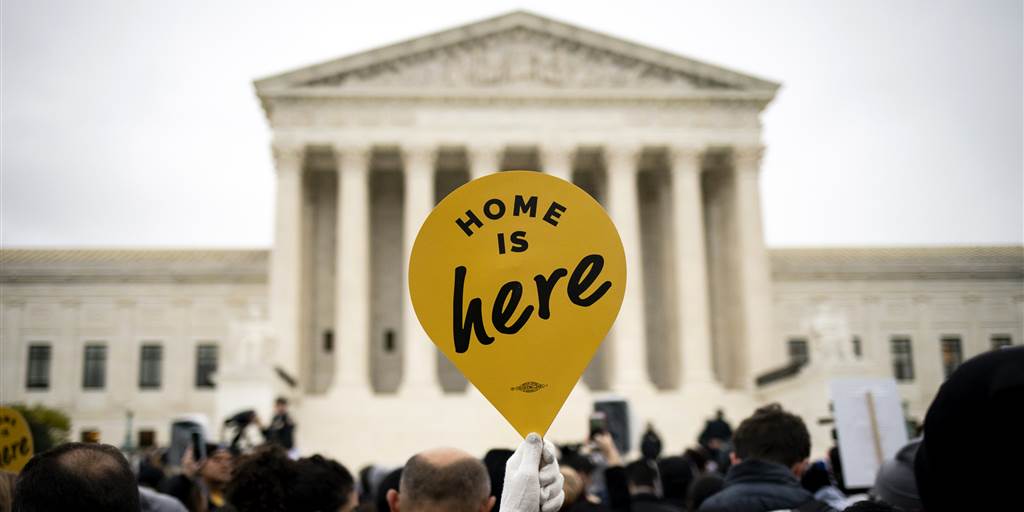
In a huge win for DACA recipients across the country, the Supreme Court ruled on Thursday that the Trump administration cannot shut down the Deferred Action for Childhood Arrivals program. The program has allowed over 800,000 young people who were brought into the country as children to avoid deportation, and continue to live and work in the United States.
Chief Justice John Roberts (the swing vote in the decision) wrote the majority opinion for the ruling, which cited the administration’s lack of clarity and detail in their justification for ending the program as the principle reason they could not move forward. This reasoning has left the door open for President Trump to potentially try to end DACA if his administration writes a more detailed explanation, but many political analysts project that this might not happen so close to the presidential election. By ending such a popular program in the midst of so much political and social turmoil, President Trump runs the risk of taking an even bigger hit in the polls.
If the Trump Administration does file new papers, it is likely that they will be closely followed by lawsuits and attempts at federal injunctions to prevent the end of the program, which is what stopped the end of the program in 2017.
While this is a big win for DACA-recipients and puts the minds of many young people across the country at ease, DACA is not yet out of the woods. A lawsuit filed in 2018 by Texas and six other states claims that President Obama overstepped his authority by launching DACA. All sides in the case have been ordered to file new papers by July 26th in light of the supreme court ruling, but the ruling has also given some traction to the suit.
One of the main questions seeking to be answered in the Texas suit is whether or not DACA was simply an exercise of President Obama’s discretion in how immigration law should be enforced. Chief Justice Roberts clarified this question in the eyes of the Supreme Court, and stated that DACA’s detailed system of evaluation and affirmative immigration relief makes it more than a nonenforcement policy. By clarifying DACA’s status as a program, the ruling may have given the Texas suit a boost. This boost makes the lawsuit the biggest threat to the program at this time.
A study conducted by the Immigration Initiative at Harvard shows that over 90% of DACA recipients have jobs, and nearly half are in school. Many do not speak the language of their birth country, and many do not have significant familial or social ties there either. DACA protects childhood arrivals from being sent away from the country that they consider to be their home, and while the Supreme Court ruling is a big win for those young people, true feelings of security and safety will only come with permanent protection.
In the words of DACA recipient Antonio Alarcon, “today we celebrate; tomorrow we fight.”
 CIMA Law Group Blog