What was once thought to be an inevitability in the coming years is now starting to appear as more of a sci-fi fantasy than one based on near-reality. Elon Musk, the billionaire entrepreneur CEO and founder of Tesla, said in 2015 that self-driving cars that had the ability to drive anywhere would be here in two or three years. John Zimmer, the CEO of Lyft, a massive rideshare company, also said that car ownership would “all but end” by 2025. Fast forward to the current year of 2021 and we have come nowhere near those predictions. Although much more common than they were previously, these self-driving cars still represent a vast minority of the cars on the road which directly reflects the distrust that many people still have in the technology.
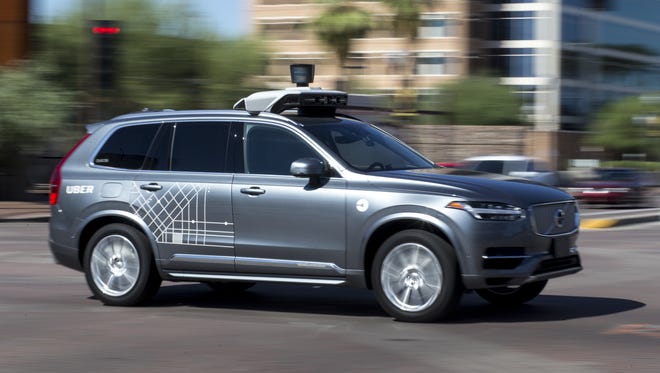
In a poll done by Partners for Automated Vehicle Education (PAVE), it was found that nearly 3 in 4 Americans believe that autonomous vehicle technology is “not ready for primetime, 48% said that they would never get in a taxi or ride-sharing vehicle that implemented the technology, and 20% said that they believed that autonomous vehicles would never be safe. Further adding to the distrust, there have been numerous crashes involving autonomous vehicles that have made national news. One of the biggest stories being one which happened in Tempe, Arizona where, an Uber vehicle that was self-driving, struck and killed a woman after it failed to recognize her as she was crossing the road. The death resulted in Uber’s autonomous vehicle program being completely pulled out of Arizona.
Furthermore, experts are now saying that it may be many years or even decades before we see fully autonomous vehicles with some saying that it might not ever happen. Even Elon Musk himself has somewhat backed up from his original statement in 2015 now saying that “[a] major part of real-world AI has to be solved to make unspervised, generalized full self-driving work.” Much of the difficulty comes from creating an AI system that is directly on par with that of a real human driver. Melanie Mitchell, a computer scientist and professor of complexity at the Sante Fe institute has stated that the situation has only been further exacerbated as previously promised deadlines for the arrival of autonomous vehicles have not been met. She notes that this has led to many in the industry to redefine what the term “autonomous vehicle” means. At the present time, it seems to resemble something more similar to an enhanced cruise control rather than anything that is truly “self-driving.” While the future of fully autonomous vehicles seems hazy at best, one thing is fairly certain. That is that truly fully autonomous vehicles are not likely to be the norm among the public for many more years to come.
This blog post is part of the CIMA Law Group Blog. If you are in need of legal help, the CIMA Law Group is a law firm in Phoenix, Arizona which possesses expertise in Immigration Law, Criminal Defense, Personal Injury, and Government Relations.
 CIMA Law Group Blog