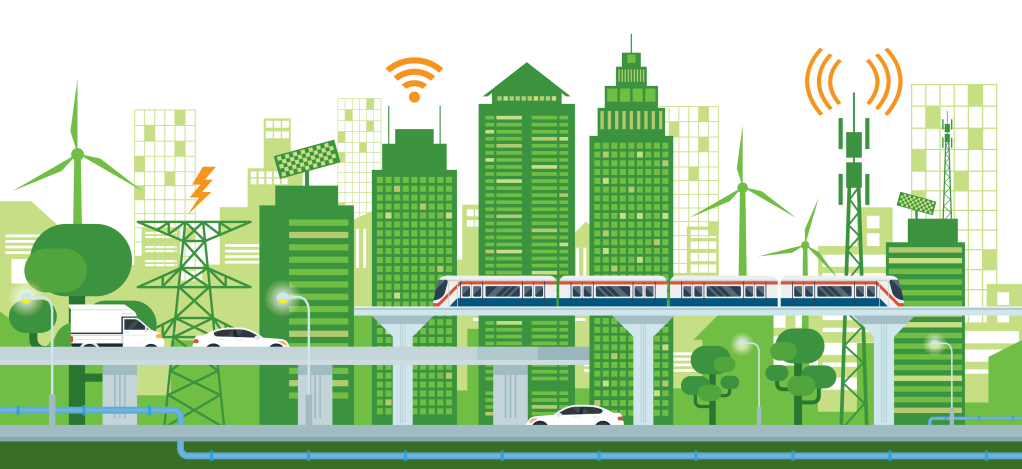
As American infrastructure ages, maintaining transportation systems, waterways, internet, and electrical grids is of increased importance. These seldom thought about services provide the framework on which the American economy is run. Not only does infrastructure affect our economic output and convenience but also our energy consumption. Using dated electrical grids, hydroelectric dams, and public transit can jeopardize safety and energy efficiency. A modern economy requires sound infrastructure to function and American infrastructure is in desperate need of attention. According to the American Society of Civil Engineers, the average age of water pipes, dams, levees, bridges, and lock chambers is either approaching or is past the recommended service age of 50 years. Additionally, America is far behind the curb on public transit and renewable energy compared to other developed economies. Fire’s in the west, hurricanes in the south, and flooding around the country have highlighted the insufficient infrastructure needed to combat the changing climate. This infrastructure bill aims to address all these concerns and more in what sums to roughly $1.2 trillion in additional funding.
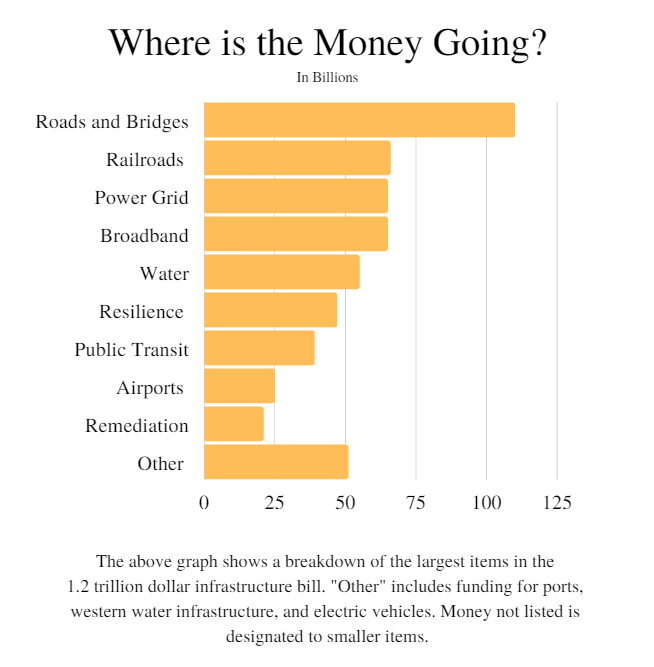
The infrastructure bill stands to benefit the majority of Americans with long overdue infrastructure spending but, the way in which these funds are spent remains to be seen. Additionally, how will the labor shortage in the U.S. impact the implementation of these projects? These are important questions to be asked as the House nears the completion of this bill. Regardless, an upgrade of infrastructure is desperately needed in order to keep pace with other developed countries in aspects like climate change, public transit, and travel.
As of September 22nd, 2021 the bill has passed the Senate but is currently held up in the House. Speaker Pelosi has hinted that her caucus may not move forward on the bipartisan infrastructure bill until the Senate votes on a 3.5 trillion dollar reconciliation bill focused on “human infrastructure”. This “human infrastructure” bill includes items such as universal pre-k, tuition free community college, public housing expansion, and immigration reform.
This blog post is part of the CIMA Law Group Blog. If you are in need of legal help, the CIMA Law Group is a law firm in Phoenix, Arizona which possesses expertise in Immigration Law, Criminal Defense, Personal Injury, and Government Relations.
 CIMA Law Group Blog