Technology has paved the way for a rapid advancement toward globalization. Social media, in particular, has allowed users from across the world to form international relationships, promoting a sense of community within the vast and seemingly endless landscape of the Internet.
However, with increased media use comes along the threat of increased data security threats. In January 2021, the Department of Commerce decided to implement the provisions outlined in Executive Order 13873, which was initially introduced in May 2019 by former-President Trump. The Executive Order on Securing the Information and Communications Technology and Services Supply Chain requested that communications technology and services be monitored to prevent foreign interference, security breaches, and exploitation of vulnerabilities which could all lead to national economic and political catastrophe. Planned to be implemented in March 2021, the regulations within the order emphasized the transactional aspects of technology between U.S. persons and foreign persons that involve information and communications technology or services designed, developed, manufactured, or supplied, by persons owned by, controlled by, or subject to the jurisdiction or direction of a foreign adversary.
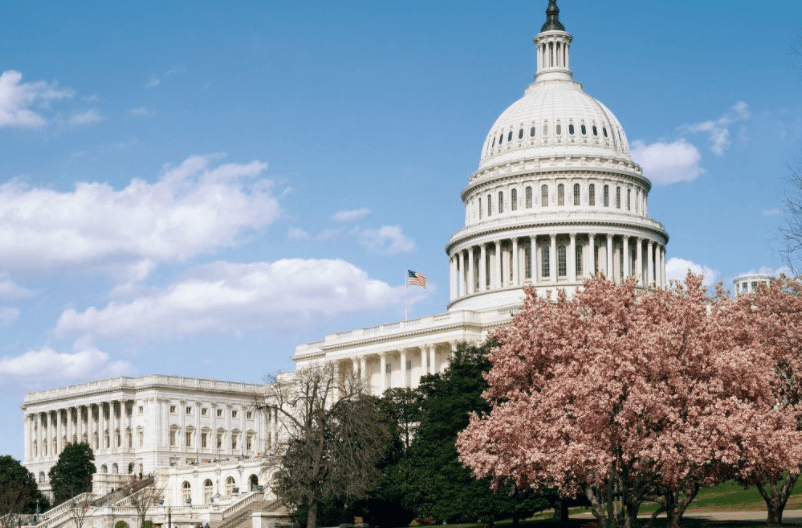
Now, amendments are being made to E.O. 14034, also known as “Protecting Americans’ Sensitive Data from Foreign Adversaries”, as well as the Supply Chain Rule. Amendments seek to provide additional criteria when considering ICTS Transactions and software applications that present risks. Changes to the order also offer a new definition of ICTS to include “connected software application”. In other words, ICTS now includes softwares with Internet data access functions.
These changes in policy could ultimately lead to platforms such as TikTok subjected to third-party auditing, source-code examination and monitoring of the logs that show user data. Already, U.S. military members are banned from using the application, but others still argue that the government is moving too slow in enforcing such policies. In a statement, the Chinese Embassy in Washington said the U.S. shouldn’t “overstretch the concept of national security and politicize economic issues.”
This complex issue is evolving into a push-and-pull approach to technology policy which reflects foreign affairs. While TikTok has repeatedly claimed that it does not share user data with the Chinese government, the U.S. still believes that limiting usage of platforms similar to TikTok should be restricted. Such regulation on applications will face backlash, especially for apps as popular as the one in question. The question remains of how to execute software regulation, and how the public will react. With social media heavily involved in the everyday life of Americans, a TikTok ban appears extreme and drastic. Meanwhile, in the name of privacy and security, a slow and steady approach might be more realistic. In any case, the U.S. government must be prepared to face the repercussions of restricting software applications in an era where such platforms are readily available and accessible by the general population.
This blog post is part of the CIMA Law Group Blog. If you are in need of legal help, the CIMA Law Group is a law firm in Phoenix, Arizona which possesses expertise in Immigration Law, Criminal Defense, Personal Injury, and Government Relations.

