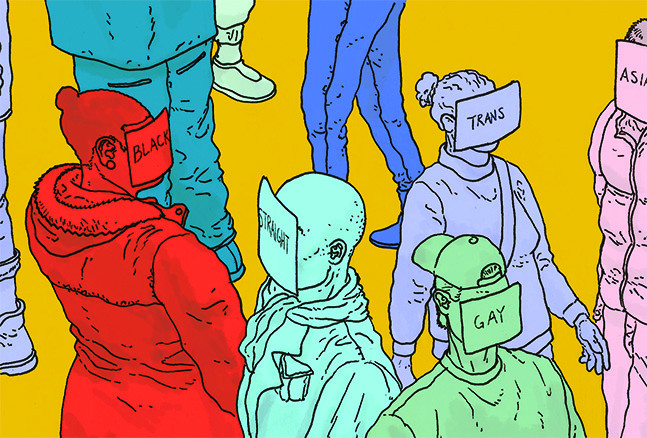
Black, White, Hispanic, Liberal, Conservative, Moderate, Gay, Trans, Straight, Young, Old, Single, Married, Christian, Agnostic, Muslim, Rich, Poor, Introvert, Extrovert, Aries, Gemini, Sagittarius, the list goes on. Since birth society begins to place identifying labels on individuals to point out the main differences between us. In some cases we place these labels on ourselves to feel a sense of belonging within a group. These labels have a greater influence on us than we may like to acknowledge.
The Labeling Theory in sociology suggests that social labels determine and influence the self-identity and behavior of individuals according to the stereotypes attached to these labels. Although wanting to feel included within a group is not bad, adopting these labels often drives us to subconsciously assume we must take on certain behaviors that are attached to the labels we identify with. Political leaders and leaders within other social groups use labels to incite fear and hate against opposing groups based on their attached stereotypes. Clustering people in categories also makes it easier to gain control over the masses and influence their behavior.
Humans are far too complex to fit within categories, yet it is also true that we are more alike than we are different. Embracing social labels gives way to the loss of individuality and self-identity. To achieve true unity within a country we must look past the stereotypes attached to social groups and be more mindful of similarities which will unite, instead of divide.
This blog post is part of the CIMA Law Group blog. If you are located in Arizona and are seeking legal services, CIMA Law Group specializes in Immigration Law, Criminal Defense, Personal Injury, and Government Relations.
 CIMA Law Group Blog