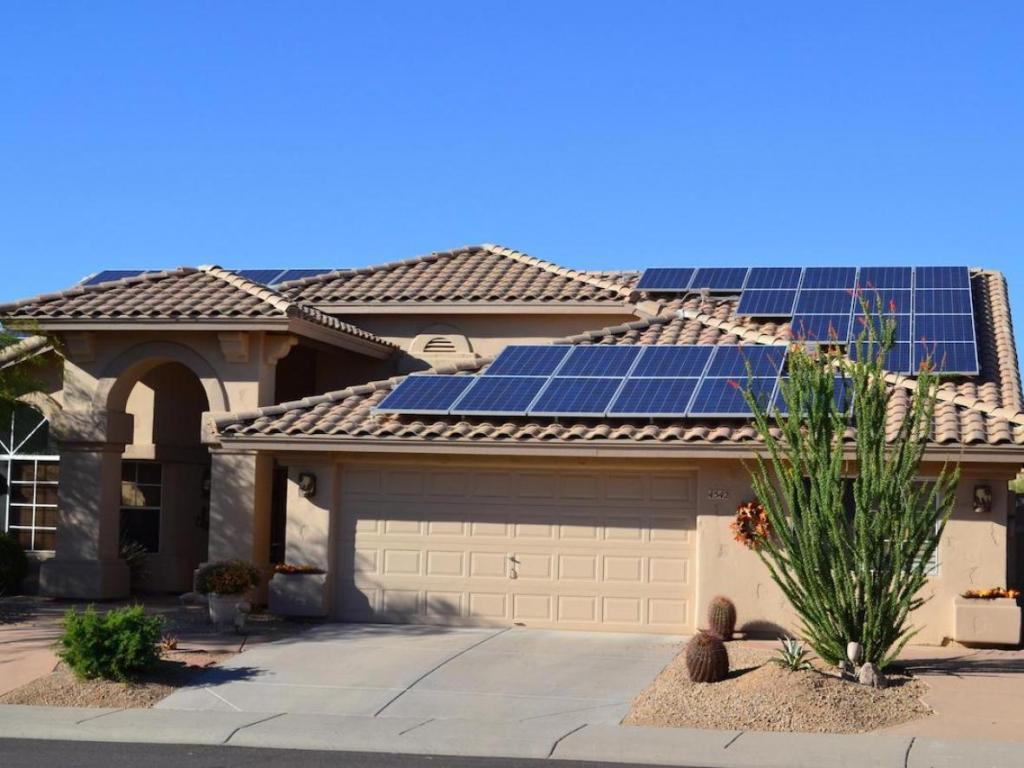
Although solar panels seem to be a new emerging technology and trend among homeowners, solar panels have been around for more than 130 years. It is because of the rising cost of natural gas and coal and the dangers of global warming that we have begun to turn to clean and renewable sources of electricity. The U.S. government and large corporations have been using solar panels as a source of energy for decades. The question is not whether solar panels are reliable, but rather if going solar is a smart move. There are six main reasons why going solar is, in fact, a smart financial decision.
First, solar helps you get rid of your rising electricity bill. Like other services and goods, your electricity bill is subject to inflation, which only means that your APS or SRP bill will continue to rise. Solar gets rid of the uncertainty of not knowing how much your electric bill will come to be next month and whether you will be able to pay it by giving you a fixed monthly payment that does not rise over time.
Second, there are government incentives available to homeowners to make going solar even more accessible. The federal government has for several years been giving tax incentives to help homeowners transition to solar. The government refunds 26% of the value of their system within their tax returns to those who go solar in 2022. The percent refunded each year has decreased over the years, so it is smarter to make the transition sooner rather than later. Please consult your tax professional for specific tax situation.
Third, you can start seeing savings from day 1. Generally, solar payments will not only be fixed but also lower than your current electricity bill, which will allow you to start saving from the first day. Your utility company will pay you for the additional electricity that your system produces that you do not consume, so that they can turn around and sell it to other homeowners that have not yet transitioned.
Fourth, solar increases the value of your home. Paying your SRP or APS bill will not bring you any benefit besides continuing to provide you with the electricity you need. On the other hand, going solar does not only satisfy your electricity needs; it also increases the value of your home, which you will benefit from at the time you decide to sell your home.
Fifth, going solar helps combat global warming. The average system on a residential home contributes to a 5-ton carbon footprint reduction per year. These systems have the capability of providing for the electricity needs of your entire household with about 80% lower carbon emissions than fossil fuels.
Sixth, states are beginning to require homes to install solar on their rooftops. States like California, Nevada, Colorado, New Mexico, Texas, Minnesota, Michigan, North Carolina, Maryland, Pennsylvania, and Massachusetts are beginning to introduce laws that require solar on new homes. It is only a matter of time for all states to require solar on all homes. Once we reach this point, the current government tax incentives will no longer be available and going solar will not be as accessible as it is now.
Certainly, you will hear homeowners here and there have a negative experience with solar but the issue at hand is not solar panels but the company providing the service. It is important to work with a solar company that has been in the industry for many years and has a good reputation.
This blog post is part of the CIMA Law Group blog. If you are located in Arizona and are seeking legal services, CIMA Law Group specializes in Immigration Law, Criminal Defense, Personal Injury, and Government Relations.
 CIMA Law Group Blog