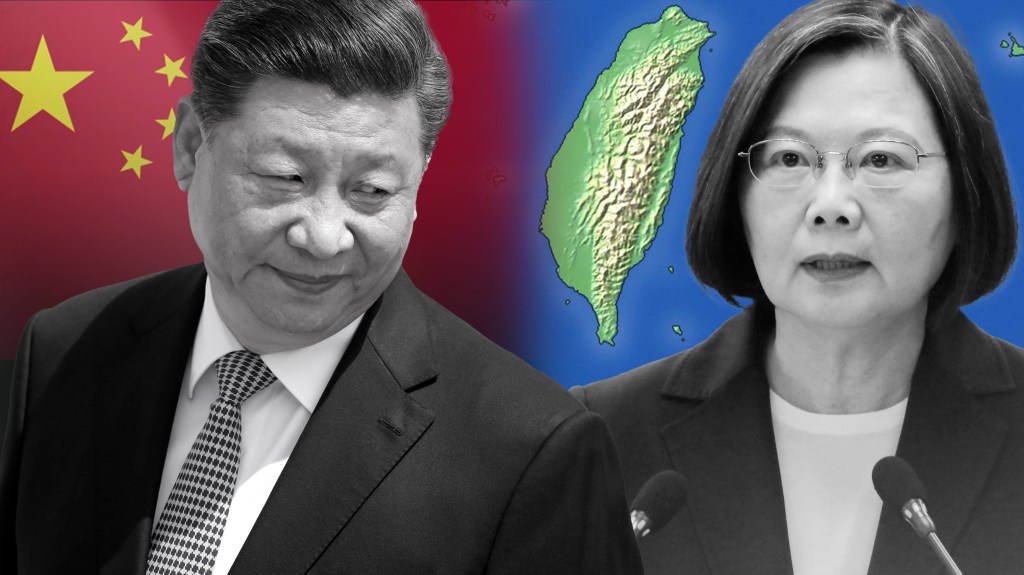
Tensions between China and Taiwan have recently escalated, but the conflict between these two nations has existed for many years. Experts suggest that the current administration’s exit of Afghanistan and its handling of the Russian – Ukrainian war has signaled to other nations, including China, that the U.S. lacks the political strength to stand its ground and defend its allies. China is allegedly taking advantage of the U.S.’s hands off approach to advance its political agenda on Taiwan. In light of the potential threat China poses for Taiwan, Taiwanese forces have reportedly started military drills near its Chinese coast.
The China-Taiwan conflict is centered on the dispute of Taiwan’s political status. The island of Taiwan was annexed in 1683 by the Qing dynasty of China and ceded to the Empire of Japan in 1895. The Republic of China, which had overthrown the Qing dynasty in 1911, took control of Taiwan on behalf of the Allies of World War II following the surrender of Japan in 1945. Ever since then, China has failed to recognize Taiwan’s independence and instead views it as a renegade province that must be united with the mainland by force if necessary.
Contrary to the current perceived hands off approach of the U.S., President Biden said the United States is committed to protect Taiwan in the case China decides to attack the sovereign nation. In the rise of tension between the two nations, after Speaker Nancy Pelosi signaled her intentions to travel to Taiwan, a top Chinese state-media commentator warned that the Chinese government would shoot down the aircraft carrying Pelosi if she were to travel to Taiwan. The fate of Taiwan is at stake and its future is unclear.
This blog post is part of the CIMA Law Group blog. If you are located in Arizona and are seeking legal services, CIMA Law Group specializes in Immigration Law, Criminal Defense, Personal Injury, and Government Relations.
 CIMA Law Group Blog