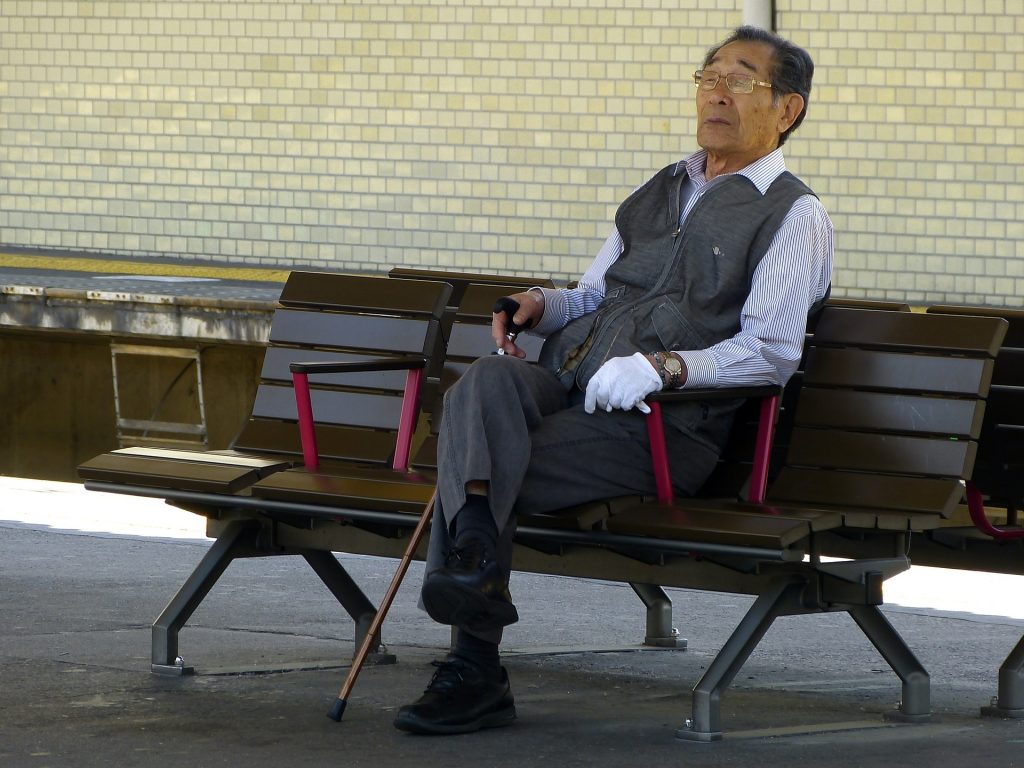
Japan has one of the world’s strongest economies. In 2020, the country’s GDP amounted to around 5.04 trillion USD, making it the third highest nominal GDP in the world. Per capita, Japan’s GDP ranks fifth in the world. Along with this, Japan has been able to control its inflation rate exceptionally well, keeping it below three percent since 2004. While the country has undoubtedly proved itself as an economic powerhouse, there are rising concerns about its ability to maintain such excellence due to its aging population. With a dwindling labor force and strict immigration laws, Japan does not have enough workers—domestic or foreign—to fill the vacancies of its retirees.
In 2020, Japan’s population comprised 36.19 million people 65 years old and over, making up 28.8 percent of the total population. By 2036, this age group will represent over a third of the population. For comparison, the United States consists of 16.8% aged 65 and over. With a median age of 48.6, Japan has the oldest population in the world. There are two main reasons for this shift. First, Japan’s life expectancy has consistently increased in recent decades, now sitting around 85 years—the second highest in the world. Second, Japan has slow population growth because of its rapidly declining fertility rate. The former is commendable and demonstrates Japan’s advanced healthcare system and nutritious diet. The former, however, warrants concern for the future of Japan’s economy. In the early 1970s, Japan’s fertility rate floated consistently above two births per woman. Now, that number has dropped to 1.3 births. In 2020, only 840,832 babies were born in Japan, down 2.8% from a year earlier and the lowest since records began in 1899.
Several factors contribute to the declining birth rate. Largely, marriage rates have steadily declined in recent years, and Japanese people are waiting longer to get married and start families. These marriage rates are partly due to the persistence of traditional gender division of labor in Japan, leaving women with additional home maintenance and childcare responsibilities. According to a study published by Asia Pacific, “Japanese wives at reproductive ages spent an average of 27 hours per week on household tasks (not including childcare), while husbands spent an average of 3 hours per week.” The declining birthrate has also contributed to a sharp increase in the cost of raising a child. As child-rearing becomes more expensive, fewer people choose to start families, which, in turn, raises the price even more.
With a growing proportion of older adults in the total population, Japan has a greater burden to provide social security and benefits to its elderly citizens. Additionally, slow population growth stunts economic activity by reducing the overall labor force—a massive determinant of production. The IMF calculated that “the impact of aging could drag down Japan’s average annual GDP growth by one percentage point over the next three decades.” As older citizens retire and leave the workforce, there are not enough young people to fill these vacancies. Not only are there fewer Japanese workers, but there is also a significant shortage of immigrant workers to make up for this deficit. Compared with other G7 countries, Japan’s use of imported labor is relatively small. According to the IMF, “Japan is an outlier in terms of its limited use of imported labor. Foreign workers accounted for only about 2.2 percent of Japan’s total labor force in 2018, compared with an estimated 17.4 percent in the United States and 17 percent in the United Kingdom.”
The lack of foreign labor is becoming a significant issue among Japan’s aging population. While many skilled workers would like to work in Japan, the country is known for having some of the strictest immigration laws in the world. Furthermore, 98% of Japan’s population is Japanese, and many foreigners have reported facing discrimination. In a survey, nearly a third of foreigners living in Japan reported having experienced derogatory remarks “sometimes” or “often” due to their background, while about 40% have suffered housing discrimination. Japan grants very few migrants residency and those who are often express difficulty gaining acceptance into the culture.
Japan’s aging population could have devastating consequences for its economic future. If Japan cannot maintain its current production level, it will undoubtedly lose its place as the third largest economy and potentially fall much further. While the Japanese government is currently making efforts to increase the nation’s birth rate, the nation’s economy needs more workers now to maintain its current level of production and social security benefits for the elderly. Estimates say that to meet its current growth target, Japan must quadruple its foreign workers by 2040, from 1.72 to 6.74 million. To combat the aging population, Japan is responsible for increasing the influx of foreign labor by offering workers incentives and loosening its restrictions on immigration.
 CIMA Law Group Blog