President Biden’s Billionaire Tax Plan

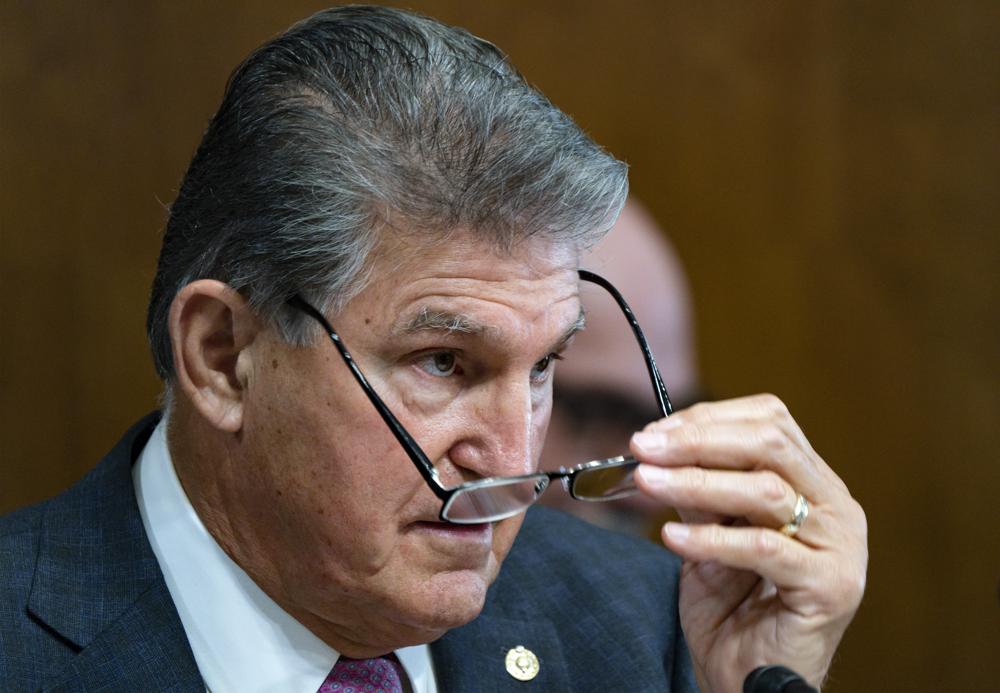
Sen. Joe Manchin, D-W.Va., a key holdout vote on President Joe Biden's domestic agenda, chairs a hearing of the Senate Energy and Natural Resources Committee, at the Capitol in Washington, Tuesday, Oct. 19, 2021. (AP Photo/J. Scott Applewhite)
Senator Chuck Schumer chairs the Senate Energy Natural Resources committee

Remember a few months ago when President Joe Biden proposed to tax the wealthiest individuals and high-end corporations? Well, that plan is still in the works. On Sunday, President Biden invited Senate Majority Chuck Schumer to his home in Delaware and discussed the potential proposal. Senator Schumer expressed his liking to the proposal with some minor changes. Instead of the original and copious 3.5 trillion dollars, it will be cut to 1.7 trillion, which is still a sweeping amount. The revenue of that amount would be directed towards the social services and climate change package which includes: healthcare and child care among creating strategies for combatting climate change.
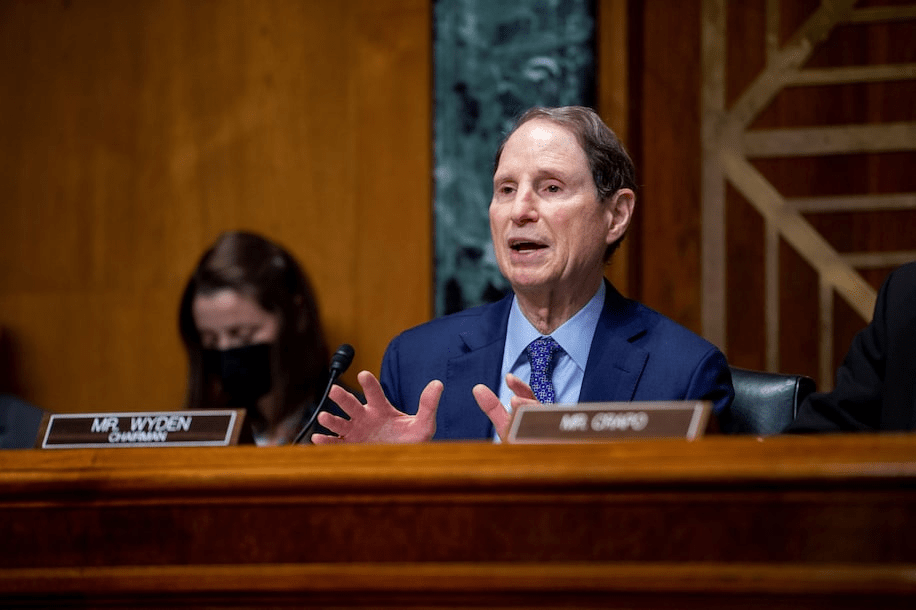
Chairman of the Finance committee, Senator Wyden drafts the Billionaire tax Proposal

With this tax plan, democrats aim to finalize their main source of revenue spending — approximately 700 of the wealthiest Americans. This is seen as a victory because it’s bridging the gap between the working class and the wealthy. The high tax rate would also affect those making more than 400,000 and heighten the tax rate on corporations that would be well off. The plan’s purpose is to utilize excess finances that would be better off invested in healthcare, childcare, and climate change strategies. Extending the revenue of higher tax rates to social services would lift many financial burdens off the working class and low-income class. Now, while this would be a step in the right direction, there has been some opposition to the higher tax rates, primarily from Senator Krysten Sinema (D-Ariz). Despite this, it’s expected that a few Senators and House Democrats will not be on board. Even though that may affect its passage, Democrats and the President remain “cautiously optimistic” surrounding the possible compromise around the Billionaire tax proposal.

Democrats look to Billionaire tax on unrealized capital gains | Fortune
Nancy Pelosi speaks on the reality of the Billionaire Tax Proposal

Moreover, the advocation for taxing the wealthy is not new. Democrats settled corporations tax raises but are now relying more on the billionaires of America — less than 1,000. As of right now, the rich do not have to pay taxes on their assets such as real estate, stocks, artwork as they only get taxed when they’re sold. However, this proposal would require them to pay the “increased value” of stocks; and assets of that manner. With President Biden behind this, the plan has an appeal but is still tentative. Nancy Pelosi states that realistically speaking, it would bring around 200 to 250 billion dollars from billionaires due to some disapproval. With that being said, members will have to search for other sources of revenue to pay the remaining end of the proposal. Even though it seems like it only has potential, the plan is in the process of finalization so we have yet to see what unfolds.

This blog post is part of the CIMA Law Group Blog. If you are in need of legal help, the CIMA Law Group is a law firm in Phoenix, Arizona which possesses expertise in Immigration Law, Criminal Defense, Personal Injury, and Government Relations.

Florida is Recruiting Police Officers Who Oppose Vaccine Mandates With $5,000 Bonus

Florida Governor Ron DeSantis (R) speaks at the Lakeland Police Department.

Amidst growing controversy concerning the rise of vaccine mandates in the workplace, Florida Governor Ron DeSantis (R) told Fox News Sunday morning that the state is actively recruiting out of state police officers who have lost their jobs due to the pandemic. The police officers being recruited did not lose their jobs from Covid-19, rather these police officers were fired from being unwilling to cooperate with their state’s vaccine mandates.

Although there is no current legislation as of today, DeSantis stated that he hopes to sign a bill that will give any out of state law enforcement a $5,000 bonus if they relocate to Florida. The Governor also specifically called to law enforcement officials in New York, Minneapolis, Seattle, and stated, “If you’re not being treated well, we will treat you better here. You can fill important needs for us, and we will compensate you as a result”. DeSantis argues that Biden’s vaccine will wreak havoc in the economy because of the potential for so many employees to leave or loose their jobs, let alone also being unconstitutional.

The Governor backs up his reasoning for opposing vaccine mandates by claiming most of the first responders already have recovered from Covid, meaning that they also have strong protection against the virus. According to a study reported by NPR more than twenty states have implemented Covid-19 vaccine mandates for government workers, with many police unions strongly opposed to them. More than 4,500 police officers in Chicago have opposed the city’s recent vaccine mandate.

This recent push to attract Americans who oppose the vaccine mandate comes after Florida’s vaccine passport ban. The ban bars private businesses, educational institutions, and local governments from demanding proof of Covid-19 vaccination. Violating the law carries a fine of $5,000 per infraction, with the state fining Leon County $3.57 million for its Covid vaccine mandate.

This blog post is part of the CIMA Law Group Blog. If you are in need of legal help, the CIMA Law Group is a law firm in Phoenix, Arizona which possesses expertise in Immigration Law, Criminal Defense, Personal Inquiry, and Government Relations.

While US Power Wanes, China Tests Nuclear Missiles

The chaos of the American withdrawal from Afghanistan prompted some to justifiably wonder if “the American Empire” was over. While this is highly debatable, it certainly seemed that our position in the world has changed. While allies in Britain and France scrambled to pick up the pieces of our mess, China, Iran and Russia were developing relationships with the Taliban.

Russia agrees to provide aid to new Afghan government

Now return to the present: we learned over the weekend that China recently tested a hyper-sonic nuclear missile as early as August. This technology relies on low-earth orbit to strike any target from any distance. This is in contrast to traditional missile technology, which would need to follow a precise trajectory through Alaska to reach the contiguous United States. Accordingly, most of our missile defense systems are based in Alaska. It would almost seem as though China’s technology is designed to evade US defenses — officials have admitted that we lack the capability to defend against this type of weaponry.

This is just one small display in a pattern of new Chinese aggression. The US Senate Committee on Foreign Relations recently decided to impose sanctions for China’s behavior in the South China Sea. Now this missile test comes just in time for an American international embarrassment — compounded with every other factor, this looks something like “Cold War” behavior. It’s possible that China sees an international power vacuum that they have an opportunity to fill.

It’s far too soon to determine if there is any serious threat, but the dynamic between the United States and our international adversaries is shifting rapidly as we come out of the COVID era.

This blog post is part of the CIMA Law Group Blog. If you are in need of legal help, the CIMA Law Group is a law firm in Phoenix, Arizona which possesses expertise in Immigration Law, Criminal Defense, Personal Injury, and Government Relations.

17 American Missionaries Were Kidnaped in Haiti. What’s Next?

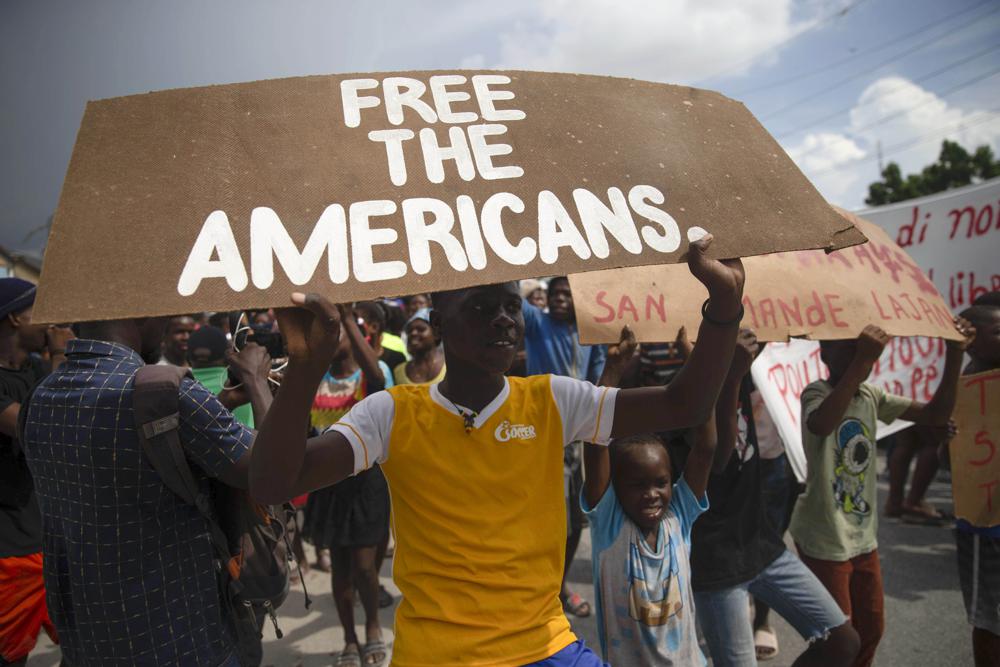
Negotiations with a notorious Haitian gang have stretched into the fourth day for the release of 17 American missionaries. With Haitian politics in limbo, criminal organizations have been able to largely operate without pushback. On July 7, 2020 Haitian President Jovenel Moïse was assassinated followed by an earthquake that killed more than 2,000 people. These events, exacerbated by Haiti’s extreme poverty, have made crime worse in the last few months. The missionaries, initially attempting to aid in earthquake recovery, were kidnapped when visiting an orphanage. Six women, six men, and five children were all taken and are being ransomed for $1 million dollars per person.

Members of the 400 Mawazo Gang are the alleged perpetrators. According to locals, this specific gang is infamous for kidnappings of both Haitians and foreigners and has gradually transitioned from petty theft to kidnapping and ransom. Earlier this year the gang kidnapped five priests and two nuns that included two French nationals who were eventually released. It is unknown whether the ransom was paid or not.

On October 19, 2021 Haitian’s took to the streets to protest the kidnappings and lack of government assistance in relation to gang violence. One protester was quoted saying, “Without these missionaries, a lot of the old people you see out here would not have been able to send their children to school. Without these missionaries, a lot of these people would have lost their homes to floods. Without these missionaries, our damaged homes would never have been repaired. It’s they who built a road that we can travel on today.”

The United States has very strict policies in dealing with ransoms and it is apparent that they will not pay it under any circumstance. If this situation is to resolved peacefully, it will either be through negotiation or a private organization will step in and pay the ransom. President Biden has been briefed and the FBI is working in conjunction with Haiti to free the hostages.

This blog post is part of the CIMA Law Group Blog. If you are in need of legal help, the CIMA Law Group is a law firm in Phoenix, Arizona which possesses expertise in Immigration Law, Criminal Defense, Personal Inquiry, and Government Relations.

COVID-19 Update: A Healthcare Dilemma & Opening Borders

COVID vaccine in pregnancy triggers strong immune response in moms, babies  | CIDRAP
Pregnant Woman receiving Covid-19 Vaccination

It’s no surprise that the healthcare system feels overwhelmed and is bearing more than it can handle. Newer issues surrounding the vaccine rise due to the hesitancy of pregnant women taking it. Pregnant women are reluctant to take the vaccine because they feel they’re putting their unborn child at great risk. During the initial rise of the Covid-19, healthcare professionals did not encourage them to take it which slightly set them back. This is due to studies finding that symptoms resulting from the vaccine may complicate their pregnancy. Despite their efforts to urge them to get it now, their suspicion regarding the risks during their pregnancy and emergency procedures still persists. Due to their precautions, hospitalizations are increasing specifically from their category. As a result, this places pressure on healthcare professionals amid the pandemic however, it’s likely pregnant women will come around when they receive more information disputing their suspicions.

What happens when cancer patients get COVID-19?
Cancer patients are attempting to flow back into routinely screenings and treatments

Adding to the dilemma, as a result of the pandemic, doctors are witnessing the advancement of cancer cases due to the delay in treatment and screenings. Difficulty in catching up arises because many patients are behind in their routinely screenings and treatments. With this in mind, doctors are now more nervous when patients show up to their office after a while because they anticipate their cancer has spread, and it usually has. However, they will still continue to do their best in decreasing the backlog of patients. Inevitably, during the start they had to adjust themselves to Covid-19 patients and tend to them as well, but as more time goes by, the simultaneous focus on both types of patients becomes more manageable.

People cross the U.S.-Canadian border at Blaine, Wash., in August, after Canada opened its border to vaccinated Americans. The United States will open its land borders with Canada and Mexico to vaccinated travelers in November.
Borders will begin to gain momentum and traffic after they open

In light of the increased vaccinations during the pandemic, the United States are planning to open its borders to Canada and Mexico for fully vaccinated travelers in November. This means when people provide proof of their vaccination they are permitted to go into Canada or Mexico to see family or be tourists and come back as they please. Government Officials did not announce an exact date for the opening yet, but it is likely they will disclose that information as November approaches. Finally after roughly 19 months of border closure, this marks the start of a new chapter in the recovery stage from the pandemic.

This blog post is part of the CIMA Law Group Blog. If you are in need of legal help, the CIMA Law Group is a law firm in Phoenix, Arizona which possesses expertise in Immigration Law, Criminal Defense, Personal Injury, and Government Relations.

Big Tech Faces Challenges From New Senate Bill

It is well known that social media platforms operated by “Big Tech” companies play a vital role in advertising and allowing goods to reach the online market. In fact the market power held by these companies is so strong that they have been known to use their own platform to unfairly promote their products over their competitors. This unfair advatage given to Big Tech companies has promoted Senators Amy Klobuchar and Chuck Grassley will introduce a bill next week that will prevent tech firms from prioritizing their products or services on their own platforms.

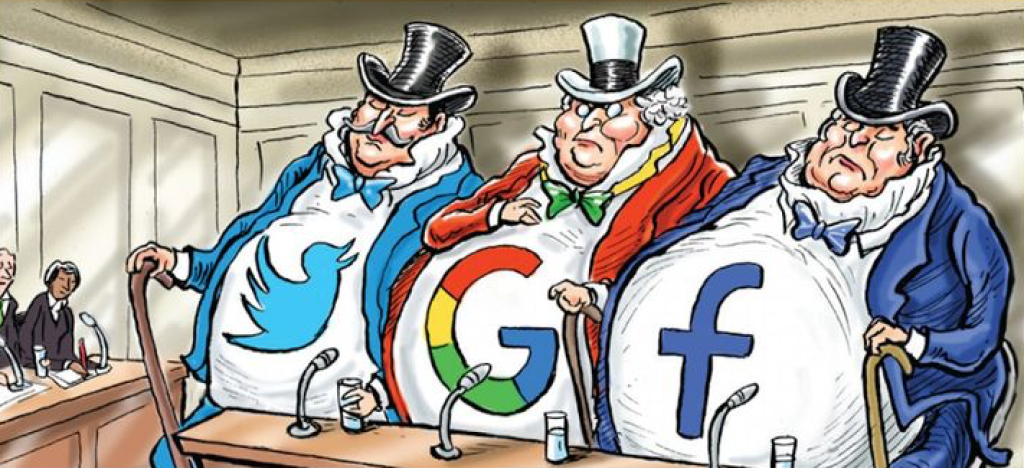
How is it possible for Big Tech to prioritize their own goods over others one might ask? All it takes is to look at the structure of these platforms hold in the marketplace. Big Tech companies such as Facebook, Google, and Twitter are so large that advertisers are left with very few other realistic choices as to where they can advertise their products.

This is not a new phenomenon either. In September of 2019 The Wall Street Journal reported that Amazon had been found to tweak the product-search algorithm to favor products that are more profitable for the company, as well as boost the reach of their own products over others. Apple has also found themselves in the center of a similar controversy over a report of tweaking their algorithm to favor their own products.

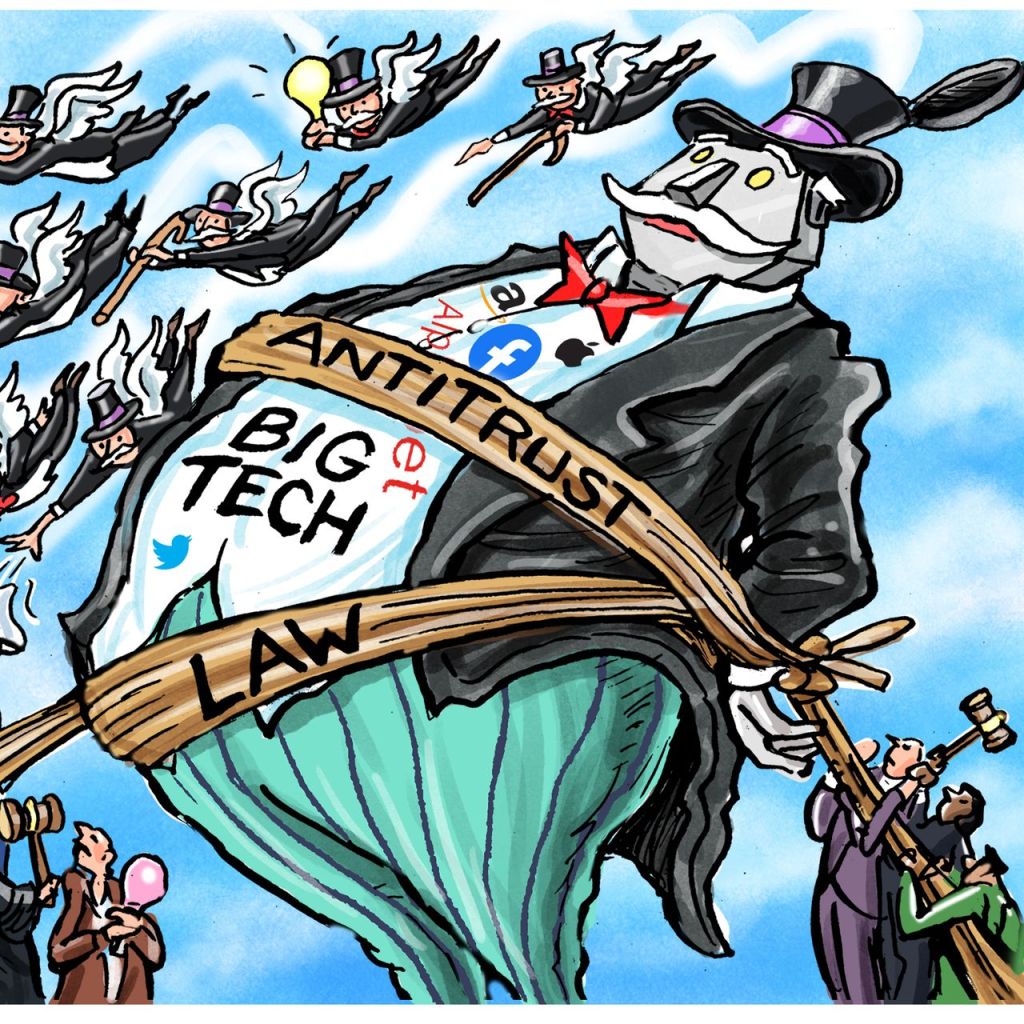
The bipartisan group of senators planning to introduce the bill titled, The American Innovation and Choice Online Act, is designed to prevent big tech platforms from using their position to disadvantage smaller rivals. Senator Klobuchar said in an interview that the bill reflects a growing realization in congress that competition laws, which prohibits anticompetitive agreements or monopolies from forming in the market place, need to be updated for the digital era.

From Amazon misusing data on their platform to Google tweaking their search results to divagate their rivals, it is clear that a bipartisan effort is being made to make big tech corporations more accountable to fair competition.

This blog post is part of the CIMA Law Group Blog. If you are in need of legal help, the CIMA Law Group is a law firm in Phoenix, Arizona which possesses expertise in Immigration Law, Criminal Defense, Personal Inquiry, and Government Relations.

There are Shortages of Everything

If you’ve been shopping in the last month, especially for anything beyond your routine products, you’ve probably noticed that basic goods are hard to find. Even something as simple as a white shirt may have been unavailable to you for the last several weeks. How does this happen? We tend to be so accustomed to the system just working that, when it fails, we don’t know where to start. But the global economy is a bit more complicated than we think, and there are several causes for this bizarre market breakdown.

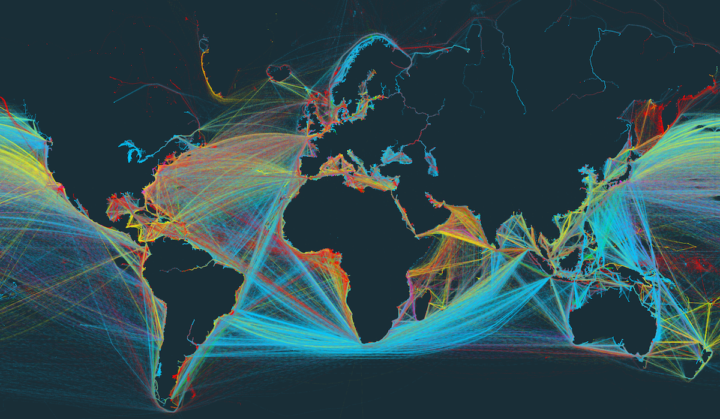
Global shipping in a narrated interactive map | FlowingData

First, logjams have overtaken major shipping ports all across the country. More container ships are entering these ports than they can handle, and once they’re finally unloaded there is a shortage of truck drivers to remove the product. Ultimately, you have unsightly heaps of product – just sitting there. Rather than reaching customers, product devalues while it waits for its turn. At some ports, roughly 80 container ships are waiting idly for a chance to dock. The average container ship has 14,000 containers worth $100,000 each.

This massive failure in the supply chain is just one element of consumer shortages. Manufacturers are also faced with labor and materials shortages. Demand is also on the rise as a result of the pandemic’s fizzling out, and manufacturers don’t have enough workers or parts to meet it.

Basically, almost anything that could go wrong has. It’s something of a perfect storm; (1) Manufacturers don’t have the resources (labor or capital) to meet demand. (2) What little they can produce gets caught in a global shipping limbo. (3) Once product finally leaves the seaport, fewer truck drivers are available to move product locally.

These shortages could persist through the end of the year. That’s right: even through the holidays. It serves as a harsh reminder of what happens when the massive systems that we take for granted experience even minor turbulence. The good news is that there is no indication that such turbulence is remotely likely to be permanent.

This blog post is part of the CIMA Law Group Blog. If you are in need of legal help, the CIMA Law Group is a law firm in Phoenix, Arizona which possesses expertise in Immigration Law, Criminal Defense, Personal Injury, and Government Relations.

The United Nations Highest Court’s Verdict on the Disputed Maritime Border Between Somalia and Kenya

Kenya-Somalia maritime dispute ruling in summary - The Brief
The International Court of Justice in The Hague issued its decision without a member from Kenya, who withdrew days before the hearing.

On Tuesday, the International Court of Justice (ICJ) ruled in favor of Somalia over a disputed area in the Indian Ocean believed to contain gas and oil. Despite Kenya’s declaration that it had control of the region since 1979, the ICJ drew a line that was closest to the proposed line Somalia marked during the negotiation.

Since 2009, both countries have attempted to resolve the conflict internally through negotiations. Still, they disagreed over the disputed territory in the Indian Ocean, sparking Somalia to refer the matter to the U.N.’s highest court in August 2014 to resolve the case. Kenya argued for the boundary line to run east, while Somalia argued to run southeast of its land border. In 2017, The court rejected Kenya’s argument due to a lack of jurisdiction. In March 2020, Kenya withdrew from the proceedings just before the public hearing, claiming they needed more time to prepare and requesting that a Somali judge be removed from the legal team.

Last week, Kenya withdrew from the case, accusing the ICJ of being biased. Refusing to acknowledge the court’s decision, stating that “As a sovereign nation, Kenya shall no longer be subjected to an international court or tribunal without its express consent.” The ICJ granted Somalia the majority of the disputed maritime border but rejected the restitution demands that Kenya’s maritime activities violated Somalia’s sovereignty. Kenya received a smaller portion of the area because it failed to establish a sea boundary between the two countries. The decision from today’s court hearing is final and legally binding but unenforceable. Somalia’s President Mohamed Abdullahi Farmajo has urged Kenya to respect the outcome and restore their relationship.

Relations between Kenya and Somalia have been uneasy since independence.
the Map of Both Countries Disputes Over Maritime Border

Both countries’ tensions may exacerbate their already fragile diplomatic relations, potentially having far-reaching political, economic, and security consequences for both, especially after the drastic actions against each other in recent years. Somalia stopped issuing visas to Kenyans and prohibited the importation of goods. Kenya deported Somali officials and suspended flights between the two countries.

What remains to be seen are the government actions in response to today’s verdict. With Somalia’s insufficient forces to protect its citizens, Kenya has been the region’s primary military provider in combatting the terrorism of Al Qaeda-linked militant group Al-Shabab. It is unclear whether Kenya will continue to provide shelter to Somalia refugees and military assistance if the case is referred to the U.N. Security Council for a strict ruling.

This blog post is part of the CIMA Law Group Blog. If you are in need of legal help, the CIMA Law Group is a law firm in Phoenix, Arizona which possesses expertise in Immigration Law, Criminal Defense, Personal Inquiry, and Government Relations.

The Changes of the New Texas Redistricting Proposal

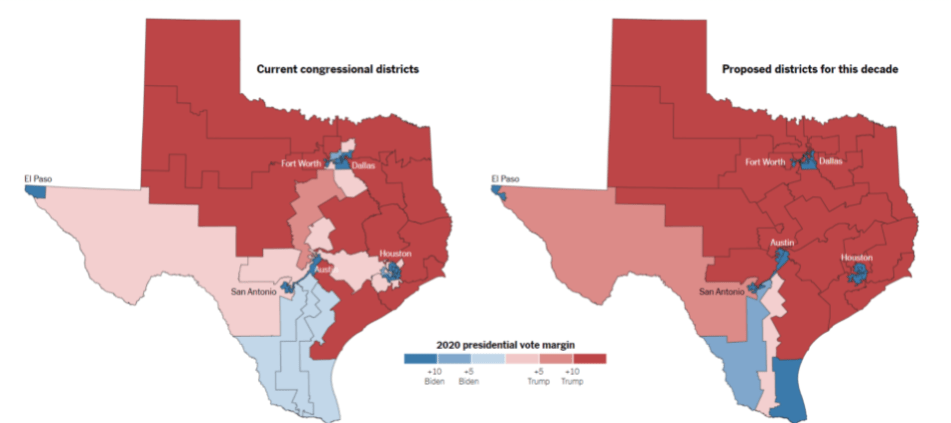
Following the 2020 census, Texas was appointed 38 congressional districts of which are drawn by the state legislature. For the first time in decades, federal law allows Texas to draw political maps without federal approval to ensure they don’t violate the rights of people of color. The new proposed congressional map of Texas for this decade aims to primarily strengthen existing Republican districts while also widening the margin in Democrat districts. According to the New York Times, under the proposed map, only one district would have fallen within a 5 percentage point margin in the 2020 election. In 2020 there were 11 districts that fell in that same 5 percentage point margin. This defensive redistricting strategy could become more prevalent in other states as well.

 Four Big Changes Include: 

  1. Adding a Republican District in Harris County- By compacting other democratic districts in Harris county, Republicans were able to draw an entirely new district where a large portion of the county’s white population lives. 
  2. Splitting Dallas into large and rural districts- Republicans strengthened their vote margin in some Dallas districts by extending them to include large rural areas that consist of mostly republican voters 
  3. Consolidating Democratic growth in Austin- Republicans used a strategy called “vote sink” by adding a new largely democratic district in Austin so Republicans can safely maintain their majority in the surrounding suburbs are rural areas. 
  4. Spreading out the Latino vote- Even though Latino’s account for a large portion of Texas’ population growth, there are still no districts with a majority Latino population. This is interesting because it is unclear how Latino voters tend to vote. Trump made large strides in approval rating with Latino’s in 2020 yet most predominantly Latino areas are separated into multiple districts. 

Controversy has ensued between Texas Republicans and Democrats with regards to the nature in which the congressional districts have been drawn. One example of controversy is how Sheila Jackson Lee and Al Green’s districts have been drawn together, meaning they would have to run against each other. Both members testified saying that, “It doesn’t look right for the only two persons in the state of Texas to be running against each other in a congressional district from the same party to be of African ancestry,” Even though the old map had one district with a majority black voters, the proposed new map has none. As of October 11th, 2020 the proposed district map has passed through the Texas House Committee and the Texas senate.  The proposed map now moves to the Texas House before it can be signed into law by Governor Gregg Abbott. The map must be approved before the special legislative session that ends on October 19th.

This blog post is part of the CIMA Law Group Blog. If you are in need of legal help, the CIMA Law Group is a law firm in Phoenix, Arizona which possesses expertise in Immigration Law, Criminal Defense, Personal Inquiry, and Government Relations.

California Oil Spill Devastates Local Economy and Marine Life

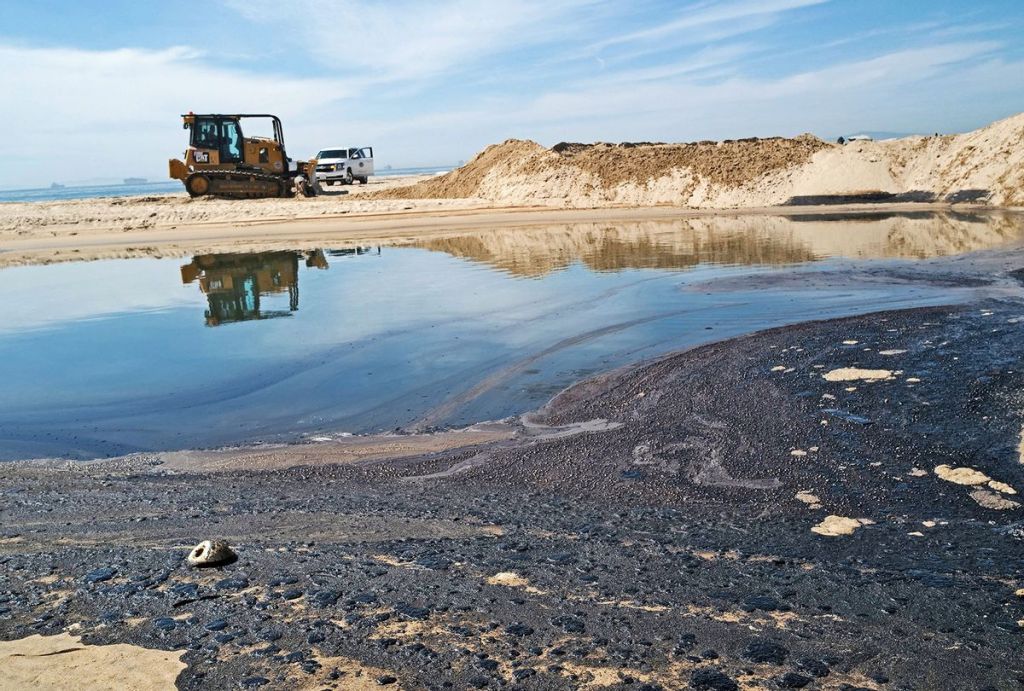
Environmental clean up crew using excavators to clean up crude oil from Huntington Beach, California.

The Pacific Airshow was cut short last week to thousands of attendees in Huntington Beach, California after a report was confirmed October 2 of an oil spill five miles off the coast. The report was made a day after the alleged time of the leak, prompting controversy over the Houston based company’s slow reaction time. The offshore pipeline located deep underwater in between Catalina Island and Orange County is owned by Amplify Energy, who use the pipeline to shuttle crude oil from offshore platforms to the coast.

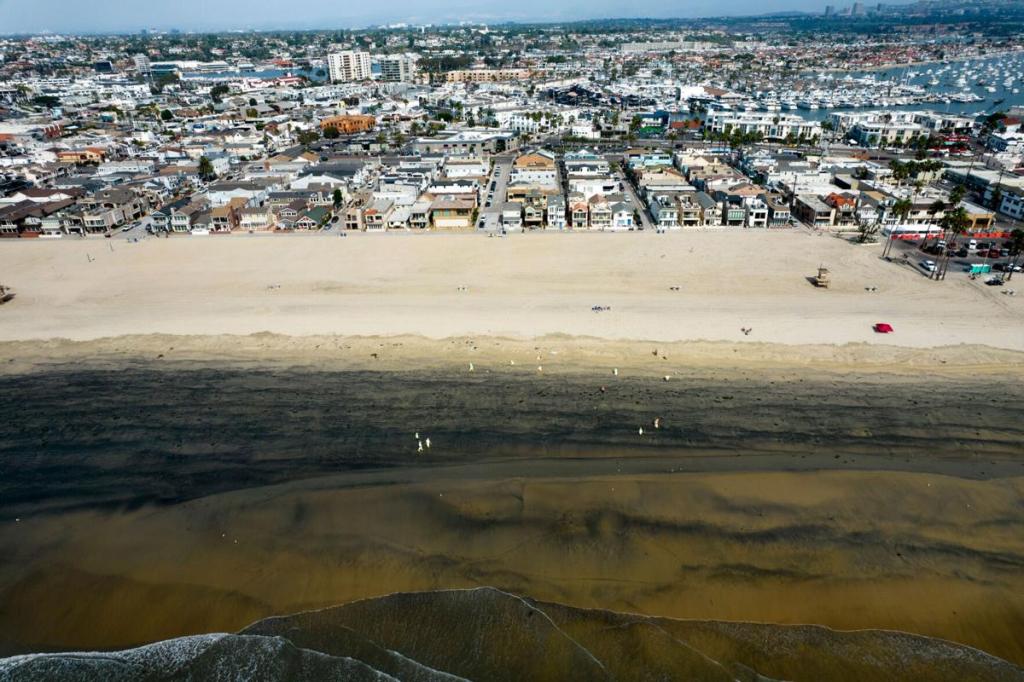
The exact cause of the oil spill is still under investigation. But officials have reported they believe the damage to the pipeline was likely caused by a ship’s anchor possibly months before the time of rupture. The roughly thirteen inch crack in the pipeline has caused untold damage to the marine life and business owners off the Southern California coast ranging from the beaches of Orange County to as far south as Mission Beach in San Diego.

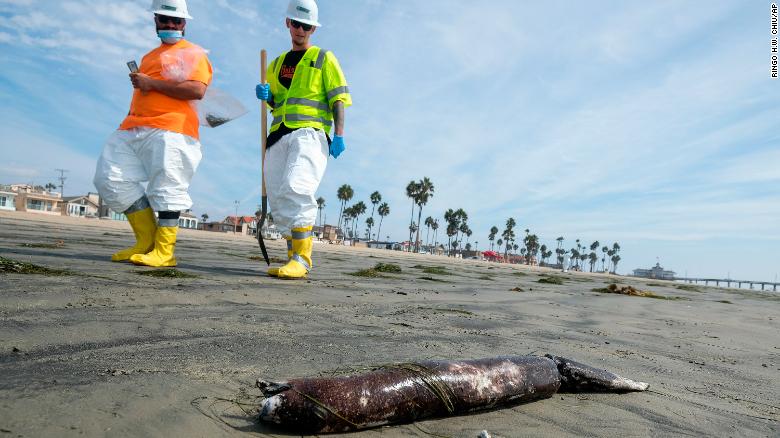
Dead marine life washes ashore in Newport Beach, California due to oil spill.

Clean up assessment teams have been deployed in Orange and San Diego County and can be seen in white hazmat suits combing the beach for black tar. Officials report that the estimated amount of oil spilled into the ocean ranges anywhere from 24,700 to 144,000 gallons, although USCG Captain Rebecca Ore is confident that the number is on the smaller end of the scale. Even if that were true Unified Command reported that to date only 5,000 gallons of crude oil has been recovered by vessel, 13.5 barrels of tar balls, 232,500 pounds of oily debris recovered from the shoreline, and 11,400 feet of containment boom has been deployed. The Associated Press reported that another Coast Guard dubbed the California oil spill a, “major marine casualty”.

Oil stained beaches in Southern California.

The California oil spill has been detrimental not only to the marine life, but the coastal businesses that depend on a healthy marine ecosystem to attract tourists. Dead marine life being washed ashore and beach closures in affect in most of Orange County has forced some coastal businesses to close their doors. These businesses affected by the oil spill, some of which include surf lessons and whale watching cruises, recently filed a class action lawsuit against the owner of the ruptured pipeline, Amplified Energy. The Houston based company is being accused of failing to safely maintain the pipeline and promptly respond to the disaster.

With a community just beginning to recover from the loss of tourism brought about by the pandemic, the most recent oil spill poses another obstacle to California’s “ocean economy”.

This blog post is part of the CIMA Law Group Blog. If you are in need of legal help, the CIMA Law Group is a law firm in Phoenix, Arizona which possesses expertise in Immigration Law, Criminal Defense, Personal Inquiry, and Government Relations.

Design a site like this with WordPress.com
Get started