Should People Return to The Office?

Working from Home Advice: 10 Tips to Improve Productivity | CCL

In March of 2019, the COVID-19 pandemic shook the world. Whole industries were turned on their head and life as we knew it seemed to come to a screeching halt. In addition to the obvious health consequences presented by COVID-19, there were a number of unwelcome changes to our daily lives. We suddenly couldn’t go places that we once frequently visited, we weren’t able to see our loved ones like we used to, and we suddenly were required to maintain social distancing and wear masks whenever we were out in public. One change, however, while perhaps not initially well received, has people hesitant to go back to the old ways.

In order to stem the tide of the highly contagious virus, millions of workers across the world were suddenly asked to work from home. Now, as we seem to be slowly coming come out of the pandemic, many are hesitant to go back. Some of the reasons for this are fairly simple and should be expected. People are now saving money on gas by not commuting, they have more time to spend with loved ones, and they are able to work from the comfort of their own home rather than in the high-pressure environment that is often associated with the workplace. Other benefits, however, were less expected. Many businesses are now seeing that performance and productivity has actually increased since allowing employees to work from home. Some businesses are seeing as much as a 13% increase in performance and a ridiculous 77% increase in productivity. Much of this can be attributed to an absence of many of the distractions that are inherent in an office setting. With less interruptions and a quieter work environment, many people are simply getting more done.

That isn’t to say that all people are automatically more productive when working from home. Research has shown that it can often depend on the type of task given. People who are given boring tasks to do while working at home are more likely to become distracted and would likely function better in an office setting whereas people who are assigned more creative tasks with less restraints were able to accomplish more in a shorter period of time. Research has also shown that performance will actually decrease if every person in the office is working from home and that the more people work from home the less productive they will become over time. This could likely explain why we are seeing, and will continue to see, more businesses establishing a sort of home/in-office hybrid workplace. This work setting has employees only come into the office 2-3 days a week while working from home on the remaining days. Only time will tell if we eventually go back to a fully in-office workplace again, but for the time being, it appears that this new style of work is here to stay.

This blog post is part of the CIMA Law Group Blog. If you are in need of legal help, the CIMA Law Group is a law firm in Phoenix, Arizona which possesses expertise in Immigration Law, Criminal Defense, Personal Injury, and Government Relations.
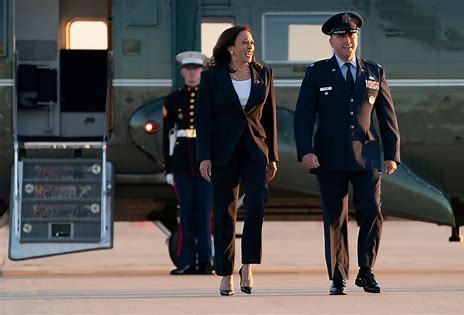
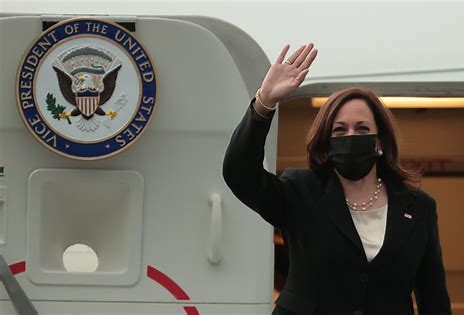
Kamala Harris visits the US-Mexico Border for the First Time During Her Time as Vice President.

This past week, Vice President Harris went to El Paso to visit the US-Mexico border for the first time during her current term as Vice President. Prior to this visit, Vice President Harris has been criticized for her handling of the current immigration crisis at the southern border of the United States and these criticisms increased after her visit to Guatemala and Mexico. The main focus of this trip for the Vice President was to focus on the more humanitarian side of the issue while also addressing the root causes underlying immigration to the United States.

During the first part of her visit, Vice President Harris met with 5 young girls, all of whom were separated from their parents at the border. These immigrant children are being housed in very poor conditions with little legal support or guidance from any family members. Vice President Harris said that meeting with these girls reminded her that this is a human issue involving children and families and that the response to this crisis needs to be effective. She also says that when discussing the immigration crisis we need to remember that these are human beings and need to be treated as such.

Vice President Harris then met with other immigration advocates and layers to further understand the current issues occurring at the border. Vice President Harris’s staff says that visiting Guatemala and Mexico first before the border was a part of a cause and effect strategy where they went to Central America to see the causes of immigration and then to the border to see the effects of immigration.

The Biden administration plans to address the inhumane conditions that current immigrants being held at the border are living in. However, many are complaining that the Biden administration is not doing nearly enough to help immigrants. President Biden has said that he is happy with the way Vice President Harris is handling the border situation.

For any questions regarding immigration law, please reach out to CIMA Law Group for all of your needs.

Long Overdue: The NCAA Enacts New NIL Policy

In huge news that that has been a long time coming, the NCAA announced on Thursday, June 30 that they would be enacting a new policy that will allow college athletes to benefit from their name, image, and likeness (NIL) moving forward. The issue has been a constant source of controversy over the years, spawning many lawsuits and outcry as players have attempted to plea their cases for compensation against what they viewed as exploitative practices by the universities and the NCAA.

Say Goodbye to College Football as We Know It | State College, PA

The news has already come with immediate action by athletes across the nation as they attempt to cash in on what was once the grounds for severe penalties. Penalties which have tainted the legacies of some of college sport’s greatest athletes in the past. Just ask Reggie Bush, a former running back for the University of Southern California, who set many records and dazzled with his outstanding play on his way to winning the Heisman trophy in 2005, a trophy reserved for the most outstanding athlete in college football. However, after an investigation that revealed that Bush and his family had received financial benefits in the form of cash, paid travel expenses, and a home in San Diego along with money to furnish it, the NCAA came down hard on Bush and USC. The sanctions from the violations included Bush having to disassociate from the university, return his Heisman trophy, 14 vacated wins including USC’s national championship in 2004, a two-year postseason ban for the school, and the loss of 30 scholarships.

While under the new NCAA rules, these types of benefits would still be considered violations, the idea is that the new policy will help avoid pay-for-play and improper inducements that are often tied to choosing to attend a particular school. The type of inducements that were at the heart of the Reggie Bush controversy and which would not have been necessary had he been able to benefit from his name, image, and likeness from the very beginning. Sandra Jordan , who serves as Division II Presidents Council chair further reinforced this sentiment when she stated that, “[t]he new policy preserves the fact college sports are not pay-for-play . . . [i]t also reinforces key principles of fairness and integrity across the NCAA and maintains rules prohibiting improper recruiting inducements. It’s important any new rules maintain these principles.”

While it is uncertain at the moment what the long-lasting effects of the new NIL policy will be in the future, one thing is certain. That is that college sports will likely never be the same.

This blog post is part of the CIMA Law Group Blog. If you are in need of legal help, the CIMA Law Group is a law firm in Phoenix, Arizona which possesses expertise in Immigration Law, Criminal Defense, Personal Injury, and Government Relations.

Only 2 House Republicans Vote for January 6th Select Committee

Liz Cheney of Wyoming and Adam Kinzinger of Illinois voted to create a select committee to investigate the January 6th attack on the Capitol. Both these representatives are frequent critics of former President Trump and they believe an independent commission is needed to really look into what happened that fateful day. Many Republicans criticized the select committee, they accused Democrats of creating a partisan panel that will be used to attack former President Trump. Cheney came out with a statement harshly criticizing current Republican leaders: “Since January 6th, the courage of my party’s leaders has faded. But the threat to our Republic has not. On an almost daily basis, Donald Trump repeats the same statements that provoked violence before. His attacks on our Constitution are accelerating. Our responsibility is to confront these threats, not appease and deflect” Kinzinger also came out with a statement; “I believe a bipartisan independent commission is the best approach—and although the House was able to pass the measure, it was blocked by the Senate. Today, I voted in support of the Select Committee (H.Res.503) because the truth matters” They have both received backlash from Republicans.

https://www.cnn.com/2021/06/30/politics/republicans-january-6-select-committee-vote/index.html

Justice Department Sues Georgia, Reigniting Debate Between Voting Rights and State Sovereignty

On June 25th, Attorney General Merrick Garland announced that the United States Justice Department would be suing the state of Georgia over their recently enacted voting legislation, which the current leadership of the Justice Department alleges was enacted with the direct purpose of limiting the voting rights of minorities. Georgia’s Governor, Brian Kemp, responded to this declaration, asserting that the lawsuit was illegal and would be soundly defeated in the court of law. The Justice Department is seeking for the following provisions to be struck from the legislation:  “a provision banning government entities from distributing unsolicited absentee ballot applications; the imposition of costly and onerous fines on civic organizations, churches and advocacy groups that distribute follow-up absentee ballot applications; the shortening of the deadline to request absentee ballots to 11 days before Election Day; the requirement that voters who do not have identification issued by the Georgia Department of Driver Services photocopy another form of identification in order to request an absentee ballot without allowing for use of the last four digits of a social security number for such applications; significant limitations on counties’ use of absentee ballot drop boxes; the prohibition on efforts by churches and civic groups to provide food or water to persons waiting in long lines to vote; and the prohibition on counting out-of-precinct provisional ballots cast before 5 p.m. on Election Day.” For his part, Governor Kemp asserts that his state is simply following a long-standing practice of strengthening voting regulations after an election in accordance with observed and potential issues. He contends that other states, Democratic states, have election procedures less open than Georgia, yet his is the only one being targeted, largely for political reasons. He futhermore argues that the voting regulations make it easy to vote, but harder to cheat.

The conflict between State Sovereignty and Voting rights has been a long one, dating back decades. One of the more notable recent Supreme Court Cases on the subject, Shelby Counter v Holder, struck down a provision in the Voting Rights Act of 1965, which “required States to obtain federal permission before enacting any law related to voting—a drastic departure from basic principles of federalism.” In his press conference concerning the lawsuit, Attorney General Garland lamented the loss of this tool, and made clear his desire for the federal government to once again have the power to preemtively veto state legislation. Delivering the opinion of the court, Chief Justice Roberts made clear in Shelby v Holder that the law had only been constitutional in the first place because “exceptional conditions can justify legislative measures not otherwise appropriate,” but the exceptional conditions that existed in the 1960s that required the federal government to interfere in matters explicitly delegated to the states by the Constitution were no longer present when Shelby was decided. Should the Justice Department’s case against Georgia make its own way to the Supreme Court, the justices will once again be forced to render a decision regarding the federal government’s authority to oversee state elections.

Housing Assistance for Undocumented Immigrants

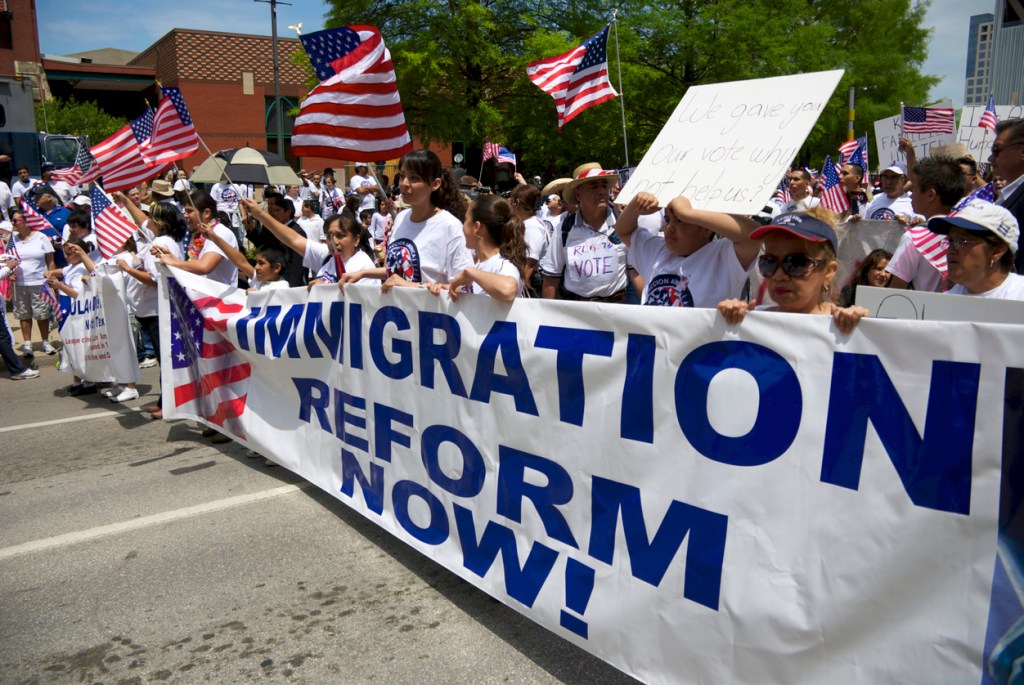
“Dallas, Texas, United States – May 1, 2010 a large group of demonstrators carry banners and wave flags during a pro-immigration march on May Day.”

Recently, Colorado has passed a series of laws aimed toward benefits for undocumented immigrants in the United States. Among these laws is HB21-1054, which “creates, unless otherwise required by federal law, a public or assisted housing benefit exception to the requirement that an applicant for federal, state, or local public benefits verify lawful presence in the United States” (Colorado General Assembly, 2021). The bill thus removes the requirement of paperwork proving one’s legal residence in the United States to apply for housing assistance.

While many have shown support for the passing of HB21-1054 by Gov. Jared Polis, others have expressed reservations concerning beliefs that “the measures will siphon money and services from other residents” (Rodriguez, 2021). However, the bill provides access to essential services and needs like jobs and state benefits alongside housing. Gov. Polis expanded the bill’s massive beneficial role to the people and state of Colorado, sharing:

“Colorado needs the contributions from everybody in our state with all different talents and skills to have good jobs and work and employ their abilities to make us all better off.”

Gov. Jared Polis at the signing ceremony for SB21-077
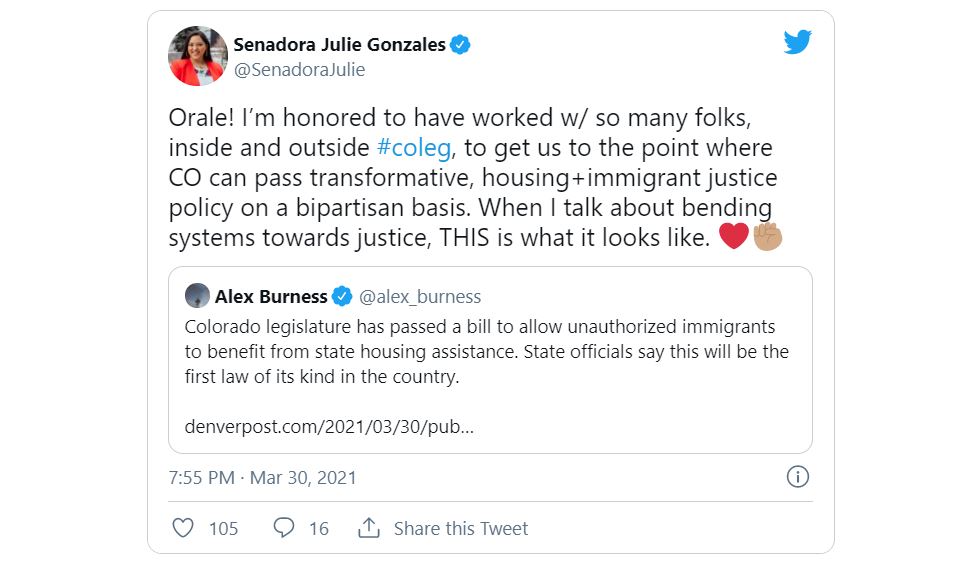
State Senator Julie Gonzalez’s tweet in support of passage of HB21-1054

HB21-1054 is also accompanied by SB21-077, which “eliminates the requirement that the department of education and each division, board, or agency of the department of regulatory agencies verify the lawful presence of each applicant before issuing or renewing a license” (Colorado General Assembly, 2021). The bill stipulates that proof of lawful presence is no longer required of an applicant for a state or local certificate, registration, or license (Colorado General Assembly, 2021). As part of the series of laws benefiting undocumented immigrants, both HB21-1054 and SB21-077 expand access to opportunities once vehemently denied to those without proof of legal residence in the United States.

For more information on immigration and legal assistance for immigration-related matters, click here to visit and learn more about Cima Law Group.

The American Dream and Promise Act is Passed in the House, Awaiting Senate Vote

Deferred Action for Childhood Arrivals (DACA) recipients, better known as Dreamers, are undocumented immigrants who came as children. Dreamers are granted deferred action, meaning United States Citizenship and Immigration Services (USCIS) will not initiate removal proceedings against them. However, deferred action does not grant any form of legal status or provide a path to permanent residence and/or citizenship. In short, Dreamers are permitted to stay, but they can never get citizenship.

What does DACA mean? Complete guide to DREAMers and DACA — Quartz

Representative Lucille Royal-Allard (D-CA), along with 146 representative cosponsors, hopes to change this fact. On March 3, 2021, the representative from California introduced H.R. 6 – The American Dream and Promise Act of 2021. The aim of this bill is to provide Dreamers, Temporary Protected Status holders, and individuals with Deferred Enforced Departure with total protection from deportation and an opportunity to obtain permanent legal status. Among other protections, this act would mean more than 2 million Dreamers could qualify for conditional permanent residence (issued a Green Card) and eventually apply for lawful permanent residence.

The Bill successfully passed the House on March 18th, with a vote of 228 to 197. Currently, the Senate has read the Bill and hearings were held by the Judicial committee in regards to the Bill just 2 weeks ago. With a 50-50 partisan split in the Senate, the American Dream and Promise Act of 2021 is expected to pass with a vote. However, it is actually getting the Senate to vote that is a problem. See this article from the New York Times about how the filibuster is preventing Democrats from passing contentious legislation.

According to the Pew Research Center, 74% of Americans are in favor of granting Dreamer the opportunity to obtain legal status. DACA recipients have, lived, worked, been educated, and started families in the United States. For most of them, this country is all they know and the only place they want to live. Granting Dreamers a path to citizenship is not only the popular and obvious choice, but simply the right thing to do.

Sources:

https://www.pewresearch.org/fact-tank/2020/06/17/americans-broadly-support-legal-status-for-immigrants-brought-to-the-u-s-illegally-as-children/?utm_source=Pew+Research+Center&utm_campaign=2e9d9bbcbc-EMAIL_CAMPAIGN_2020_06_18_04_34&utm_medium=email&utm_term=0_3e953b9b70-2e9d9bbcbc-399501645

https://www.congress.gov/bill/117th-congress/house-bill/6

https://immigrationforum.org/article/bill-summary-american-dream-and-promise-act-of-2021/

Rules vs. Standards: Which is Better for Society?

For a long time now, there has been an ongoing debate concerning rules and standards. The debate focuses on two sides, both representing different legal forms that are often used to promote the interest and general well-being of society. One side being in favor of using “rules” as law and the other being in favor of a “standards” approach. To put the sides in simple terms, “rules” in the context of this debate refer to “those legal criteria that differentiate legal from illegal behavior in a simple and clear way.” “Standards”, on the other hand, can be defined as “general legal criteria which are unclear and fuzzy and require complicated judiciary decision making.”

law-books - City of Duncanville, Texas, USA

From the above definition alone, it might seem that “rules” would be the clear winner in the debate about which one is better for society. After all, they have the benefit of often being clear and concise, allowing a person to easily determine whether their conduct falls on the side of prohibited conduct or permissible conduct. Take for example, the average everyday driver. The driver can simply drive by a speed limit sign, determine whether they are driving at an appropriate speed, and take the steps necessary to either slow down to be in conformity with the law or maintain their speed at the permissible level. The interpretation takes little to no effort on the part of the person and the prohibited conduct is easily deterred.

A standard, on the other hand, would look something like a law that requires drivers to simply “drive safely” rather than having a predetermined speed limit. This type of law, unlike the easy-to-interpret “rule”, requires much more self-evaluation on the part of the person engaged in the conduct. Despite this requirement of having to exert much more effort to comply with standards, a compelling argument can me made that standards might actually be more effective in promoting the general well-being of society.

Take again for example, the driver who is subject to a fixed speed limit. Just because that driver is going under the speed limit, does not necessarily mean that they are going to be driving safely. In fact, a person driving five under the speed limit can be much more dangerous than a person going 15 over the speed limit. By requiring a person to remain in a constant state of awareness about their conduct, people are more incentivized to be safer drivers. Rather than simply looking at their speedometer to determine whether they fall on the side of permissible conduct, they must consciously ask themselves whether they are truly “driving safely.” Furthermore, there is an added layer of evaluation that must take place. Not only does the driver need to ask themselves whether they are driving safely, they must also ask whether a police officer will determine that they are driving safely. This added layer of evaluation provides further incentive for the person to not drive in a dangerous manner.

Obviously, that isn’t to say that every person subjected to the “drive safely” standard would automatically become a better driver or that people are automatically going to be more prone to follow the law. The point is that a “standard” simply may be better at addressing the actual goals of society as opposed to the an easy-to-understand rule. Where a rule provides a clearly defined boundary that people can be sure not to cross, a standard can be more in line with promoting the general well-being of society. Well-being which a rule can often only attempt to promote due to its rigidity and lack of flexibility.

Additionally, it should be noted that there are many other considerations that need to be taken into account to adequately answer this debate and the points made in this blog post only scratch the surface by using one example of common driving laws. Other considerations such as administrative costs and the ability of each type of legal form to be delegated and enforced must also be taken into consideration. The debate is likely to continue for a long time to come as people continue to weigh the pros and cons of each.

This blog post is part of the CIMA Law Group Blog. If you are in need of legal help, the CIMA Law Group is a law firm in Phoenix, Arizona which possesses expertise in Immigration Law, Criminal Defense, Personal Injury, and Government Relations.

Ivanka Trump and Jared Kushner Distance themselves from the Former President

As the former president continues to complain about the election being stolen from him, his daughter and son-in-law are backing away from him. A major reason for this is Trump’s inability to move one from the 2020 election. He is convinced he will be back in office based on what he hears from Q-anon. This has caused a strain on the relationship with the former president. Trump also questioned the role Kushner played when he was president, and how he will ultimately effect his presidency. Ivanka wants to return to normalcy and do what is best for her family. They have barely seen him since he started living in a cottage at his golf club in New Jersey. Ivanka and Jared have distanced themselves and cut off any influence they could have on the former president. This has caused Trump to replace them so he can try to continue his claw his way back into politics.

Ivanka Trump and Jared Kushner Report Up to $135 Million in 2018 Income -  The New York Times

https://www.cnn.com/

It’s All Hands on Deck for Democrats Before Pivotal Senate Vote

Drew Angerer/Getty Images

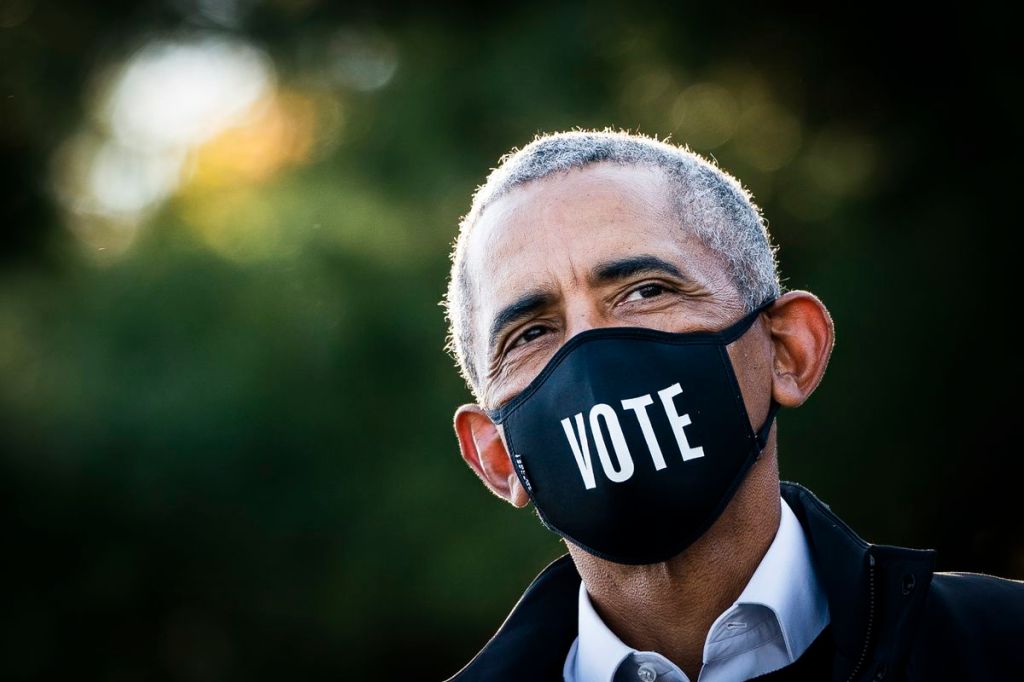
As the Senate prepares to vote on the For the People Act, former President Barack Obama cites the January 6 insurrection to advocate for the bill. Currently, Republicans have been transparent regarding their intention to not even debate but just filibuster the voting rights bill. While in a conference call for the National Democratic Redistricting Committee, the former president stated the anticipated filibuster “is not acceptable” especially in the aftermath of the insurrection.

Bill H.R.1 (For the People Act) makes election day a federal holiday, prohibits states from restricting mail-in ballots, and promotes automatic voter registration, internet registration & early voting. As it stands, it is unlikely that the bill will pass today’s Senate vote as Democrats would need 10 Republicans to break the filibuster.

The For the People Act comes as a response to Republicans pushing a multitude of restrictive voting laws at the state level. Democrats believe they can repel these passed and signed restrictive laws with the For the People Act. All eyes are on the Senate vote as the battle between Democrats and Republicans regarding voting laws continue.

Sources

https://www.cnn.com/2021/06/21/politics/obama-voting-rights-january-6-insurrection/index.html

https://www.theguardian.com/us-news/2021/jun/21/barack-obama-joe-manchin-voting-rights-proposal

https://thehill.com/homenews/senate/559462-obama-voting-rights-bill-must-pass-before-next-election

Design a site like this with WordPress.com
Get started