Biden Administration Reinterprets Title IX to Expand Protections for Gay and Trans Students

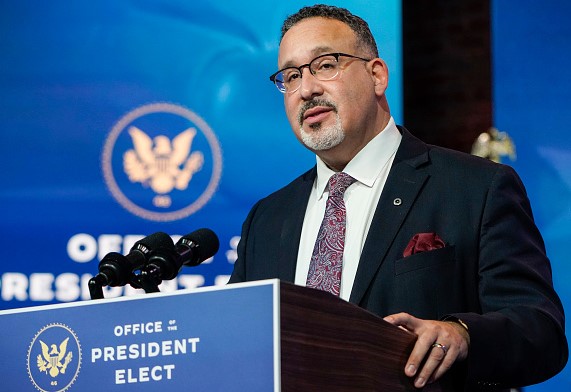
Education Secretary Miguel Cardona
JOSHUA ROBERTS/GETTY IMAGES

Wednesday, June 16th Biden Education Department extended the protections of Title IX to gay and transgender students. This was largely done to overturn Trump-era Education Department policy and existing proposals to bar trans women in school sporting events.

Using precedent from the last year’s landmark supreme court ruling that offered protections from discrimination for gay, lesbian, and transgender people from discrimination in the workforce, the administration found that these same protections can be applied to students in schools after legal review. While it is unlikely that the decision will bring immediate large-scale change, it does open the door for federal sanctions against schools that fail to protect LGBGTQ+ students.

With this announcement this Department of Education is taking a stand against previous policy and the proposals in more than 20 states to bar transgender girls from playing on female sports teams and events. The new guidance does not specifically address this issue or these proposals, however it does state that action will be taken if students are denied equal access to “academic or extracurricular opportunities”.

This guidance does not reinstate the Obama-era protections that were later repealed by the Trump administration, but instead clarifies the existing administrations interpretation of Title IX, and its intention to investigate any complaints of discrimination in schools.  It is officially a “notice of interpretation” and does not possess the power of law.

For further questions regarding the interpretation of federal, state, or local laws and ordinances, CIMA Law Group is a top Phoenix law firm willing and able to assist.


Biden-Putin Summit Raises Specter of Cybersecurity and Possible Future Threats

On June 16th, President Biden had his first face-to-face meeting with the Russian autocrat as commander-in-chief, and amongst the most crucial topics of conversation was cybersecurity, especially after the recent ransomware attacks on U.S Pipelines which eminated from Russia (despite Putin’s denial of responsibility). In this first meeting, the two world leaders were reported to have agreed to further talks on the subject, but have yet to give any concrete details regarding the substance of such talks. As for what the two have already discussed, President Biden is said to have made clear 16 critical sectors that the United States will not tolerate any interference with. The implication was that, should Russia cross the red line and attack these sectors in any capacity, the U.S would be willing to respond in kind. To that end, President Biden claimed to have made clear to Putin the United States has its own formidable cyber capabilities that we would be prepared to bring to bear if necessary.

Going forward, it remains to be seen if future cyber talks between the two world leaders will, in fact, be conducted, or if Putin will continue to challenge the U.S on this front, perhaps by making a greater effort to ensure hacks cannot be traced affirmatively back to Russia, or perhaps by targetting sectors not included in Biden’s aformentioned list. And the extent to which the U.S is actually willing to utilize its own cyber capabilities against adversaries like Russia and China remains anybody’s guess.

CIMA Law Group specializes in immigration law, criminal defense, and personal injury, as well as having a substancial government relations division. Keep up with the blog for more updates on current political and legal events, or visit the website for more information or legal assistance.

The Tokyo Olympics are Still Happening After a Positive Covid-19 Test from a Coach.

One of the biggest questions among the sports world during the beginning of the Covid-19 pandemic was what would happen to the Tokyo Olympics in 2020. The first obvious step was a delay in the games past the summer of 2020, with many people questioning whether the games should still happen in the first place. However, as time has went on and with more and more vaccines being rolled out, the decision to still hold the games in 2021 has been made. Even though many citizens in the home country of Japan are opposed to the games being held, the International Olympic Committee (IOC) and the government of Japan have decided to still host the games, mainly due to the sunk costs that have gone into building the stadiums for the games. This decision has led to even more questions regarding the safety of the athletes and people of Tokyo and also how the immigration of athletes into the country would occur with the different Covid-19 travel restrictions set by countries participating.

This years Olympic Games will look very different than any other Olympic Games previously with many new policies set in place to try to combat Covid-19. One such policy is the exclusion of any international fan due to the policies of Japan. Even with these policies, the Olympics are still bound to have positive tests with the first positive test appearing this past Friday on June 19th.

One of the coaches of the Ugandan Olympic team has tested positive for the coronavirus and is now not being allowed entry to Japan for the Olympic Games. All members of this team were fully vaccinated with the AstraZeneca vaccine, even though the country only has a 2% vaccination rate currently. How the IOC plans to handle this positive case will provide an example to other countries on how they plan to address the challenges that come with hosting a multinational sporting event during a global pandemic. Furthermore, it also demonstrates the immigration issues that arise when trying to coordinate a large gathering of many different countries with differing Covid-19 restrictions in place.

Even with positive tests and many Covid-19 cases occurring, it is highly unlikely that the games would be cancelled. The economic repercussions that would occur for a cancelled Olympics would be devastating for both the IOC and Japan, which is why nothing short of war would cancel the games. It will be interesting to see how the IOC handles these immigration issues going forward.

For any questions you have regarding your immigration case, CIMA Law Group is one of the highest rated immigration law firms in Phoenix and can help answer those questions.

The Third-Party Doctrine: Failing to Keep Up with Modern Times

The Third-Party Doctrine has been a subject of debate since it was first introduced in the ’70s. The doctrine, first detailed in the cases of United States v. Miller and Smith v. Maryland, states that a person does not have a reasonable expectation of privacy in information that he/she voluntarily turns over to a third party. In Miller, police obtained bank records without a search warrant in order to tie Miller to an undocumented whiskey distillery. In Smith, the police, again without first obtaining a search warrant, used a pen register to figure out what phone numbers Smith had dialed. In both cases, the Court found that there was no reasonable expectation of privacy that would require the police to first obtain a search warrant, because in both cases, the defendants had willingly turned information over to a third party. As such, the evidence in both cases was admissible at trial.

Police surveillance: social media monitoring - netivist

While the sureviellance at the time of Miller and Smith did not seem overly intrusive, the doctrine has remained relatively unchanged in the nearly 45 years since its inception. In a world where technology is increasingly needed to participate in everyday life, however, this poses significant problems. We live in a world where the use of certain technology is no longer an optional luxery, but rather it is a necessity in order to be able to carry on with everyday life. We are constantly carrying our cell phones and using applications where we are turning massive amounts of information over to third parties. Our phones can track every single place we go and do so in effortless fashion. By the logic of the outdated Third-Party Doctrine, this information could be obtained by police without a search warrant and admitted at trial. It is easy to see how this power could easily be abused by law enforcement. As technology increases, so does the need for the Third-Party doctrine to adapt and mold to modern-day lifestyles.

Recently though, in 2018, there was a breakthrough. In the case Carpenter v. United States, the Court held that the use of 127 days of CLSI data (data that works as a sort of time stamp that is created every time a person’s cell phone connects to a nearby cell cite) to track the whereabouts of a man constituted a violation of his reasonable expectation of privacy. The police did not obtain a warrant before obtaining the data which led to it being inadmissible at trial.

While this seemed to be a major win in the fight for the Third-Party Doctrine to adapt to modern times, it left a significant number of questions to be answered. Does the ruling apply to other technologies? How long can surveillance be conducted before it violates a person’s reasonable expectation of privacy? Would anything less than 127 days of surveillance data have been admissible? These questions were left unanswered by the Court leading many to hypothesize their own theories about how the ruling in Carpenter should be interpreted. Theories such as the Mosaic Theory which generally states that surveillance only requires a search warrant when the cumulative data paints an intimate portrait into that person’s life; or the Source Rule which serves as more of a bright-line rule that looks at whether the surveillance is that typically used in the digital age, whether the the data was generated by a meaningful choice, and whether it is the type of data that is likely to reveal intimate information. These theories themselves, however, are not without their questions and will likely lead to more scholarly debate as people attempt to make sense of what the ruling in Carpenter means for the Third-Party Doctrine. Only time will tell as technology continues to advance and more challenges are brought against the doctrine.

This blog post is part of the CIMA Law Group Blog. If you are in need of legal help, the CIMA Law Group is a law firm in Phoenix, Arizona which possesses expertise in Immigration Law, Criminal Defense, Personal Injury, and Government Relations.

With The G7 Summit Over, It Appears Biden is ‘part of the club’

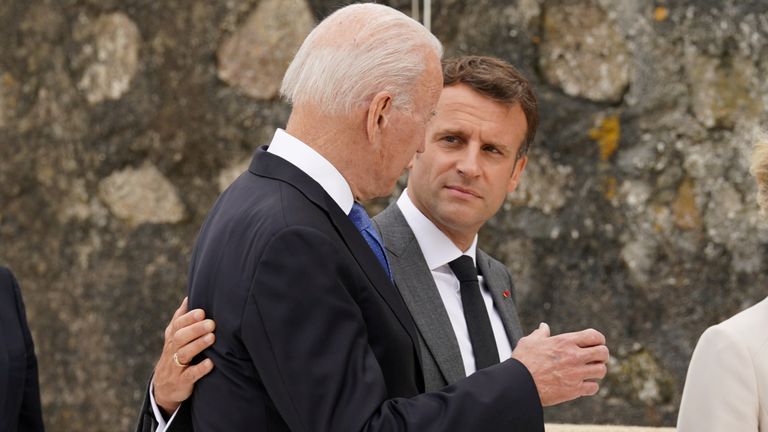
President Biden and President Macron speaking during this weekend’s G7 summit.

The 47th G7 summit took place this weekend, starting June 11 and ending June 13. The G7 summit is mostly a venue for coordination among foreign leaders. The group of countries has a history of producing globally consequential decisions during these G7 (previously known as G8) summits. In years prior, international security and the global economy were often substantial topics of discussion, however, as expected, recovery from the Covid-19 pandemic commanded much of this year’s meeting. During the summit, there are many meetings that do not include the other countries as was the case of President Biden’s meeting on Saturday with President Macron of France. When asked of their meeting, President Macron stated, “I think it’s great to have a US President part of the club and very willing to cooperate.”

With the G7 summit concluded, it appears President Biden fit right in amongst foreign leaders. As hinted by President Macron’s statement, President Biden is forging a different path as compared to that of former President Trump. The American people can take great comfort in knowing President Biden commands the respect and attention of foreign leaders.

Sources:

https://www.cnn.com/2021/06/12/politics/biden-macron-bilateral-g7/index.html

https://www.cnn.com/2021/06/11/politics/g7-summit-explainer/index.html

https://news.sky.com/video/g7-summit-emmanuel-macron-and-joe-biden-walk-arm-in-arm-12330360

Dreams Delayed and Sometimes, Denied

Migrants who are applying for asylum in the United States go through a processing area at a new tent courtroom at the Migration Protection Protocols Immigration Hearing Facility on Sept. 17, 2019, in Laredo, Texas. (Eric Gay / AP file)
Migrants applying for asylum in the United States in a tent courtroom at the Migration Protection Protocols Immigration Hearing Facility in Laredo, TX. 

Amid recent immigration policies, one of which denies immigrants with TPS (temporary protected status) application for green cards, immigration judges across the United States express being overworked and under political pressure. Scarcity in number, lack of support staff, and political pressure from the Justice Department are among immigration judges’ primary concerns.

As there are only 500 immigration judges presiding in the United States, the backlog of 1.3 million cases continue to increase, resembling what Judge Dana Leigh Marks describes as, “holding death penalty cases in a traffic court setting.” Immigration judges preside over asylum cases, deciding what individuals get to come to and remain in the United States and which must be deported. Unlike federal court trial judges who are essentially appointed for life, immigration judges “are Justice Department employees who are appointed by and answer to the attorney general, a political appointee.” Furthermore, immigration judges are represented by a union; however, an executive order issued by the former Trump administration is putting the union in “danger of ceasing to exist.”

Immigration has, especially amid the Trump administration, stood as a polarizing topic across the nation. However, what mustn’t be forgotten or disregarded is that those individuals seeking immigration, asylum, and even temporary protection are not just parts of a polarizing topic but people — people with dreams, aspirations, and desires to provide for and protect those under their care and be the best versions of themselves they can be. For immigration help and services offered by professional immigration lawyers in Phoenix, AZ, click here to read about Cima Law Group.

Democrats and Republicans Clash over Immigration Policy in Wake of Unanimous Supreme Court Decision

On June 7th, the Supreme Court of the United States reached a unanimous decision in the case of Sanchez v. Mayorkas. That decision, delivered by justice Elana Kagan, held that the granting of TPS, Temporary Protected Status, (given to foreign nationals in the U.S who would face especially dangerous conditions back home) was not enough, on its own, to qualify a person for LPR, Legal Permanent Residence. Justice Kagan explains that, as the law stands, a foreign national must have nonimmigrant status (granted by TPS) AND have been admitted to the United States legally and undergone inspection. The plaintiff in the case had argued that, by virtue of his being granted TPS, he had been admitted to the U.S, despite the fact that he entered the country illegally. None of the Supreme Court Justices were won over by this argument, and they held that the granting of status and admission were two separate issues, both of which must be satisfied for LPR to be granted.

However, H.R. 6 hopes to change all of that. Passed by the House of Representatives on March 18th, The American Dream and Promise Act hopes to both create a path to citizenship for Dreamers and to rectify the current situation regarding TPS recipients. To that end, Section 202, subsection A, declares that “notwithstanding any other provision of law, the Secretary or the Attorney General shall adjust to the status of an alien lawfully admitted for permanent residence, an alien” eligeable for TPS, if said alien fulfills certain preconditions. President Biden has expressed his own support for the Promise Act, declaring his his desire to help “Dreamers and TPS holders who contribute so much to our country,…to [build] a 21st century immigration system that is grounded in dignity, safety, and fairness,…and to create a path to citizenship for the undocumented population in the United States.”

The bill was passed by the House with a vote of 228-197, with only 9 Republican representatives voting for it and 5 not voting either way. Most GOP representatives argued against the Promise act, citing the recent surge of immigration at the border (dubbed the “Biden Border Crisis” by many Republicans) and expressing concern that promises of amnesty may only encourage further attempts to illegally cross the southern border, exascerbating abuses by human traffickers and drug cartels in the process. Just this week, Vice President Kamala Harris, in her trip to Guatamala, warned potential immigrants not to come to the United States in an effort to quel the surge in arrivals. Critics argue that sending such messages while, at the same time, expanding possible paths to citizenship for illegal arrivals might be sending conflicting signals.

Whatever the merits or criticisms of the Promise act, such slim margins in the House may portend doom in the Senate before substantive debate is even had, where the Democratic majority is far slimmer and the filibuster remains a powerful weapon of the minority. The Senate Judiciary Committee is currently scheduled to conduct hearings on the legislation on Tuesday, June 15th.

CIMA Law Group specializes in immigration law, criminal defense, and personal injury, as well as having a substancial government relations division. Keep up with the blog for more updates on current political and legal events, or visit the website for more information or legal assistance.

Vice President Harris’s Trip to Guatemala Raises Many Questions Regarding this Administration’s Immigration Policies.

Recently, Vice President Kamala Harris went on her first foreign trip as Vice President to Guatemala and Mexico and many people are questioning the goal of the trip and the comments made by Vice President Harris.

Immigration is one area that this administration was heavily focused on during the elections, and even though some policies changes have been made, many voters have expected more out of the Biden administration in helping solve the crisis at the border. This is why when Vice President Harris announced that she was going to Guatemala and Mexico to address the root cause of undocumented immigrants, people were curious as to what this meant. However, many people were discouraged by the Vice President’s remarks and saw some of her responses as tone deaf.

At one point during the visit, Vice President Harris told asylum seekers from Guatemala, “Do not come. Do not come. The United States will continue to enforce our laws and secure our border.” This statement was regarded by some as very harsh and demonstrates how the Biden administration is still keeping a very strict stance on immigration and is using the same language as previous administrations. Furthermore, Vice President Harris also brushed off critics who questioned why she did not visit the southern border earlier when she replied, “And I haven’t been to Europe. I don’t understand the point you’re making.” This one comment set off many people because she clearly knew the point she was making, yet wanted to deflect.

Additionally, many are confused on what was meant by Vice President Harris wanting to address the root causes of immigration, when in actuality, the U.S.-led destabilization in the Central American area over the past half century is one of the largest reasons as to why. These comments have led many to question whether or not the Biden administration will change the course of immigration policies of his predecessors or continue on the same path.

To anyone looking for attorneys to handle your immigration needs or if you have any questions regarding immigration law, contact CIMA Law Group, one of the best immigration law firms in Phoenix, Arizona.

Will Cars Ever Truly be “Self-Driving?”

What was once thought to be an inevitability in the coming years is now starting to appear as more of a sci-fi fantasy than one based on near-reality. Elon Musk, the billionaire entrepreneur CEO and founder of Tesla, said in 2015 that self-driving cars that had the ability to drive anywhere would be here in two or three years. John Zimmer, the CEO of Lyft, a massive rideshare company, also said that car ownership would “all but end” by 2025. Fast forward to the current year of 2021 and we have come nowhere near those predictions. Although much more common than they were previously, these self-driving cars still represent a vast minority of the cars on the road which directly reflects the distrust that many people still have in the technology.

An Uber vehicle cruises in Tempe, Aug. 25, 2017, near Mill Avenue and Rio Salado Parkway.

In a poll done by Partners for Automated Vehicle Education (PAVE), it was found that nearly 3 in 4 Americans believe that autonomous vehicle technology is “not ready for primetime, 48% said that they would never get in a taxi or ride-sharing vehicle that implemented the technology, and 20% said that they believed that autonomous vehicles would never be safe. Further adding to the distrust, there have been numerous crashes involving autonomous vehicles that have made national news. One of the biggest stories being one which happened in Tempe, Arizona where, an Uber vehicle that was self-driving, struck and killed a woman after it failed to recognize her as she was crossing the road. The death resulted in Uber’s autonomous vehicle program being completely pulled out of Arizona.

Furthermore, experts are now saying that it may be many years or even decades before we see fully autonomous vehicles with some saying that it might not ever happen. Even Elon Musk himself has somewhat backed up from his original statement in 2015 now saying that “[a] major part of real-world AI has to be solved to make unspervised, generalized full self-driving work.” Much of the difficulty comes from creating an AI system that is directly on par with that of a real human driver. Melanie Mitchell, a computer scientist and professor of complexity at the Sante Fe institute has stated that the situation has only been further exacerbated as previously promised deadlines for the arrival of autonomous vehicles have not been met. She notes that this has led to many in the industry to redefine what the term “autonomous vehicle” means. At the present time, it seems to resemble something more similar to an enhanced cruise control rather than anything that is truly “self-driving.” While the future of fully autonomous vehicles seems hazy at best, one thing is fairly certain. That is that truly fully autonomous vehicles are not likely to be the norm among the public for many more years to come.

This blog post is part of the CIMA Law Group Blog. If you are in need of legal help, the CIMA Law Group is a law firm in Phoenix, Arizona which possesses expertise in Immigration Law, Criminal Defense, Personal Injury, and Government Relations.

Failed Bipartisan Effort for Infrastructure

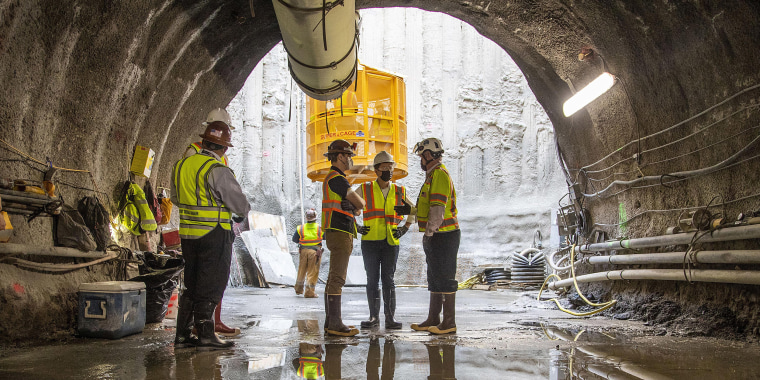
President Biden is being criticized by some Democrats because of his efforts to get bipartisan support for his infrastructure bill. This bill includes clean energy and climate change investments, but to some progressive and moderate Democrats, it is not enough. Representative Alexandria Ocasio-Cortez and Senator Michael Bennet are warning the President to not compromise too much on tax increases on the top 1% or investments aimed at combating climate change. The bill does not need Republican support to pass, and some are trying to press the leadership to move forward without their support. It could move forward on a party-line basis, however President Biden sees the importance of having bipartisan support. If he could get some of the moderate Republicans like Senator Romney, then maybe a few others will follow. Democrats are pushing to the get the bill passed, but it looks to be a long road ahead because of the President’s push for a bipartisan effort.

Image: Pete Buttigieg

https://www.nbcnews.com/

Design a site like this with WordPress.com
Get started