Ethnic Studies Added to List of California State University’s Graduation Requirements

Amid a social climate that is actively combating racial injustice, California State University, the largest four-year public university system in the United States, has added ethnic studies and social justice classes to its graduation requirements for students. Starting in the academic year of 2023-2024, the University of California system’s Board of Trustees will implement the first change major change to the system’s education curriculum in 40 years.

The California State University system’s new graduation requirement is planted in ethnic studies; however, students will have the opportunity to choose from classes focused on class, race, immigration, police brutality and reform, and other areas having to do with ethnic studies and/or social justice. CSU students must choose from one of four ethnic studies disciplines — African American studies, Native American studies, Latinx (Latino and Latina) studies, or Asian American studies — or a course focused in social justice. Each CSU campus will determine their specific requirements regarding ethnic studies and social justice course fulfillment for graduation.

Although the study of minority groups as a requirement has been a longstanding idea in the state of California, the push toward making ethnic studies and social justice classes part of graduation requirements was marked by the fatal police killing of George Floyd on May 25, 2020. The new requirement is opposed by California Faculty Association and several lawmakers who instead support AB 1460, legislation that restricts the graduation requirement to strictly the four ethnic studies disciplines and excludes courses outside of those disciplines, including those of other minority groups (such as Jewish studies) and social justice component courses.
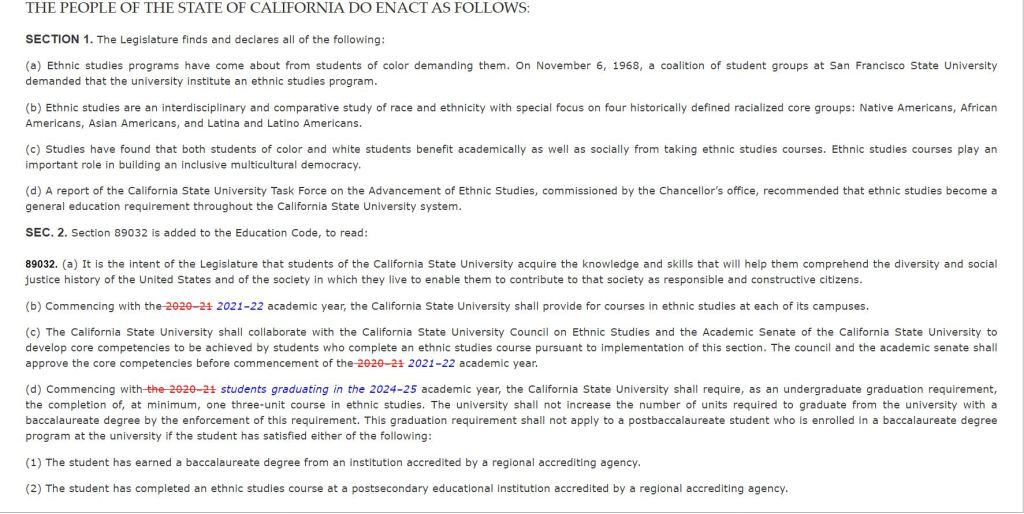
Sections one (1) and two (2) of California legislation AB 1460

Chancellor Timothy White expressed the California State University system’s decision to add ethnic studies and social justice classes to graduation requirements “will empower our students to meet this moment in our nation’s history, giving them the knowledge, broad perspectives, and skills needed to solve society’s most pressing problems” including the systemic marginalization of people of color.

Unemployment Aid is Expiring: What Next?

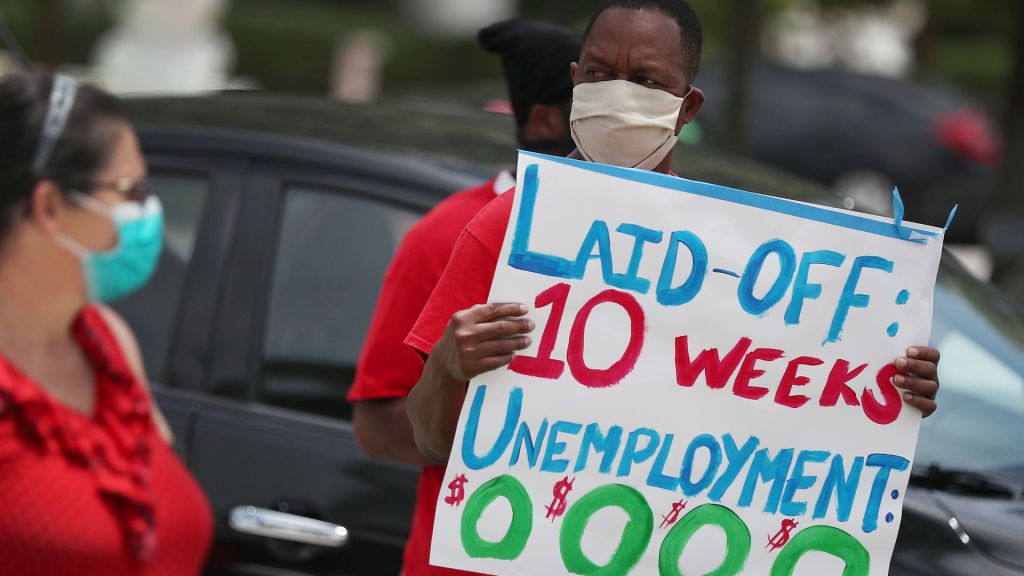
As more and more states across the country report thousands of new COVID-19 cases daily, the extra funds made available to support unemployed Americans through the pandemic have expired.

The Coronavirus Aid, Relief, and Economic Security (CARES) Act was passed by Congress in late March, and provided over $2 trillion in direct economic relief to Americans. A portion of these funds were dedicated to enhancing existing unemployment funds, adding a boost of $600 per week to the payments. With this boost expiring, unemployment payments could fall very short for those who are out of work in the wake of COVID-19.

While individual states have their own unemployment funding, the amounts vary greatly by state and may not be sufficient in economically protecting those who need it. In Arizona, the payments can range anywhere from $122 to $240 per week, which leaves many Arizonans short for rent, groceries, and other essential expenditures. These funds are available for 26 weeks per individual in Arizona, but that timeframe can be as short as 13 weeks in some states.

Some states are enacting their own legislation to increase the amount of money available in state-funded unemployment payments; both Hawaii and New Hampshire voted to increase their weekly payments by $100 per week, and Georgia is allowing those receiving unemployment to work part-time jobs as well. Not all states are taking on this issue, however; in Arizona, Governor Doug Ducey rejected proposals by Democrats to increase weekly payments, and instead deferred to Congress’ decision.

While many political analysts expect Congress to extend their unemployment provisions in light of the surge of COVID-19 cases in the US, it could take many weeks before the extension comes. Democrats in Congress are pushing for a continuation of the $600 per week program, while Republicans are vying for assistance in the amount of up to 70% of what an individual made in their most recent job; it’s safe to say that there is significant deliberation ahead before Congress makes a decision.

It is certain that Americans across the country are struggling financially due to COVID-19-related losses, and the enhanced unemployment payments were making a significant difference in the lives of the unemployed during these unprecedented times. While it is likely that Congress will vote to extend their stimulus program, it likely that the party divides will somewhat delay their decision.

A Lawsuit was filed to terminate the ballot measure of legalization of Marijuana in AZ

The lawsuit by the group Arizonans for Health and Public Safety argues that the initiative did not accurately describe the measure on its petition.

As the election in November is creeping up, voting on ballot measures is becoming heatedly debated as this year’s ballot measure included that of legalization of Marijuana in Arizona. Opponents now in a desperate act to stop the legalization of Marijuana have gone so far to file a lawsuit in which would question the ballot’s description accuracy and doing so would hopefully stop the ballot measure from going to be on the ballot’s in November. 

From AZ Central News the lawsuit, by Arizonans for Health and Public Safety which is a conservative advocacy and lobbying group that has donated $100,000 this year, has argue that the initiative’s backers did not accurately describe the measure in a 100-word summary including that of the petitions that voters signed for it to qualify for the general election. Former Congressman John Shadegg, one of the attorneys who filed the lawsuit quoted on saying “The proponent’s summary of the initiative is confusing and deceptive in numerous ways, beginning with the very definition of marijuana,”. The group contends that the summary should have included or at least expanded on a range of details in a 16-page initiative. Firstly it needs to be more accurate on if Marijuana was legalized it must include the description of Marijuana concentrate. Secondly the summary’s initiative is misleading when it comes to describing “ The protection of the employer and property owner rights” and not explaining well why the government can’t tax the Marijuana on top of the proposed 16%. Lastly, it needs to do better explaining how carrying marijuana under the age of 21 criminal offense will be changed to a civilian penalty, not a  felony.

Stacy Pearson, a spokeswoman for the initiative campaign Smart and Safe Arizona believes that there is no way to incorporate a 15-page document or even a 12-page document into a 100-word summary and is confident that the 100-word summary has included the principal provisions of the ballot measure. One ballot measure that was voted out that was similar in nature of the 100 word summary complication was in 2018. The Arizona’s Supreme Court said that 100-word summary of that initiative did not show the facts in the “principal provisions” when it came understanding the structuring when it came to funding education but there was no issue of it not being impartial and not needing to detail every provision of a ballot measure. The 100-word summaries required for each initiative are at the heart of lawsuits challenging the other three ballot measures as well that have been proposed for this year’s election. The other ballot measures proposals are changing the state’s criminal sentencing laws, raising pay for health care workers, and increasing taxes on higher income tax filers to boost funding for public schools. 

Arizonians have as well changed their opinion on the legalization of Marijuana this year than the last couple of years. This year, backers turned in around 420,000 signatures for the measure to qualify for the ballot, far more than the 237,645 required and more than were gathered by any other initiative campaign this year. As well, there was a poll released by the firm OH Predictive Insights in which showed 62% of Arizona voters support legalizing marijuana, up from 51% in December. Only 32% of voters surveyed said they oppose legalizing marijuana, down from 42% at the end of last year. Surprisingly this year that was different then the other years of voting for the legalization of Marijuana is that the demographics were more well-rounded support by suburbanites and parents with young children who before opposed legalization.

This election year has been probably one of the craziest of all time and as a well key election year for ballot measures that have not to gain much support in Arizona until recently. CIMA Law Group will keep track to see if this lawsuit will be successful or have the ballot measure to keep its journey towards election day, in which Arizonians will decide the fate of legalization of Marijuana in this year election.

Aerial Surveillance of the Black Lives Matter Protests

RC-26 aircraft Photographed by Staff Sgt. Marvin Cornell/United States Army

State surveillance of the Black Lives Matter protests over the past three months has caused controversy across the country. State national guards, local police departments, and the FBI have deployed aircraft generally reserved for high profile missions on civilian protests and surveilled over 15 cities protesting the murder of George Floyd. On June 2nd, the Drug Enforcement Administration was granted the authority to “conduct covert surveillance” on civilians. 

Since then, surveillance footage has been fed into “the Big Pipe,” a digital network managed by Homeland Security that can be accessed by other federal agencies and local police departments. According to Homeland Security’s “Privacy Impact Assessment,” the data may be stored for up to five years. Access to this surveillance data carries the potential for police to identify, track, and even arrest people who have attended protests, long after the protests have ended. For instance, on June 30th, police in Tempe, Arizona used drone surveillance footage as a justification for the arrest of three protesters organizing a “chalk walk” in support of the Black Lives Matter movement. 

However, in all, police departments aren’t the ones primarily requesting access to this surveillance footage. According to the New York Times, most requests come from Immigration and Customs Enforcement (ICE) and Customs and Border Patrol (CBP); both of which have had outsized roles in carrying out surveillance and putting down protests around the country. In West Virginia, for example, the state National Guard used RC-26 aircraft, which are generally used by CBP to monitor immigration and drug smuggling across the southern U.S.-Mexico border. CBP Director Mark Morgan testified on June 25th that, “CBP’s aircrafts can be equipped with cameras, radar and/or other technologies to support CBP components in patrolling the border, conducting surveillance as part of a law enforcement investigation or tactical operations, and respond to other significant incidents as directed.” The link between surveillance and targeted arrests against protesters has come even more into the spotlight this week, as armed CBP officers in Portland were seen forcefully seizing people who had been to protests “from the streets and detaining them without justification.” The state of Oregon is currently awaiting the outcome of a lawsuit against the federal government, meanwhile, the White House has mentioned plans of rolling out CBP officers and surveillance tactics in Milwaukee, Chicago, and other cities. 

  • Isabela von Dehl

Realtors and COVID-19: Successes and Advocacies

National Association of Realtors logo (PRNewsFoto/National Association of Realtors)

In COVID-19 society, countless institutions, organizations, and families across the nation have suffered major blows due to concerns for safety and society’s forced transformation to safely coexist with Corona virus for the time being. Among those organizations that are making active efforts to combat some of the effects of COVID-19 is the National Association of Realtors (NAR).

Due to the transformative role and meaning of the home amid the pandemic (such as being the restaurant, workplace, daycare, hub for hanging out and spending time, etc.), the real estate industry has since thus made up a large portion of the economy. Despite this, the COVID-19 pandemic has posed many unprecedented issues for realtors and their clients, sparking advocacy efforts by members in the real estate industry. NAR’s federal advocacy team has been working feverishly with Congress to guarantee that the interests of realtors and their clients are protected federally.

Among the successes and advocacies of the real estate industry include:

  • Independent workers being included in the stimulus package for the first time in history
  • Advocacy efforts at the state level such as:
    • Unemployment being considered in the stimulus package
    • The $1,200 stimulus check
  • The Families First Coronavirus Response Act, which requires certain employers to provide employees with expanded family and medical leave and paid sick leave for reasons directly related to COVID-19

As for consumers in the real estate industry, the NAR has an ongoing list of advocacy efforts at the federal level. Such efforts include, but are not limited to, the following:

  • On June 18, NAR sent a letter to the U.S. House of Representatives advocating the “Promoting Access to Credit for Homebuyers Act of 2020”, which supports homebuyers’ ability to enter forbearance and guarantee there is a market for underwritten loans given during the pandemic.
  • On June 17, NAR wrote a letter to the Director of the Federal Housing Finance Agency to express gratitude for actions taken in support of distressed homeowners including:
    • Translations of amended Mortgage Assistance Applications
    • Expansion of forbearance programs
    • Extension of moratoriums on evictions and foreclosures
  • On July 1, NAR wrote a letter to the Leaders of the House Transportation, Housing and Urban Development, and Related Agencies Subcommittee calling for increased funding for housing counseling services and fair housing activities. This letter was sent to avoid the negative economic effects of COVID-19 from impacting housing situations

In such unsure and changing times, NAR’s advocacy efforts are seeking to assist and support homeowners as well as realtors. For more information on NAR’s advocacy efforts toward COVID-19 relief, click here.

Students Get Relief: International Student Directive Rescinded

On July 15, the Department of Homeland Security rescinded the controversial July 6th directive that would have required international students to take at least some in-person coursework to stay in the United States. This directive was immediately and passionately protested not only by international students, but by universities and allies across the country.

The initial order was overwhelmingly opposed by those in higher education administration, and by students and alumni of American universities (both those affected by the order directly and those who know students who would be affected). Many university administrations felt that they were being forced to choose between public health and their students’ ability to stay in the country, and vehemently rejected that forced choice.

One of the most powerful displays of protest to the ill-advised directive was a lawsuit filed by Harvard University and Massachusetts Institute of Technology (MIT) to block the directive from being put into effect. Over 200 other higher-education institutions announced their support for the lawsuit, and many universities filed their own lawsuits against Immigration and Customs Enforcement (ICE), the government agency that initially announced the order. In the University of California’s lawsuit announcement, university president Janet Napolitano called the order “mean-spirited, arbitrary and damaging to America.”

As part of the Harvard and MIT lawsuit, declarations of need by students from the respective institutions were submitted into the court record. The declarations served to demonstrate the numerous personal, academic, financial, and professional reasons that many international students have to stay in the United States while studying– and to illustrate that “online” is not necessarily accessible to everyone abroad.

Many of the reasons cited by the students who submitted declarations centered around political, social, and economic instability, time differences between their homes and universities that would be incredibly difficult to navigate, lack of access to reliable internet, and deep social ties to their universities. The declarations demonstrated the significant impact that being forced out of the United States would have both on their education and on their lives at large.

While the Harvard/MIT lawsuit remains open (as do the 8 other lawsuits filed by other universities), it is believed that the substantial response in opposition to the order caused the reversal, and it is unlikely to be reinstated.

President L. Rafael Reif of MIT said it well in his response to the reversal: “These students make us stronger, and we hurt ourselves when we alienate them. This case also made abundantly clear that real lives are at stake in these matters, with the potential for real harm. We need to approach policy making, especially now, with more humanity, more decency — not less. We stand ready to protect our students from any further arbitrary policies. Our nation’s future is at stake.”

Closed Schools, Closed Funding

President Trump recently spoke with education stakeholders at the White House to discuss plans for reopening schools this fall amid the COVID-19 pandemic. Along with his declaration to push for the reopening of schools across the nation, President Trump threatened to cut federal funding for districts that don’t resume in-person classes. Despite the United States being in the lead for most reported COVID-19 cases and related deaths, President Trump is vehemently rejecting the advice and assertions of healthcare experts and the Center for Disease Control, whose guidelines he has described as “very tough and expensive guidelines.”

Parents, teachers, and students have expressed concern for the reopening of schools. Among those concerns are questions of safety, quality of learning, increased safety measures and precautions, and feasibility of children being at home select days of the week in the hybrid learning model (half in-person, half remote learning) being proposed. Dr. Deborah L. Birx, the White House’s coronavirus response coordinator, Education Secretary Betsy DeVos, Vice President Mike Pence, and Dr. Robert R. Redfield of the C.D.C. addressed plans to reopen schools, with discussion involving the Trump administration’s strong incentive to get states, as well as schools, to fully reopen.

President Trump’s declaration to cut federal funding for districts who don’t reopen their schools are accompanied by criticisms in a thread of tweets on Twitter that express neither support for compromise plans nor concern for the health and safety implications of reopening schools amid high rates of COVID-19 cases and deaths across the nation. President Trump made mention of countries like Denmark and Norway who have reopened schools; however, such countries have implemented measures that have allowed them to gain better control of the virus — some of which the U.S. have not fully implemented, resulting in the insurgence of COVID-19 cases and deaths.

Dr. Thomas R. Frieden, a former CDC director, advocated the safe reopening of schools, sharing:

“Here’s the bottom line. The single most important thing we can do to keep our schools safe has nothing to do with what happens in schools. It’s how well we control Covid in the community.”

Dr. Thomas R. Frieden, a former Center for Disease Control Director

Resetting the Local Economy After COVID-19: What’s Next?

On July 9th, the Institute for Local Government, CSAC Finance Corporation, and Kosmont Companies hosted a webinar highlighting the economic hurdles that local governments and private investors are facing in the wake of COVID-19. While the webinar focused in on California’s changing economic landscape, the panelists emphasized that the potential ramifications should be very similar across the United States.

As the country begins to reopen and recover economically from COVID-19, city and county governments are facing huge setbacks:

  • cities are bracing for nearly $7 billion general revenue deficits over the next two fiscal years
  • cities and counties most severely impacted are those with high dependencies on sales tax and hotel occupancy taxes (TOT)
  • US counties could face budgetary impacts as much as $144 bullion in lost revenue

Adaptability is going to be the name of the game for the foreseeable future, and as the nationwide financial blow has shown, nothing is the same as it was pre-pandemic.

Larry Kosmont and Ken Hira (the CEO and President of Kosmont Companies, respectively) shared the presentation time, and thoroughly outlined the shifting economy as it stands today; while COVID-19 remains at the forefront of national attention (especially as numbers have again begun to rise exponentially in many states), most companies and local governments are focused on making consumers feel safe and protected in their daily lives. For retail, hospitality, office, and restaurant industries, this is mainly focused on short-term customer retention– think marketing based on cleanliness and safety, rather than highlighting the individual company’s amenities.

Hira highlighted the clear relationship between the public and private sectors in terms of fiscal health; as retail and tourism have been hit hard by the pandemic, so have the incomes of the city and county governments. Because tourism and retail are projected to be the slowest industries to recover, city and county governments must use their resources wisely over the coming months and years to bounce back more quickly.

In the long-term, both Kosmont and Hira anticipate a sort of “land-use revolution” that will stimulate local economies, if done right. Gone are the days of massive, multi-store malls, and with the multiple big-anchor retail companies announcing bankruptcy due to COVID-19, it’s looking less and less likely that retail as we know it will remain a strong industry. E-commerce has gained huge traction during the lockdown of many communities, and the convenience of ordering online has never been more attractive. The future of mall spaces, according to Hira, includes more outdoor amenities, smaller shops, and integration of residential and office space. The key will be a city-square feel for the space, rather than a huge grouping of anchor retail stores.

Industrial space, too, will be a staple in this “land-use revolution.” As e-commerce and online grocery becomes more desirable, there will be new need for fulfillment, manufacturing, and shipping facilities that exist closer to residential areas. Now is the time to capitalize on those industrial needs, and for cities to use flexible zoning as leverage in bringing bigger industrial projects to their areas. Because city governments that rely heavily on sales tax and TOT for a large proportion of their revenue are facing huge budget deficits over the coming quarters, being able to attract industrial projects has never been more important.

Things are changing very rapidly for public and private economics. The resilience of the economy will be contingent on the public and private sector’s ability to adapt to the new needs of the people: e-commerce for both retail purchases and grocery, experiential retail shops when they do shop in-person, and safe and trustworthy hotel stays.

Reading Between the Lines: Los Angeles County’s Rent Stabilization Ordinance

Background

The Apartment Association of Greater Los Angeles filed a federal lawsuit against the city of Los Angeles on Thursday, June 11, 2020 for stripping protections from evictions due to the COVID-19 pandemic. The plaintiffs in the case (Apartment Association of Greater Los Angeles) argue that the city has violated landlords’ 5th Amendment rights against the government for taking property without compensation in the city’s efforts to prevent evictions against those who are unable to pay their rent due to the pandemic, either financially or health-wise. The lawsuit is also targeting Los Angeles City Council’s Rent Stabilization Ordinance to cease rent increases on more than 600,000 apartments that are covered by the Ordinance.

What is Rent Stabilization?

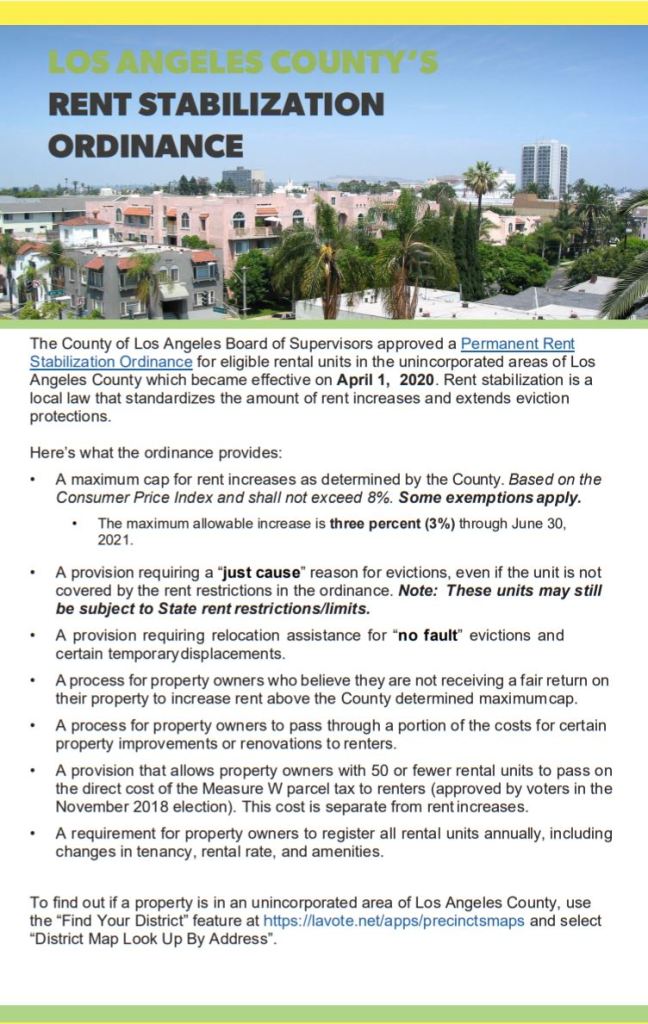
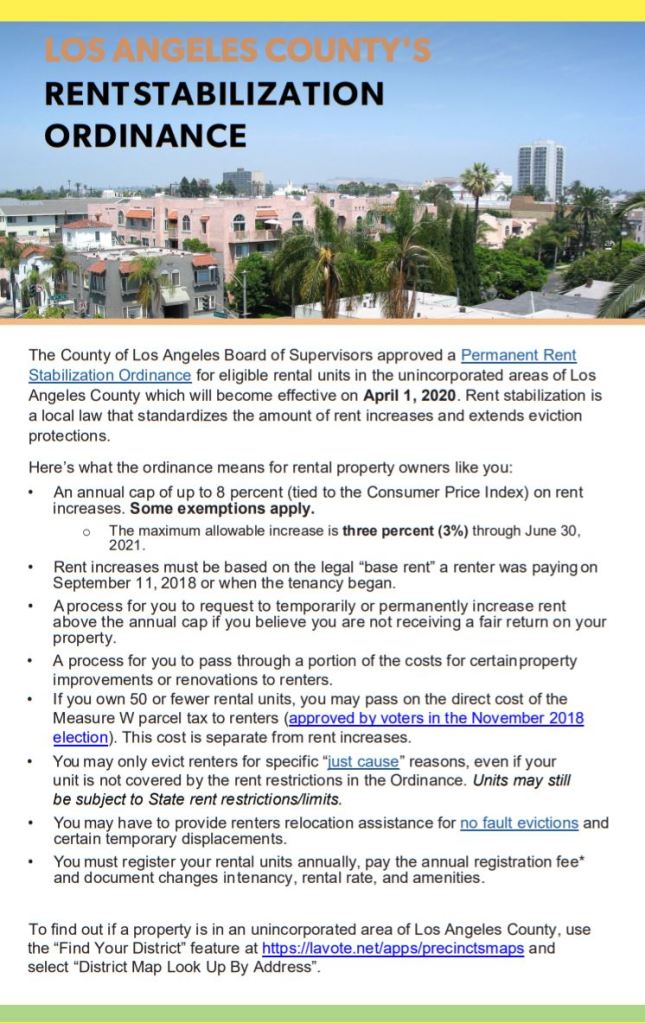
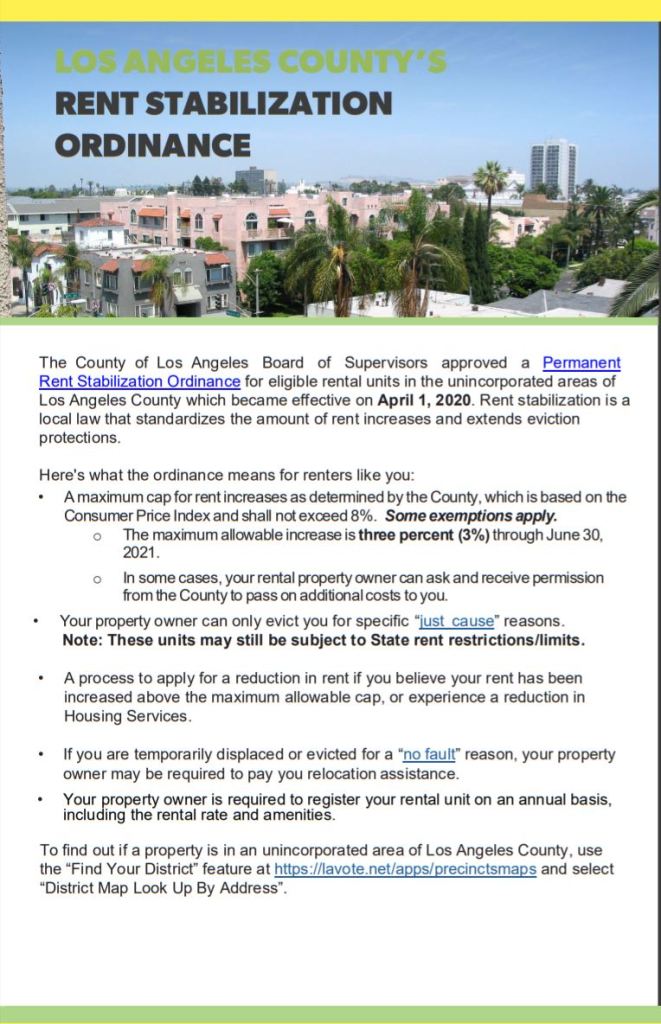
Rent stabilization are local laws that standardize amounts of rent increases and extend eviction protections. The County of Los Angeles Board of Supervisors sanctioned a Permanent Rent Stabilization Ordinance for qualified rental units in unincorporated areas (land regions not governed by a local municipal corporation) of Los Angeles County. Los Angeles City Council’s Rent Stabilization Ordinance took effect on April 1, 2020 and covers more than 600,000 apartments in Los Angeles County. The Ordinance includes:

  • A maximum cap for rent increases as established by the County
  • A “Just Cause” provision for evictions, even if the unit is uncovered by the rent restrictions in the Ordinance
  • A process to increase rent above the annual cap for property owners who feel they are not recieveing a fair return on their property
  • A process for property owners to pass down a portion of the costs for select property improvements and/or renovations to renters
  • A provision allowing property owners with a 50 or fewer rental units to pass on the direct cost of the Measure W parcel tax to renters. ***The direct cost is separate from rent increases
    • The Measure W parcel tax creates special tax for parcels in Los Angeles County Flood Control District, which covers the majority of Los Angeles County. The tax revenue pays for projects, infrastucture, and programs to capture and recycle rainwater and is paid for by property owners.
  • An annual register of all rental units, including changes in tenancy, rental rate, and amenities
  • A provision necessitating relocation assistance for “no fault” evictions and select temporary displacements
  • Click here for more information on Los Angeles’s Renter protections

Los Angeles County’s Rent Stabilization Ordinance’s Roll in the Anti-Eviction Lawsuit

If the Ordinance stands, the Apartment Association of Greater Los Angeles argues that it violates property owners’ and landlords’ rights under California and United States Constitutions and inflicts widespread economic damage on property owners and landlords in Los Angeles. Although the eviction bans and rent freezes put in place due to the COVID-19 pandemic protect tenants who cannot pay their rent due to heath reasons and job and wage loss (in direct relation to COVID-19), it also allows tenants to ignore their contractual obligations even if able to pay their rent. The plaintiffs are thus seeking a court order to invalidate eviction bans and rent freezes.

GENERAL INFORMATION
PROPERTY OWNERS’ INFORMATION
RENTERS’ INFORMATION

For a detailed overview on the Rent Stabilization Ordinance:

https://hcidla2.lacity.org/RSO-Overview

For assistance, the Los Angeles Department of Consumer and Business Affairs (DCBA) Rent Stabilization Program is providing essential services in the following:

Executive Order to Waive Environmental Reviews: How Could it Affect the Environment?

Nearly a month ago on June 4th, President Trump quietly signed an executive order that waived long-standing environmental review policies to expedite federal approval for development projects across the US. The administration justified this order by declaring that the United States is in an economic emergency brought on by COVID-19.

By declaring an economic emergency, the President is given the power to allow projects that might have significant environmental impact to move forward without observing the usual environmental reviews enforced by laws like the Endangered Species Act and the National Environmental Policy Act (NEPA). In his justification, President Trump stated that “Unnecessary regulatory delays will deny our citizens opportunities for jobs and economic security, keeping millions of Americans out of work and hindering our economic recovery from the national emergency.”

Laws like NEPA not only require developers to consider the environmental impact of a project, but also allow those living in or around the project area to speak out about how the project might impact their community. In 2019, NEPA provisions allowed Hawaiians to protest and eventually halt the building of a telescope on the summit of Mauna Kea, a mountain considered sacred to many native Hawaiians. Public discourse and environmental reviews are essential to maintaining natural spaces across the United States, and while the executive order may speed up project timelines for developers, it fails to protect the United States’ beloved landscape.

Once up and running, the projects will still have to comply with laws like the Clean Air Act and the Clean Water Act, but the process of getting the location and scope of projects approved will have been temporarily erased by the order.

Some critics argued that the order was issued during a time of great social unrest in order to somewhat mask the order from public opposition. While other presidents have used emergency action to bypass environmental regulations before (like President Obama did in 2014), no president has ordered such sweeping deregulation, which naturally has garnered much criticism.

On June 4th, the administration gave agencies 30 days to provide report of the projects that are going to be expedited. As that 30 days comes to its end, environmentalists and political analysis’s estimate that the number of expedited projects will be high.

Due to how sweeping and immediate the order is, it is very likely that President Trump’s directive will end up being contested in court. Until then, activists have taken to signing petitions, calling their representatives, and hoping that there won’t be too much damage done to the environment before the order can be reversed.

Design a site like this with WordPress.com
Get started