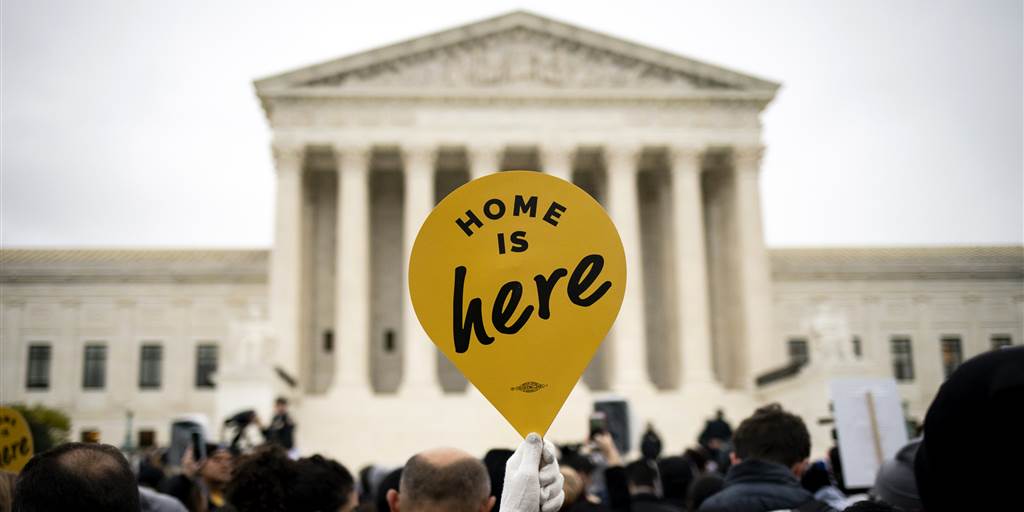
For nearly 30 years, immigrants from ten countries have been guarded by the “temporary protective status” program and allowed to live in the United States. In 1990, Congress established an Immigration Act under President George H. W. Bush. This legislation granted, “Temporary Protective Status (TPS) to foreign nationals from nations experiencing excessively difficult living conditions but who do not qualify as refugees. These conditions may be borne from natural disaster, political and economic instability, or violent conflict” (Leblang et al., 2019). This program has been a blessing for many immigrants who needed to escape emergency situations within their home countries. However, President Trump has argued that since these conditions are no longer imminent, those who immigrated to the US for these purposes should return home.
On Monday, the Ninth Circuit United States Court of Appeals ruled that President Trump’s decision to end legal protections for immigrants with “temporary protective status” was constitutional. Essentially, these individuals will be legally forced to leave the country and are subject to deportation if they do not comply. The rule does not apply immediately. Immigrants will be given until at least March of 2021 to leave the United States. It is unlikely, however, that the plaintiffs will accept the decision. They will most likely seek review, giving the case the potential to come before the Supreme Court. Additionally, if a new President were to take office in November, prior to the March 2021 deadline, they could choose not to enforce the deportation order.
If enforced, the repeal of temporary protected status for these nearly 400,000 immigrants could prove problematic for a number of reasons. First, many of these people have lived in the United States for decades and the United States feels more like home than their origin countries. These individuals have built lives for themselves, made friends, and fit into the cultural makeup of the United States. Second, deporting immigrants could lead to family separation for about 200,000 children with United States citizenships. Third, according to the United States Chamber of Commerce, many industries are currently primarily supported by immigrant laborers. Removing this large portion of the workforce could have adverse effects on the United States economy. Lastly, the Court’s decision itself sets the precedent that the federal government has the ability to decide when it is safe for immigrants to return to their home country and the ability to force them to leave, with the looming threat of deportation, whenever the American government sees fit (Jordan, 2020).
Jordan, M. (2020, September 14). 400,000 Immigrants Can Be Forced to Leave the U.S., Court Rules. Retrieved September 19, 2020, from https://www.nytimes.com/2020/09/14/us/immigrants-temporary-protected-status.html
Leblang, D., Helms, B., Iadarola, A., & Satpathy, A. (2019, January 17). Temporary Protected Status and Immigration to the United States. Retrieved September 19, 2020, https://www.cato.org/publications/research-briefs-economic-policy/temporary-protected-status-immigration-united-states
 CIMA Law Group Blog