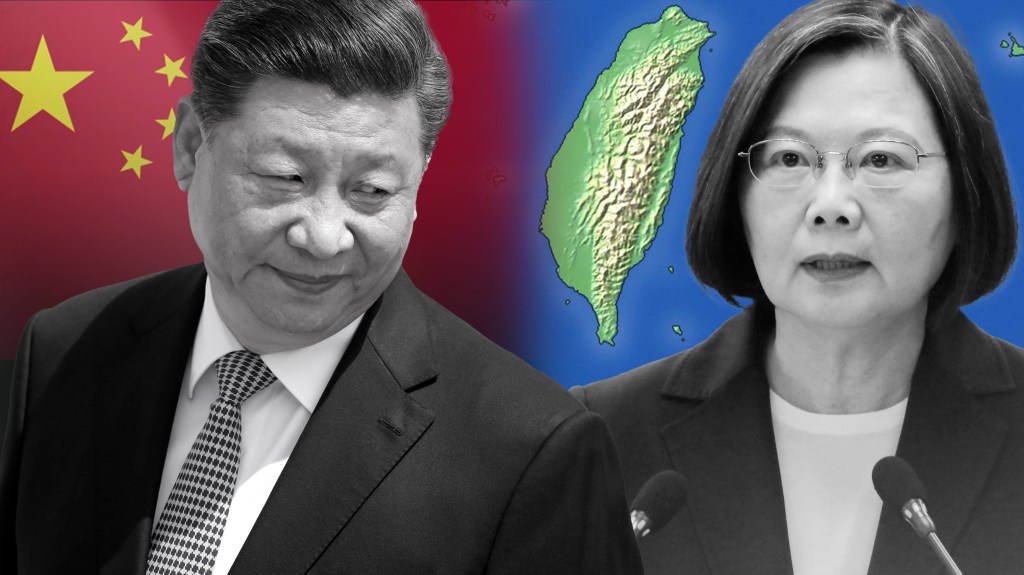
The China – Taiwan Conflict

           Tensions between China and Taiwan have recently escalated, but the conflict between these two nations has existed for many years. Experts suggest that the current administration’s exit of Afghanistan and its handling of the Russian – Ukrainian war has signaled to other nations, including China, that the U.S. lacks the political strength to stand its ground and defend its allies. China is allegedly taking advantage of the U.S.’s hands off approach to advance its political agenda on Taiwan. In light of the potential threat China poses for Taiwan, Taiwanese forces have reportedly started military drills near its Chinese coast.

The China-Taiwan conflict is centered on the dispute of Taiwan’s political status. The island of Taiwan was annexed in 1683 by the Qing dynasty of China and ceded to the Empire of Japan in 1895. The Republic of China, which had overthrown the Qing dynasty in 1911, took control of Taiwan on behalf of the Allies of World War II following the surrender of Japan in 1945. Ever since then, China has failed to recognize Taiwan’s independence and instead views it as a renegade province that must be united with the mainland by force if necessary.

Contrary to the current perceived hands off approach of the U.S., President Biden said the United States is committed to protect Taiwan in the case China decides to attack the sovereign nation. In the rise of tension between the two nations, after Speaker Nancy Pelosi signaled her intentions to travel to Taiwan, a top Chinese state-media commentator warned that the Chinese government would shoot down the aircraft carrying Pelosi if she were to travel to Taiwan. The fate of Taiwan is at stake and its future is unclear.

This blog post is part of the CIMA Law Group blog. If you are located in Arizona and are seeking legal services, CIMA Law Group specializes in Immigration Law, Criminal Defense, Personal Injury, and Government Relations.
Rogue Monkeys?

With all the recent news about monkeypox, this unexpected headline certainly caught my eye, but not for the reason you might expect— it reads, “Japanese city alarmed by biting, clawing, attacking monkeys.” That’s right, feel free to reread to make sure you understood me correctly.

In the southwestern Japanese city of Yamaguchi, monkeys have attacked 58 people since July 8th, targeting mostly children and the elderly. According to AP News, these monkeys are trying to snatch babies, some even sneaking into nursery schools to do so.

How are they executing these assaults you might ask? By sneaking up from behind and grabbing at your legs. Victims have reported scratches on their hands and legs and bites on their necks and stomachs. It has gotten so bad that a city official put out a statement explaining what to do when confronted by a monkey— “Do not look them in the eye, make yourself look as big as possible, such as by spreading open your coat, then back away as quietly as possible without making sudden moves,” just in the off chance that you’re visiting Japan soon and might actually need this information.

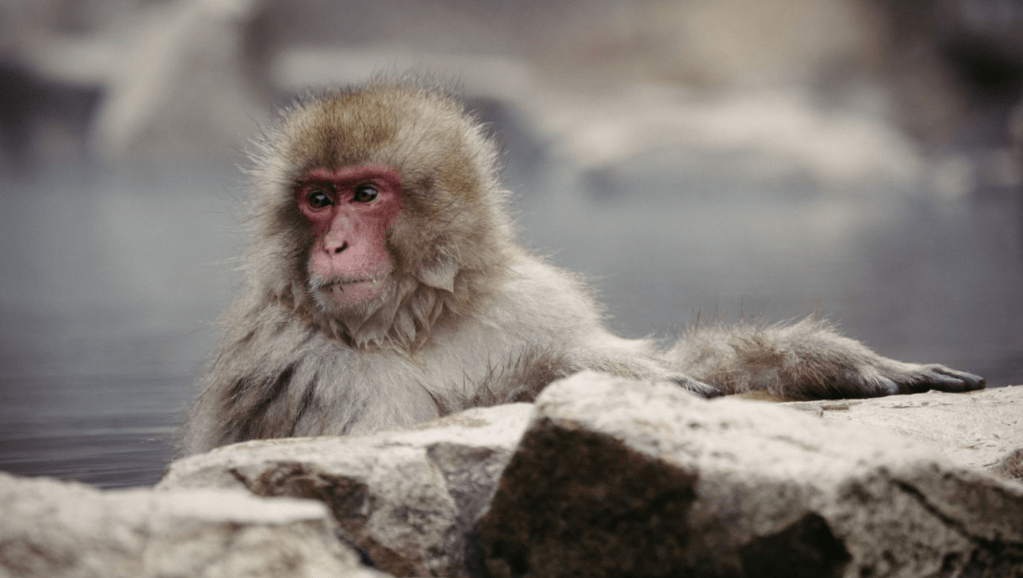
These monkeys, Japanese Macaques to be exact, are known for being pictured peacefully bathing in hot springs during the winter. Once considered endangered, their population has recovered and are now listed as least concern by the International Union for Conservation of Nature. I suppose that could be a good thing considering the city has hired a special unit to hunt the animals with tranquilizer guns. One four-year-old male monkey was just put to death after being identified as an assailant at a local high school.

According to CNN, Japanese macaques have coexisted alongside humans for some time now, but this is an unusual occurrence (that’s probably the least I would say). Mieko Kiyono, an expert in wildlife management and associate professor, says that these kinds of human-monkey conflicts have become increasingly common as the monkeys’ natural habitats are destroyed. The more humans and monkeys interact, the more monkeys lose their natural fear, and the bolder they can become.

This blog post is part of the CIMA Law Group blog. If you are located in Arizona and are seeking legal services, CIMA Law Group specializes in Immigration Law, Criminal Defense, Personal Injury, and Government Relations.
Senate Republicans block PACT

The Toxic Burn Pit Act (or PACT) was blocked Thursday by Senate Republicans who claimed the bill would open the door for more reckless government spending. The Military Burn Pit Act had initial support in the Senate consisting of 34 Republicans and all 50 Democrats just a few weeks ago. 

The bill was created in order to expand access to health services and disability benefits for veterans who were exposed to toxic smoke from the U.S. military’s use of burn pits to dispose of waste on foreign bases until the mid 2010’s. Rare cancers and respiratory illnesses were found to have been caused by fumes from burning everything from rubber, chemical waste, ammunition and human feces in the burn pits. Existing coverage for veterans exposed to toxins forces them to prove they got their illness during their time in service and take additional steps that ultimately limits their coverage. 

Comedian and outspoken advocate for military veterans, Jon Stewart held a press conference in front of Capitol Hill to show his outrage with Senate Republicans saying ,“Republicans haven’t met a war they won’t sign up for and they haven’t met a Veteran they won’t screw over.”

The bill returns to the floor for another vote on Monday according to Senate Democratic Leader Chuck Schumer. 

This post is a part of the CIMA Law Group blog. If you are in the Phoenix area looking for aid in criminal defense, personal injury, or immigration, contact CIMA Law Group today to get your worries squared away.

Are We Going Into Recession?

Based on historical trends, it is likely that the United States is heading into a recession or is currently in one. A common sign that a recession occurred or is occurring is marked by two consecutive quarters of negative GDP growth. Today, the Bureau of Economic Analysis has just released its data for the last quarter showing that the United States had another quarter of negative GDP growth.  This means that the United States produced less now than it did 6 months ago. 

Of course, two negative quarters is not the only indicator of a recession and it would not be official until the non-profit group called the National Bureau of Economic Research (NBER) declares it. However,  this wouldn’t be officially declared until after all data has been collected, which takes a considerable amount of time; in other words they wouldn’t declare we are in a recession until after the recession had probably ended. 

Another indicator that we may be going into another recession is that the Federal Reserve once again raised interest rates at unprecedented levels – another 0.75 percentage point increase!  This increase is meant to curb the still high inflation but will also in effect slow the economy down worsening the recession. 

Recessions typically occur once every ten years and last around 11 months meaning that we are likely to pull out of this one around November, assuming it started around January-February. Although since the last recession would have been the COVID-induced lockdown in 2020, having another one only two years later would be bizarre if going off of historical trends.

Meanwhile, President Biden is arguing that we cant be going into a recession when you look at record low unemployment rate and high foreign investment.  It is true that a 3.6% unemployment rate and a high job creation is unusual with a recession. A recession is normally characterized by large scale layoffs and high unemployment something, that does not appear to be clearly occurring with 327,000 jobs created in the US just last month. An issue with these numbers is that the amount of jobs created doesn’t say whether they are good jobs that people want or not. 

Ironically, the economy is somewhat a self-fulfilling prophecy. If the public believes a recession is likely to occur, they are likely to spend less and companies won’t produce as much, something that would lower GDP and cause the recession in the first place. Time will tell whether or not this truly is a recession however if it is, the good news will be that we are already most of the way out of it. 


This blog post is part of the CIMA Law Group blog. If you are located in Arizona and are seeking legal services, CIMA Law Group specializes in Immigration Law, Criminal Defense, Personal Injury, and Government Relations.

No More Green Sprite Bottles

After 60 years of seeing green Sprite bottles at the store, this will no longer be the case.

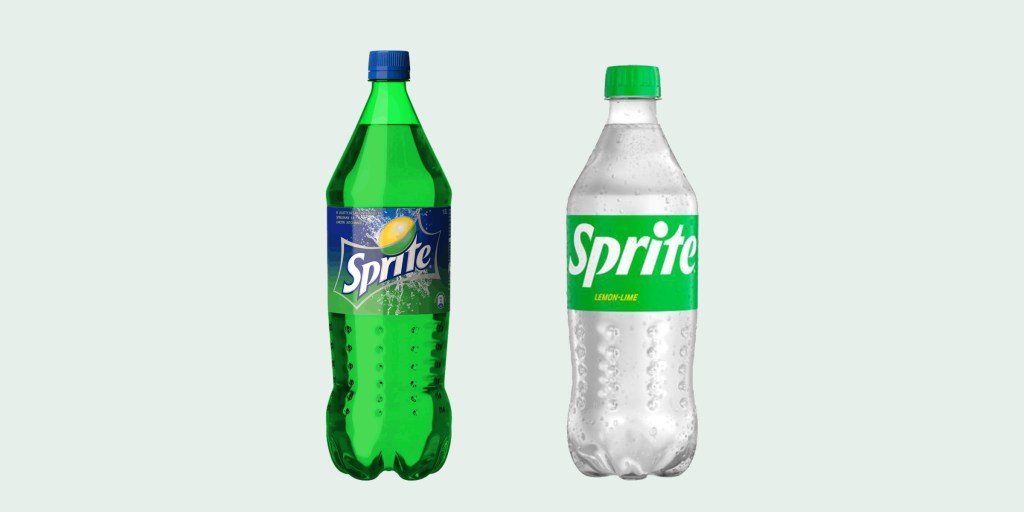
Coca-Cola has decided to become more environmentally responsible by changing the color of their Sprite bottles. The green plastic is an issue as it contains a non-recyclable additive, green polyethylene terephthalate. By taking away any form of color on the plastic bottle, it improves the quality of the recyclable material

This new look will begin selling in stores starting August 1. Along with a new bottle, customers will also notice a new and improved packaging design, but don’t worry, the signature Sprite green will now be used on the label instead.

Coca-Cola explains, this small step will result in a reduction of roughly 20 million pounds of plastic waste in comparison to 2019.

This blog post is part of the CIMA Law Group blog. If you are located in Arizona and are seeking legal services, CIMA Law Group specializes in Immigration Law, Criminal Defense, Personal Injury, and Government Relations.

Gasoline to Winter Fire

While Russia continues their hot war in the beseiged country of Ukraine, they must fight on another front– a cold war sparked with gasoline against Europe. 

The European Union has recently finalized a deal on regulating emergency gas cuts this upcoming winter despite energy cut-offs from Putin. 

The surge in natural gas prices has already adversely affected the currency of the Euro, falling 0.85% compared to the US dollar. Yet, the EU remains confident in facing Russia’s looming winter without backing down. 

There are a few exemptions to this regulation however– states not directly linked to Europe’s gas pipelines such as Ireland, Cyprus and Malta will be allowed an exemption; along with the Baltic nations not plugged into Europe’s electricity grid whom are also reliant on foreign gas. Additionally, countries can petition to be exempt if they reach certain gas storage goals, have seen an increase in 8% in the past year, or if their dependence is deemed too critical. 

It may seem that this is far from a form of warfare, but it is in actuality a highly risky one. Germany has already warned that a reduction of 15-20% on gas reliance is necessary to avoid major gas shortages in critical junctures such as hospitals. Because Europe and Russia (along with the entrie globe) are so interconnected, it is necessary for the EU to train itself to be less dependent– to find alternative energy sources or find the means to run on less gas. 

But this is easier said than done. It is a battle wedged by two opponents who already have their swords stuck in one another– the question is how much of the blade can be pulled out before it becomes fatal? 

According to the IMF, an embargo from Russia would not only surge inflation, it would ignite recessions in Central and Eastern Europe– particularly in Germany.

There are alternrtaives– liquid gas from Asian markets being redirected by the United States can aid Europe; as can a new pipeline opened in Azerbaijan and flowed through Turkey. Similarly, Putin won’t have a market to sell his oil to, lest he open a pipeline through Siberia into Russia which would be both costly and absurd. 

Nevertheless, winter warfare is on the horizon. It looms cold and unforgiving, eternal night that would surround the continent in pitch darkness. The only light to be seen in the distance– a flame, singular and desolate, burning off the gasoline both sides seek to extinguish for the other. 


This blog post is part of the CIMA Law Group blog. If you are located in Arizona and are seeking legal services, CIMA Law Group specializes in Immigration Law, Criminal Defense, Personal Injury, and Government Relations.

Space Travel with the Tiny Water Bear

Biomimicry is the science of using systems in nature to solve problems. When biomimicry is put into use, the structures and patterns of nature are translated into different materials to approach the issue as natural selection had.

Here are some examples of biomimicry put into use:

  • Velcro mimics burs on a dog
  • Humpback whale fins inspired wind turbines
  • A vehicle’s glass breaks into a web pattern to mimic the strength of a spider web
  • Winter coats are stuffed with down feathers to mimic ducks

VINE, or Virtual Interchange for Nature-inspired Exploration, is a part of NASA’s Glenn Research Center that focuses on applying the concept of biomimicry to NASA’s goals. This mostly focuses on applying natural structures to physical structures. Recently, however, scientists have used the mimicry of biological systems to overcome long-standing hurdles of space travel. The tardigrade, a creature about the size of a dust mite, has provided some surprising insights on the topic.

The taligrade, also known as a water bear.

The taligrade produces a number of proteins that allow it to survive extreme environments, particularly those with high radiation. By mimicking the taligrade, food crops may be able to withstand these large radiation doses. Scientists have already inserted the gene for this protein into human cells and found that they have higher resistance to X-rays and peroxides.

This is a CIMA Law Group blog entry. CIMA Law Group is located in Arizona and specializes in Immigration Law, Criminal Defense, Personal Injury, and Government Relations. If you live in Arizona and need legal assistance CIMA Law Group can help.

Russia to Withdraw from the International Space Station

The International Space Station (ISS) will no longer be manned by Russia after 2024, according to an announcement made today . Russia’s space agency, Roscomos, announced it will be focusing its efforts to build Russia’s own space station. Officials cite outdated equipment and safety concerns as the reasons of Russia’s decision to depart from the ISS.

A crew swap agreement  was reached between NASA and the Russian space agency less than two weeks prior to this announcement. This deal would entail two American astronauts would launch on a Russian rocket, and two Russian cosmonauts would launch in Florida on a US spacecraft. It’s still unclear at this point if Russia abandoning the ISS will affect the existing agreement.

The Russian Orbital Segment and the US Orbital Segment, the two components that make up the International Space Station, are interdependent. “The Russian segment can’t function without the electricity on the American side, and the American side can’t function without the propulsion systems that are on the Russian side”  said former NASA astronaut Garrett Reisman. In order to continue utilizing the ISS after Russia’s departure, NASA has been testing new techniques to maintain the ISS in its proper orbit without the need of the Russian Orbital Segment.

The United States and Russia’s cooperation came to an end, in the eyes of many, with Russia’s departure from the International Space Station. What effect Russia’s choice will have on the ISS’s future remains at large.

This is a CIMA Law Group blog entry. CIMA Law Group is located in Arizona and specializes in Immigration Law, Criminal Defense, Personal Injury, and Government Relations. If you live in Arizona and need legal assistance CIMA Law Group can help.

The Russia-Iran-Turkey Relationship

Last week, Russian President Vladimir Putin traveled to Iran, only his second international trip since he launched the invasion into Ukraine. Since February 24, Russia has achieved pariah status in the West, and many analysts believe that the Iran visit was a way for Putin to show to the world the he does have allies. Putin, the leader of the most heavily sanctioned country in the world, met with Iranian President Ebrahim Raisi, the leader of the second most heavily sanctioned country in the world, on issues relating to unblocking Ukrainian grain exports via the Black Sea and the ongoing civil war in Syria. Raisi also hosted Turkish President Recep Tayyip Erdoğan.

All three countries have complicated relationships with one another. Turkey and Russia are on opposing sides in Syria and in Libya; they are competing for influence in the South Caucasus; Turkish combat drones have been supporting the Ukrainian military. As for Iran, it’s competing with Russia in global energy markets. Erdoğan has so far refused to join in on Russian sanctions and offered to play a mediating role between Moscow and Kyiv, including assisting in brokering a deal to restart shipments of blockaded grain in Ukraine.

The talks between Putin and Raisi brought forth a $40 billion agreement between Iran’s national oil company and Russia’s state-run gas company Gazprom to develop Iranian gas fields and build new pipelines for export. However, there is skepticism as to whether anything will materialize due to Iran’s heavily restricted economy. The US has imposed secondary sanctions that place firms or individuals that deal with Iran at risk of being penalized. Investment in Iran’s energy sector would trigger enforcement action from the US that would jeopardize Russia’s continued energy exports to Europe and to other countries. In recent months, there has been tense energy competition as they desperately find buyers for their sanctioned oil. With the West barring Russian oil, Moscow and Tehran have been competing for energy exports to China. And in regards to the Iran nuclear deal, Russia asked for guarantees that protect its own national interests, angering many in Iran.

As is the case in international relations, there is always more to the story than what you see in the immediate news headlines. Russia and Iran do have some common goals in the Middle East and both claim to be unfairly targeted by the US and its allies. Nevertheless, they are both vying for influence in the region and competing in the energy markets. There are limits to how far they can go.

This blog post is part of the CIMA Law Group blog. If you are located in Arizona and are seeking legal services, CIMA Law Group specializes in Immigration Law, Criminal Defense, Personal Injury, and Government Relations.

How hot is too hot for Arizona?

In recent days Arizona has been undergoing an excessive heat warning for most parts of the states. It is important to understand what a heat stroke looks like and what to do to prevent it.

For the Maricopa County everyone should stay inside between the hours of 12pm-6pm, as these are the hottest times of the day to be outside. But if you are to go out during these times remember to drink lots of fluids, especially water. Take many breaks and limit the time of being outside. It is also said that dark clothing attracts more heat so beware that lighter colors and clothing will reduce heat intake.

Last week Maricopa, Yuma, Pinal and many more counties were advised of excessive heat coming in throughout the day and reach at a potential 116 degrees. On this day a UPS driver collapsed on the doorstep of homeowner Brian Enriquez in Scottsdale. As the UPS driver bent down to drop off a packet for the homeowner he immediately collapsed and was unresponsive for a minute until he slowly started to wake up.

More than 4 other states are under excessive heat advisory as of now, including, Texas, Kansas, Missouri, Louisiana and Arizona. This is putting at least more than a 100 million people under heat warning. To those in these areas it is to be understood that water, light clothing and much needed AC must be apart of your daily routine while these days are in affect.

If you or someone you know has been in an accident and need assistance, CIMA Law Group is here to help. CIMA specializes in personal injury, criminal defense and immigration and are here to provide to you the quality assurance you need.

Si usted o conoce a alguien que necesitan asistencia, CIMA grupo de abogados está aquí para ayudar. CIMA se especializa en lesiones personales, defensa criminal y inmigración y están aquí para proporcionarle la garantía de calidad que necesita.

Design a site like this with WordPress.com
Get started