Remembering Vincent Chin

 Forty years ago, Vincent Chin was murdered. Forty years on, his memory remains both in remembrance and in chilling parallel to hate crimes today.

In 1982, Chin was approached by two men in the city of Detroit where an altercation broke out and Chin was left mortally wounded by a baseball bat. The assailants had attacked China because he was Asian and blamed him for a sweep of layoffs in the automotive industry due to the rise of Japanese imports. Chin was not Japanese, but rather an immigrant from China. But this didn’t matter to his attackers, who beat him with the savageness of a single-minded view. 

You would think that after four decades, the memory of Vincent Chin would serve as a warning against blind prejudice against Asian Americans and the consequences it brings, but this has not been the case. The start of the new decade has been wrought with anti-Asian hate crimes brought on by rhetoric surrounding the COVID-19 pandemic. 

Many Americans, including the previous administration, had used terms such as “kung-flu” and “Chinese Virus” that portrayed the Asian continent as a source to be feared and hated. This of course fueled a racist generalization of all Asian-Americans and a rise in violence against random people all because of their ethnic origin.

According to the Department of Justice, more than 8,000 bias-based offenses occurred against Asian Americans in 2020— two of these incidents involving old men who were killed after being assaulted in public; along with the shooting of three Asian women in KoreaTown, Dallas. 

Errors such as these are why it is more important than ever to remember Vincent Chin’s memory, not because it was a problem of the past– but because it is a concern for our present and future as a nation. Our country bears as much pride for itself just as quickly as it forgets history and allows it to repeat once more.   Asian Americans are not to blame for the pandemic nor are they to be discriminated against and if we allow such troubles to repeat, then we will never heal.

This pandemic has brought us apart in many ways, but it is with shame and no surprise that it can tear at such fragile threads as the underlying racism in this country.

Remembering Vincent Chin is to act towards a better and more just America where rhetoric falters to divide us. As vaccinations return us to a somewhat normal life, we must ask ourselves– will this anti Asian American sentiment go away or was it always there to begin with?

This blog post is part of the CIMA Law Group blog. If you are located in Arizona and are seeking legal services, CIMA Law Group specializes in Immigration Law, Criminal Defense, Personal Injury, and Government Relations.  

The Sustainability of the Sanctions Placed on Russia

Ukraine’s allies have imposed sanctions on Russia in an effort to damage Russia economically. Sanctions are penalties inflicted by one government on another to deter hostile behavior or violations of international law. But will these attempts to support Ukraine be able to last the duration of the war?

The US intends to impose an embargo on all Russian crude oil and gas imports in order to help Ukraine. Similar actions are being taken by European countries and the European Union; the United Kingdom is phasing out Russian oil imports by the end of 2022, while the EU has indicated that Russian coal imports will be reduced by this August. And as it is evident in the prices of gas and oil around the world, Russia is not the only country paying for these sanctions.

While there is widespread support for Ukraine from residents and countries around the world, this solidarity is not limitless. National governments and individual consumers will eventually succumb to the economic pressures imposed by these penalties.

This is evident in Russia’s crude oil exports increasing in the month of May. According to the International Energy Agency, Russia increased its exports from 130,000 barrels of crude oil a day in April to 10.55 million a day in May.

These price spikes as a result of these penalties can’t be sustained permanently in capitalistic systems that can’t tolerate external forces since the system will collapse under pressure.

This is a CIMA Law Group blog entry. CIMA Law Group is located in Arizona and specializes in Immigration Law, Criminal Defense, Personal Injury, and Government Relations. If you live in Arizona and need legal assistance CIMA Law Group can help.

Brittney Spears Granted a Restraining Order Against Ex-Husband

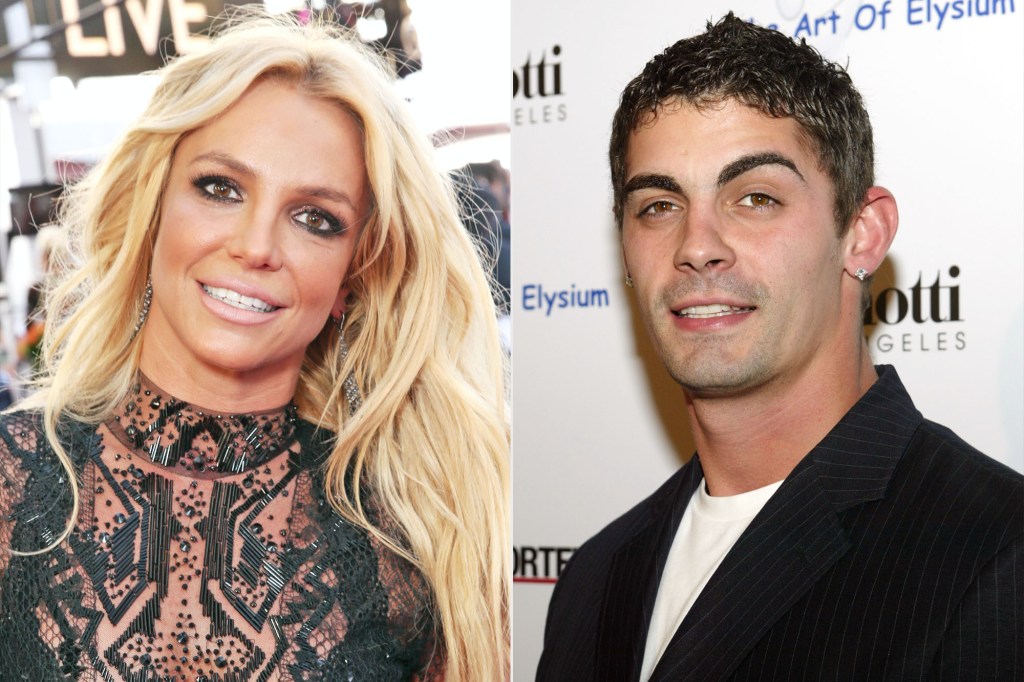
Brittney Spears’ ex-husband, Jason Alexander, broke into her home while being on livestream and is now facing charges.

Alexander has plead not guilty to the court on the charges of misdemeanor trespassing, two misdemeanor counts of battery, and misdemeanor vandalism. This is all a result of Alexander hopping a wall at Spears’ mansion that then led to him live-streaming as he wandered through her home without her permission. However, he has already been charged with felony stalking, and was a wanted man on a felony theft warrant in Napa County.

The trespassing all took place hours before Spears was supposed to get married to Sam Asghari. As Alexander was live-streaming, he was showing viewers all of the wedding decorations that were being set up as he trespassed Spears’ home.

As a result, Alexander is now currently in jail with a bail set to $100,000. As well as now receiving a restraining order from his ex-wife, Brittney Spears. Which is said to be effective for three years.

This blog post is part of the CIMA Law Group blog. If you are located in Arizona and are seeking legal services, CIMA Law Group specializes in Immigration Law, Criminal Defense, Personal Injury, and Government Relations.
Missing in the Amazon

Ten days ago British journalist Dom Phillips and Indigenous expert Bruno Pereira went disappeared while returning from a four-day reporting trip in the Javari region of the Amazon. Some of their belongings, including clothes and a laptop, were found on Sunday. Phillips had been living in Brazil for over ten years and was working on a book about the Amazon. As a specialist on tribes in the Amazon, Pereira was introducing him to his contacts and friends. Illegal fishing and poaching has become widespread. Cocaine trafficking is well-known, as the region sits right on the border with Peru and Colombia. It was this conflict that Phillips and Pereira were documenting.

Devastating fires and sweeping cuts to indigenous protection budgets have led to increased tensions between the Brazilian government and tribes over the last few years. The disappearances have brought new attention to the dangerous environmental policies under President Jair Bolsonaro. Deforestation of the forest has risen to a 15-year high, the indigenous protection agency FUNAI has been weakened, surveillance has fallen, as too have fines doled out to those who break the law. The response by the Brazilian government to this situation has angered the families. Last week, Bolsonaro seemed to blame the two men for venturing into a dangerous area of the country. Just today Brazil’s ambassador to the UK apologized to families for incorrect claims that bodies had been found in the search operation. Roberto Doring, deputy head of mission at the Brazilian embassy in London, called the families on Monday to tell them that bodies had been found.

Police in Brazil say they have arrested a second man in connection with “the alleged murder” of Phillips and Pereira.

This blog post is part of the CIMA Law Group blog. If you are located in Arizona and are seeking legal services, CIMA Law Group specializes in Immigration Law, Criminal Defense, Personal Injury, and Government Relations.

Five Ways to Predict an Election

Are these experimental polling questions pointing to a Trump victory? >  News > USC Dornsife

We are currently in the midst of primary election season where the winner(s) of the primaries will move on to the general election. Most states have what is called a closed primary, where voters can only choose between candidates of their own preferred party. Conversely, there is what is referred to as an open primary, where voters pick between all candidates regardless of party preference and the top two move on to the general election. Regardless of the primary system used, there are clear methods of determining who the winners of each will be.

Method 1: Polling

This method is the most prominent indicator of public perception of candidates from the general population. Sources such as fivethirtyeight and RealClearPolitics have easy to read and compiled polls from a variety of sources to demonstrate which way the public is leaning. However, the drawbacks are that not all polls are trustworthy and the way a question is asked can strongly influence the respondents answer. Most importantly, polls are expensive to conduct so, while they are helpful in determining bigger races closer to election day, they are rarely used during the primary season. 

Method 2: Track Fundraising:

A study that conducted the 2020 race for the house of representatives determined that 87% of the victors had outraised their competitors. This may be in part due to finance enabling candidates to have more name recognition. The more name recognition a candidate has, the more likely they are to win their primary. With more funds available to promote TV ads and other advertisements, the more money a candidate is able to preclude, the more a candidate can get name recognition and win the nomination then election. Funds raised by candidates for an election is public knowledge and can be found at FEC.gov for federal positions and your state government website for local races. This knowledge is required by law and can be used as a good indicator of who will win the election. 

A drawback of this method is that it doesn’t take into account dark money, money that is spent on attack ads or other promotional material that is not financed by the candidate themselves but rather political action committees (PACs). This money is not as regulated in the government and it makes it more difficult to trace exactly how much money a candidate has in their campaign. For this reason, be sure to look at all groups working towards the election, not just the campaign themselves. 

Method 3: Party Identification 

This method is more common knowledge and does not apply closed primaries. Regardless of the position being sought after, 80% of voters during the 2020 election voted straight-ticket, where the voter voted their preferred party all the way down the ballot. This means that if a district leans heavily Democratic or Republican, the winner of the general election is most likely going to reflect this. This can only be used to predict the general election but also can help predict the winners of an open primary as well. 

In an open primary, all candidates, regardless of party identification, run against one another and the top two advance to the general election. In this scenario, one Republican and one Democrat are likely to be in the top two even though it is an open primary. The reasoning behind this is that if there is only one option for Republicans in a heavily Democratic area, all the Republicans will vote for the same person, even if they don’t know who they are, based purely off of party identification. Then, with the Democratic voters split amongst their options, a republican will inevitably end up in the top two. The same results can be expected the other way around. This phenomenon can help explain some of the results that appeared during California’s open primary on June 7th. It is important to note that these candidates are unlikely to win the general election even though they may have won the primary.

Method 4: Incumbency Advantage

A study on the US House of Representatives 2018 race, found that incumbents won their seats 91% of the time. This is due in part to name recognition and people already seeing them in the role. Additionally, the incumbent will start off with a stronger fundraising campaign and endorsements from their friends already made in office. A combination of these factors makes them hard to beat.

Method 5: News/Media

The newspapers are constantly referring to new policy positions or scandals. If a new one emerges, this could strongly sway opinions about a particular candidate and could override any preexisting notions. If one candidate seems to be doing well in the polls and fundraising but then a new scandal emerges, the negative coverage could undo all progress made. Therefore no method is perfect due to rapid changes and the news/media must be monitored in order to have an up-to-date picture of election standings. 

A combination of all of these factors contribute to a winning campaign. Despite the relative ease of finding out information about a candidate and their following, the public is often unpredictable. It’s important to remember that a voter’s decision is often not after weeks upon weeks of consideration but rather a snap decision based on one hours of one day a year.

This blog post is part of the CIMA Law Group blog. If you are located in Arizona and are seeking legal services, CIMA Law Group specializes in Immigration Law, Criminal Defense, Personal Injury, and Government Relations.
Understanding the Second Amendment

As more cases of school shootings occur around the country, the nation reflects on solutions to this issue. The main concern when assessing these options is the constitutionality of these approaches. Gun control policies are constantly being challenged as it is argued that they violate the right to bear arms as stated in the Constitution. Different interpretations of the wording of the Second Amendment have been offered, challenging whether such right is given as an individual right or as a collective right solely given to state-organized militias for protection against the federal government. I suggest that the second amendment stands as both an individual and a collective right. It creates an individual right to keep and bear arms to satisfy a collective right to form part of a state militia group.

The second amendment is comprised of two elements: a prefatory clause (a well-regulated militia being necessary to the security of a free state) and an operative clause (the right of the people to keep and bear arms shall not be infringed).

In the English language, the prefatory clause is independent of the operative clause and does not enhance or complement the operative clause unless the operative clause is ambiguous. Admittedly, the operative clause is, with no doubt, unambiguous. It is clear that the right of individuals to bear arms is not to be impaired. However, without its connection to the operative clause, the prefatory clause is the one that becomes ambiguous. It is ambiguous not in the sense that it is an unclear statement, certainly a militia is necessary to protect the people from the tyranny of a federal government, but without its connection to the operative clause its purpose of being included in the amendment is uncertain. If the framers intended to grant all individual citizens, the right to keep and bear arms, indistinctive of whether they belonged to a state militia or not, then stating the need for a militia is irrelevant when the intention of the bill of rights was to list out the rights of the people. To propose that the prefatory and operative clauses are independent of each other is to suggest that the prefatory serves no function in the bill of rights other than as a commercial break to remind the readers of the importance of a militia. On the contrary, the operative clause is not a commercial break, nor can it be disposed of as something of no worth. Chief Justice Marshall in Marbury v. Madison argued that it cannot be presumed that any clause in the constitution is intended to be without effect.

The prefatory clause enunciates the reason for the operative clause. Namely, the need for a state militia to secure the freedom of the people against the federal government is the reason why the individual right to keep and bear arms is given to the people. The Second Amendment does not create an individual right to own weapons for seemingly any lawful purpose, as the individual rights theorists advocate. An additional connection exists between the two clauses; the term “militia” in the prefatory clause and the phrase “bear arms” in the operative clause are both military terms. “Militia” refers to a military force formed by civilians for emergency purposes. The general concern the states had when forming the federal government was the fear of the federal government suppressing the power of the states. It is no surprise that to guarantee the freedom of the states and of the individuals from an oppressing and tyrannical federal government, the framers drafted an amendment that guaranteed both the state and the individual the right to own and carry weapons for protection against the federal government.

The phrase “bear arms” originates from the Latin term “arma ferre,” which means “to bear equipment of war. The phrase “keep and bear arms” was read as referring to the possession and use of weapons in connection with militia service. The word “bear” does the lion’s share of the work in this regard. Adherents to the militia-based reading of the Second Amendment argue that the phrase’s plain meaning is military. The term “bear arms” is a familiar idiom; when used unadorned by any additional words, its meaning is to serve as a soldier, do military service.

The prefatory clause and the connection between both clauses refer to a collective right, while the operative clause refers to an individual right. The term “the people” is used throughout the constitution, except within the preamble, to make mention of citizens as individuals. For example, the Fourth Amendment guarantees the people the right to secure their property against searches and seizures. Property is owned individually and not collectively, thus constituting the Fourth Amendment as an individual right while consequently giving the term “the people” an individualistic meaning. Wherefore, the right to keep and bear arms is indeed an individual right, which nonetheless does not mean that the right is given to all people without purpose.

To understand the meaning and purpose of the wording of the second amendment more clearly, we can refer to the country’s history and traditions. Many gun advocates suggest that the country’s tradition shows a long-standing history of gun ownership. Individuals certainly possessed guns in the past for hunting and self-defense purposes, but it was not until the threat of English forces that the right to own guns was acknowledged. During the 18th century, colonists became weary of the increasing number of English militaries on their land and feared the threat of a standing army. Their fears became a reality during the Boston Massacre, when English soldiers killed 5 men. Later, during the Revolutionary War, it became clear that armed militias were vital to preserving their free state. Colonies, however, did not have the economic means to provide weapons to their militias. Because of this, it became the responsibility of all men to own and possess their own weapons and to be ready to report for duty when called upon to defend the land and their rights. There was an inherent understanding that the individual right to own and carry weapons was directly connected to their right to be part of their local militia. Without the right to own guns, they would have been unable to belong to their local militia and defend their land from a standing army. The responsibility of owning a gun, at least at that time, would have had no purpose were it not for the threat the English military posed to their freedom and security.

The right to own weapons for the preservation of a free state did not exist without regulations. At the time, the larger cities in the colonies passed laws inhibiting the use of firearms as a means of protection for individuals’ homes. New York City, Boston, and Philadelphia, among other cities, placed bans on the discharging of weapons within their cities. New York prohibited discharging guns 3 days before and after New Year’s. Boston passed a statute banning the firing of any weapon. Philadelphia banned the discharge of weapons unless one received a permit from the city. Other laws similar to these were enacted in smaller cities during the time of the 13 colonies.

This hybrid right allows for individuals who are part of a state-organized militia to own and possess weapons in an individual capacity for the protection of their freedom and the freedom of the state against the federal government. This right implies that individuals have the right to belong to their state militia, but not without regulations from their state. The states also have the power to regulate the weapons owned by members of their militias, which are only to be used for protection against a tyrannical government. The second amendment does not grant individuals the right to own guns for hunting or for protection against other individuals. Instead, law enforcement has been tasked with the duty to protect communities. If voters desire to have the right to own guns for reasons other than military purposes, they have the power to influence the government to guarantee that right for them.

This blog post is part of the CIMA Law Group blog. If you are located in Arizona and are seeking legal services, CIMA Law Group specializes in Immigration Law, Criminal Defense, Personal Injury, and Government Relations.

Will the United States face another recession?

It is no secret that our economy is facing high prices ranging from food to gas to even shelters. For those who are unaware, inflation is the upward spike of prices within goods and services . As for on the other hand, Consumer Price Index is the measuring of market prices within the good and services. Essentially, the CPI is measuring Inflation.

As of Friday, the CPI report showed an increase of 1 percent in the month of May and with a total increase of 6 percent in inflation prices within the last year. As of now the inflation is at a high total of 8.6%. This is the highest CPI report there has been in over 40 years. Could this be the beginning of another recession? In 2008 the country was facing major downfall in the economy much like how it is being shown in today’s economy.

There are theories in the communities about the housing market crashing. This could be a good thing for college students looking to rent apartments or buy homes after graduation. Not so fortunate for those who just bought a home at a high rate when they could have gotten a much lower price.

The FED ultimately will have to decide if they will be putting a hold out on the economy as prices sky rocket once again. They will also be increasing interest rates over the next few months to town down demand, according to NY Times. The White House was disappointed by the shocking reveal of numbers on Friday morning, due to their prediction from Thursday night. The president said, “his goal of slower, more stable economic growth with lower inflation”.

In the end there is no knowing whether there will be a recession in the near future but we can all hope for the best for our country and our economy.

If you or someone you know has been in an accident and need assistance, CIMA Law Group is here to help. CIMA specializes in personal injury, criminal defense and immigration and are here to provide to you the quality assurance you need.

Si usted o conoce a alguien que necesitan asistencia, CIMA grupo de abogados está aquí para ayudar. CIMA se especializa en lesiones personales, defensa criminal y inmigración y están aquí para proporcionarle la garantía de calidad que necesita.

Stand Back and Stand By for Prosecution?

This past Thursday was the first in a series of primetime hearings investigating the January 6th attack on the Capitol. As the select committee began telling the story of January 6th to the American people, we were met with gruesome, never-before-seen footage of the insurrection, videoed interviews with members of former President Trump’s inner circle, and witness testimony from both a U.S. Capitol Police Officer who was injured during the riot as well as from a filmmaker who spent January 6th following the Proud Boys.

As the New York Times reports, given that Democrats are preparing for big losses in the upcoming midterm election, these hearings, commencing only five months beforehand, are politically critical. This is THE opportunity to convince voters to hold Republicans responsible for their role in Trump’s destructive effort to overturn the 2020 Presidential Election.

Republicans, on the contrary, intend to defend Trump during the hearings, but are nearly incapable of coming to a consensus as to how best to do so. As NBC News reports, one faction is insistent on ignoring the hearings and trying to redirect focus to blaming President Biden and Democrats for inflation and high gas prices. Another faction plans to use conservative media to publicly refute anything discovered during the hearings. For example, according to NBC News, “House GOP Conference Chair Elise Stefanik of New York and two leaders of the far-right Freedom Caucus… scheduled a conference call with conservative media outlets on what they called ‘Democrats’ prime-time political witch hunt hearing’ and ‘[House Speaker Nancy] Pelosi’s sham committee’.”

So, a 10-month investigation, producing thousands of interviews and documents, essentially amounts to a Democratic campaign strategy? I highly doubt it.

Rather, as former federal prosecutor Danya Perry told VOA News, “[Liz] Cheney’s remarks actually read very much like a prosecutorial opening argument.” Perry, along with multiple other former federal prosecutors, believe this to be a road map for the criminal prosecution of the former president— trying not only to reach the American people, but U.S. Attorney General Merrick Garland too.

Some, such as Neal K. Katyal, former acting solicitor general under President Obama, actually believe criminal prosecution could be possible. Katyal told the New York Times, “A crime requires two things — a bad act and criminal intent.” Considering testimony that Trump’s own attorney general, William Barr, assured Trump there was no voter fraud and given Trump’s refusal to act while his supporters attacked the Capitol, Katyal says the committee has addressed both requirements.

However, prosecuting a former president would prove to be anything but that simple.

Click here to see the January 6th Hearings scheduled dates and livestream link.

This blog post is part of the CIMA Law Group blog. If you are located in Arizona and are seeking legal services, CIMA Law Group specializes in Immigration Law, Criminal Defense, Personal Injury, and Government Relations.

Masking up for Monkeypox?

The United States and Biden administration officials have warned the country of the precautions being taken against the increasing outbreak of monkeypox. Unironically, this viral disease was first found in within colonies of Monkeys in the late 1950’s and was discovered mildly within the U.S. in 2003. The United States has been recently recorded to be taking extra precautions against this resurfacing virus in great fear that our world may again lockdown, and citizens will be left unprepared and unprotected- as we profoundly experienced with the outbreak of COVID-19.

More than 1,300 cases of monkeypox have been recorded globally, with increasing cases specifically throughout Germany, the UK and Portugal. When monkeypox was first recorded to be within the United States in 2003, there were 47 confirmed cases throughout 6 states. On Friday, the Biden Administration made an official statement confirming there to be 45 known cases of monkeypox within 15 states- a rather significant increase from the 20 cases that were recorded the week prior. Although there is an increase in the national presence of this viral illness, officials have stressed not only that public risk and exposure is very low, but also that our health agencies are properly equipped to protect and prevent this spread before it becomes an alarming concern.

One of the most prevalent questions that citizens of the United States have been demanding answers for is exactly how the country is prepared and taking precaution. Do our healthcare providers collectively have a sufficient amount of tests available, if needed? Vaccines? Will masks again be required to prevent the spread? Unlike the global inability to answer these questions efficiently with the coronavirus’ abrupt and colossal emergence, there have been answers. As stated on Friday, the United States allegedly has ordered 500,000 more monkeypox vaccine doses to be delivered this year, with 36,000 to be delivered in the next week. It was also important for the manufacturer to mention that the monkeypox vaccine will be produced using bulked materials owned by the US, and stored with the drug maker. Health officials have additionally stated that a countrywide mass vaccination will not be necessary, and that it is more likely that only those who contract the virus will need to receive it.

One of the key differences that have been noted between the monkeypox virus and the coronavirus is the transmission of the illness. The CDC stated that, in short, monkeypox spreads mainly from mouth to mouth– meaning contamination is less likely to be spread simply by being in a room full of people. In other words, this viral disease is spread by extremely close contact and not through respiratory droplets, such as it would with COVID-19 or influenza.

So, will masks be encouraged if the spread of monkeypox continues to increase? Possibly. Will a national mask mandate be implemented if cases remain relatively controllable? Officials are saying, most likely no.

This blog post is part of the CIMA Law Group blog. If you are located in Arizona and are seeking legal services, CIMA Law Group specializes in Immigration Law, Criminal Defense, Personal Injury, and Government Relations.

Ivanka turns on Donald

During the January 6th committee hearing a lot was unveiled. Including testimony from Ivanka, the daughter and former Senior advisor to former President Trump, where she publicly accepted Attorney General Bill Barr’s conclusion that the 2020 election was not stolen. Donald Trump reacted to this news in his typical fashion, by taking his thoughts to social media and wrote “Ivanka had long since checked out, and was, in my opinion, only trying to be respectful to Bill Barr and his position as Attorney General (he sucked!).” 

The video playing at the committee hearing showed a clip of Bill Barr in front of a panel of investigators calling his former bosses claims of election fraud “Bullshit”. And that there was “no evidence that the election was stolen from him.” After hearing this, the committee transitioned to a video of Ivanka saying “It affected my perspective. I respect Attorney General Barr, so I accepted what he was saying,”. 

More testimony from the January 6th committee will become public during the next hearing on Monday, June 13th. 

This post is a part of the CIMA Law Group blog. If you are in the Phoenix area looking for aid in criminal defense, personal injury, or immigration, contact CIMA Law Group today to get your worries squared away.

Design a site like this with WordPress.com
Get started