Journalism Under Attack: Threats to Democracy

Journalists are increasingly coming under fire as the fourth anniversary of the assassination of Jamal Khashoggi approaches. Hatred fueled by propaganda has created a hostile environment for journalists throughout the world. With rising accusations made by reporters against tyrannical governments in the Middle East and Asia, journalists play a vital role in raising awareness on important issues, and contributing to conversations that promote democracy and human rights.

The U.S. has gained a reputation of being the land of the free, where freedom of speech and press are protected in the First Amendment, and cornerstones of democracy. Yet, journalists are harassed or worse daily for expressing opinions and distributing material to the public. Social media has served not only as a platform to disseminate information to wider audiences, but has also increased the threats and torments that journalists face.

Just last year, the Associated Press fired Emily Wilder, a young reporter who used Twitter to express her thoughts on the Palestinian-Israeli conflict. After receiving being spammed with backlash and abuse, she was removed from her post. And while journalists are not the only ones who face digital attacks on social media, they are seen as more obvious and vulnerable targets due to their public status.

The threats to journalism, then, is not only violence occurring in seemingly distant countries. Violence against reporters occurs in domestic and international domains alike. Even with preventative actions taken by social media platforms, such as reporting or blocking users, the masses of people ready to harass journalists outweigh the capabilities of simple report functions designed for small-scale repairs.

Rana Ayyub, Indian journalist and Washington Post columnist, recently wrote of her experience being harassed on social media after publishing critical articles on India’s right-wing and its supporters. She wrote that “what [she] witnessed during the last two weeks was a combined hatred, egged on by two ruling politicians in countries considered among the most dangerous for journalists.”

Rana Ayyub photographed by Tania Cristofari

With politicians encouraging online users to digitally and physically attack journalists, the question surrounding this issue becomes one about the overarching threat to democracy looming over the U.S. Ayyub’s experiences are one of hundreds, if not thousands, of recollections that journalists throughout the world go through. With unfounded accusations of “fake news” and “radical opinions”, the value of journalists and articles are diminished, and could lead to disastrous consequences for the future of speech, information, and democracy.

This blog post is part of the CIMA law group blog. If you are located in Arizona and are seeking legal services, CIMA law group specializes in Immigration law, Criminal Defense, Personal Injury, and Government Relations. 
UCLA Settlement of $243.6 Million Dollars paid to Sexual Abuse Victims at the Hands of UCLA Gynecologist

University of California, Los Angles came to a settlement of $243.6 million dollars paid to the sexual abuse victims by the hands of, former UCLA gynecologist Dr. James Heaps.

Dr. James Heaps worked part-time as a gynecologist at the student health center from 1983 to 2010. He was then hired by UCLA Health in 2014. He worked at UCLA Health until 2019 when he was arrested under charges of sexual battery of two former patients in 2017 and 2018. He pleaded not guilty and is scheduled for trial for the criminal charges.

Heaps was criminally charged in 2021 for 21 counts of sexual offenses involving seven different women. Lawsuits that were brought on against UCLA, are firm in their belief that the university ignored three decades of complaints and they concealed Dr. James Heaps’s abuse towards hundreds of women.

UCLA released a statement on February 8th, 2022 announcing a settlement that equals $1.2 million dollars for each plaintiff. The settlement covers 203 former patients that have sued against UCLA for the misconduct created by Dr. James Heaps. While this is a step in the right direction, more action needs to be taken. Over the course of 35 years, hundreds upon hundreds of allegations came out against Dr. James Heaps. The 203 patients this settlement targets, do NOT include everyone that he has harmed.

This is not the first time a university has dealt with these allegations. USC had a similar situation back in March, where they agreed to an $852 million dollar settlement because of all of the allegations against their gynecologist. The University of Michigan announced a $490 million dollar settlement last month because of their sports doctor who had many sexual assault allegations against him.

This blog post is part of the CIMA law group blog. If you are located in Arizona and are seeking legal services, CIMA law group specializes in Immigration law, Criminal Defense, Personal Injury, and Government Relations. 
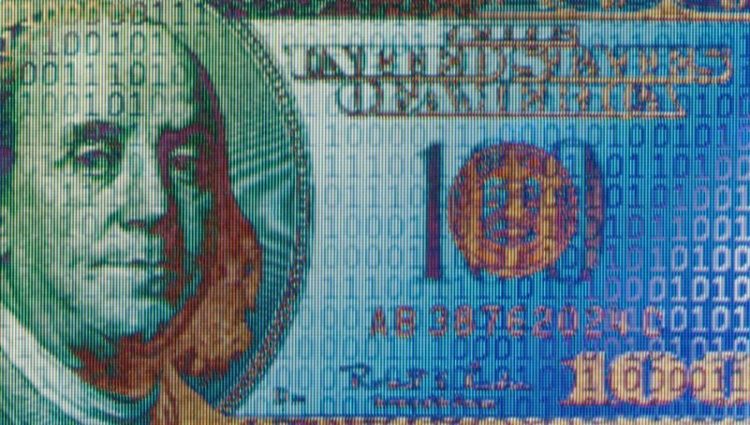
Digital Currencies In the Global Marketplace

In the United States, fiat currency is the standard form of currency used in nearly all transactions. It is now fifty-one years since President Nixon executed his bold economic plan to end the gold standard by severing the U.S. dollar’s ties to gold. This transition to fiat currency gave central banks greater control over the economy and monetary policy through their ability to control the supply of money. Today that reality is being threatened by the widespread adoption and integration of digital currencies.

Digital currencies like cryptocurrencies are threatening the efficacy of fiat currency. Now, high volumes of transactions and large sums of currency can be anonymously transferred person-to-person in a split second. This bypasses the need to use traditional financial institutions and currencies such as banks and USD, which may result in heavy fees, long wait times, and tax implications. Coins referred to as “stable coins” threaten to replace the use of fiat currency to make payments due to their ability to maintain a stable value by being backed by stores of fiat currencies. The USD as a currency and a store of value is becoming increasingly unpopular given how digital currencies transcend financial institutions, monetary policy, and tax policy

For these reasons, China and dozens of other nations have completely banned cryptocurrencies or restricted its compatibility with their national financial institutions. These nations fear that a heavy volume of unregulated transactions could destabilize their economy and hurt the credibility of their fiat currency. More importantly, China began pushing for its own digital yuan currency, and they saw the cryptocurrency marketplace as a dangerous competitor for their own digital fiat currency.

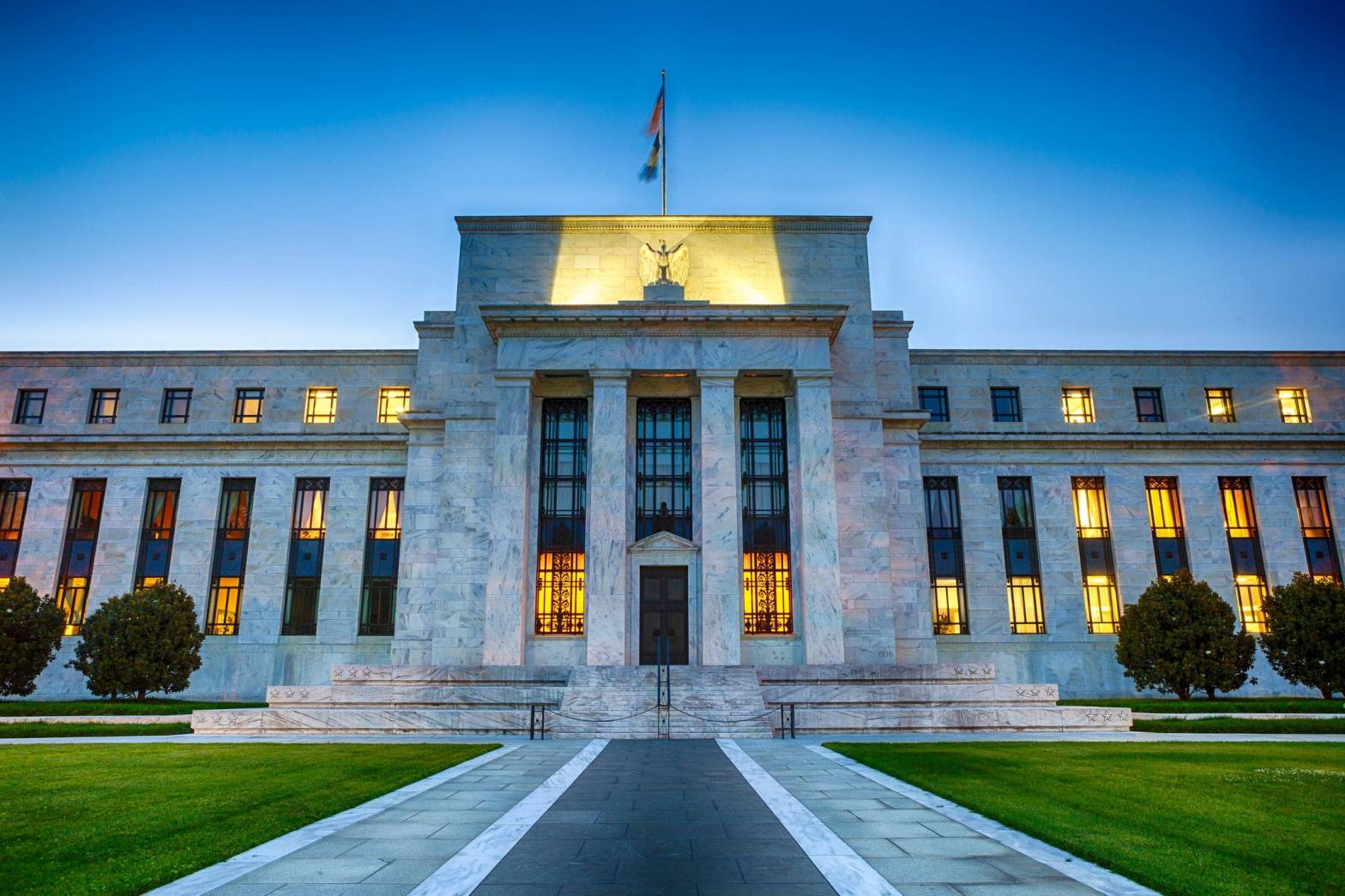
This week policymakers and the Federal Reserve have begun discussing this unprecedented economic situation and how the United States can capitalize on this opportunity without negatively affecting monetary policy. A digital fiat currency presents the government with many opportunities that can revolutionize the nation’s economy. A digital fiat currency eliminates a majority of the middlemen that profit off of processing and transferring transactions. This allows for faster and cheaper transactions fees which are burdened by businesses and cost more than $110 billion a year. Additionally, millions of Americans don’t use any traditional financial institution, but a digital fiat currency would be more accessible to individuals which can lead to greater amounts of currency in circulation. Lastly, digital fiat currencies make it easier for government to distribute welfare benefits to the poor. Rather than sending checks, cards, or stamps, the government can transfer digital fiat currency directly into people’s digital wallets. Digital currencies continue to offer many opportunities which will revolutionize the global economy, but many nations and policymakers are reluctant or slow to change.

This blog post is part of the CIMA law group blog. If you are located in Arizona and are seeking legal services, CIMA law group specializes in Immigration law, Criminal Defense, Personal Injury, and Government Relations. 
Banning Books the New Political Trend

As the primary elections begin to roll out, there is one thing pushing politicians such as Texas Governor Greg Abbott and State Representative Matt Krause’s campaigns trial along, and that is books. States such as Wyoming, Oklahoma, Virginia, and Tennessee are joining Texas politicians and parents in banning books in school libraries that focus on race, sexuality, and gender. The state of Oklahoma, for instance, has introduced a bill in the State Senate that will prevent public school libraries from keeping books that discuss sexual activity, sexual identity, or gender identity. 

Parents are reporting to school districts to remove books from libraries, and now reaching out to politicians for help. The American Library Association has initially received 300 book challenge reports listing various books per report. Virginia candidate Glenn Youngkin has used the book challenge reports to his advantage by reaching out to parents who oppose these “explicit books”  during his campaign for governor, which might win him the position. Additionally, Texas Representative Matt Krause “is asking schools statewide to tell him whether they currently hold any of around 850 books on a list he compiled.” Furthermore, Texas Governor Gregg Abbott has even gone as far and has continuously called for criminal charges against all school administrators concerning these young adult novels. However, what politicians such as Governor Gregg Abbott are missing, is novels that focus on sexual activity, sexual identity, or gender identity might be resources for the youth, especially those within the LGBTQ+ community.

The overall idea of banning books sets society back many decades. In addition, involving politicians to make laws against books sounds extreme. Books are an outlet for some children and teenagers. Additionally, novels, especially ones that discuss race, sexuality, and gender, bring new perspectives not commonly taught throughout K-12. Teenagers are exposed to much worse in current society, and they are more aware of what is happening in the world. Furthermore, passing a law that would incarcerate a librarian for displaying books about diversity in a library does not sound reasonable. 

All in all, the claims made by politicians to ban critical books for the youth to further their campaign reveal the lengths they will go to increase votes.

This blog post is part of the CIMA Law Group Blog. If you are in need of legal help, the CIMA Law Group is a law firm in Phoenix, Arizona which possesses expertise in Immigration Law, Criminal Defense, Personal Injury, and Government Relations.

TikTok And Others Could Face Upcoming Restrictions As Data Security Is Prioritized

Technology has paved the way for a rapid advancement toward globalization. Social media, in particular, has allowed users from across the world to form international relationships, promoting a sense of community within the vast and seemingly endless landscape of the Internet.

However, with increased media use comes along the threat of increased data security threats. In January 2021, the Department of Commerce decided to implement the provisions outlined in Executive Order 13873, which was initially introduced in May 2019 by former-President Trump. The Executive Order on Securing the Information and Communications Technology and Services Supply Chain requested that communications technology and services be monitored to prevent foreign interference, security breaches, and exploitation of vulnerabilities which could all lead to national economic and political catastrophe. Planned to be implemented in March 2021, the regulations within the order emphasized the transactional aspects of technology between U.S. persons and foreign persons that involve information and communications technology or services designed, developed, manufactured, or supplied, by persons owned by, controlled by, or subject to the jurisdiction or direction of a foreign adversary.

Now, amendments are being made to E.O. 14034, also known as “Protecting Americans’ Sensitive Data from Foreign Adversaries”, as well as the Supply Chain Rule. Amendments seek to provide additional criteria when considering ICTS Transactions and software applications that present risks. Changes to the order also offer a new definition of ICTS to include “connected software application”. In other words, ICTS now includes softwares with Internet data access functions.

These changes in policy could ultimately lead to platforms such as TikTok subjected to third-party auditing, source-code examination and monitoring of the logs that show user data. Already, U.S. military members are banned from using the application, but others still argue that the government is moving too slow in enforcing such policies. In a statement, the Chinese Embassy in Washington said the U.S. shouldn’t “overstretch the concept of national security and politicize economic issues.”

This complex issue is evolving into a push-and-pull approach to technology policy which reflects foreign affairs. While TikTok has repeatedly claimed that it does not share user data with the Chinese government, the U.S. still believes that limiting usage of platforms similar to TikTok should be restricted. Such regulation on applications will face backlash, especially for apps as popular as the one in question. The question remains of how to execute software regulation, and how the public will react. With social media heavily involved in the everyday life of Americans, a TikTok ban appears extreme and drastic. Meanwhile, in the name of privacy and security, a slow and steady approach might be more realistic. In any case, the U.S. government must be prepared to face the repercussions of restricting software applications in an era where such platforms are readily available and accessible by the general population.

This blog post is part of the CIMA Law Group Blog. If you are in need of legal help, the CIMA Law Group is a law firm in Phoenix, Arizona which possesses expertise in Immigration Law, Criminal Defense, Personal Injury, and Government Relations.

Pfizer and BioNTech Urge Emergency Use of the First COVID-19 Vaccine for Children 5 and Under

Pfizer and BioNTech announced on Tuesday that they were seeking the FDA to approve the usage of the first COVID-19 vaccine on children between the ages of 6 months-5 years old. Both companies announced that they have started submitting data to the FDA regarding clinical research in Europe involving the possibility of distributing the vaccine to 6mo-5years old. The FDA announced that they will hold a meeting on February 15, 2022, to discuss the submission. Scientists and doctors say that, “safety and effectiveness are key.” They also go on to say that in order for the American public to be confident with distributing the vaccine to their babies and toddlers, it needs to be something that all the scientists and doctors would be comfortable recommending to their children.

There are clinical trials going on right now to see the effectiveness and safety of the vaccine in young children. Studies show that the vaccine was effective in children ages 6 months-2 years old but not efficient between the ages of 2 to 4 years old. Researchers are running tests and such to see why the vaccine isn’t effective in ages two to four years old. The FDA gave emergency approval for kids ages 5 to 15 to get the vaccine.

The reason for this research is being brought up now is because of omicron, cases are skyrocketing not only with adults but, they are being seen a lot more in young children. So to help alieve that, scientists are testing out what would be the safest and the most effective way to distribute the vaccine amongst children. With the current research we have now, it’s shown that if we distribute the vaccine at a 3 microgram dose rather than a 10 microgram dose that the 5-11 years old take, it might be safer and more effective for the young children. More tests and trials are being run to ensure the safety and effectiveness of these doses.

This blog post is part of the CIMA law group blog. If you are located in Arizona and are seeking legal services, CIMA law group specializes in Immigration law, Criminal Defense, Personal Injury, and Government Relations. 
The Nuclear Option and the Supreme Court Today

On 01/27/2022 Supreme Court Justice Stephen Breyer announced his retirement, which is to take place during the court’s summer recess “assuming that by then [a] successor has been nominated and confirmed.” This presents the Biden administration with their first opportunity to nominate a justice to the court. The political make-up of the Senate may have been a cause for concern in the past, but since the adoption of the nuclear option in 2013, the vote threshold for Supreme Court appointments decreased from a super-majority to a simple majority. The Supreme Court is currently seeing an unprecedented political climate due to this rule change. Political polarization in the Senate has forced congressmen to alter parliamentary rules, effectively overriding filibusters and only requiring a simple majority to pass legislation, resolutions, and appointments.

Currently, there are 50 Republicans (minority), 48 Democrats (majority), and 2 Independents, who both caucus with the Democrats in the 117th United States Congress. Even a vote down party lines, which results in a tie, favors the Democratic Party since Vice President Kamala Harris can “cast a vote in the Senate only in order to break a tie” per Article I, Section 3, Clause 4 of the Constitution. It would be the first time in United States history that a Vice President breaks a tie in the Senate over a Supreme Court appointment. But did the framers of the Constitution intend for the VP to cast the tie-breaking vote on a Supreme Court appointment? While the Constitution never explicitly states that appointments require a supermajority vote, a tie-breaking vote made by the VP to appoint the Presidents nominee appears to conflict with the purpose of the nomination/appointment process.

All Supreme Court appointments since the adoption of the nuclear option have been decided on a tight margin. Justices Gorsuch, Kavanaugh, and Barret were all nominated with less than a 54% majority vote. Moreover, since 2013, all Supreme Court appointments have been younger than the average age of a Supreme Court Justice at the time of appointment, which is 53 years old. Presidential administrations are taking advantage of the congressional rule change to nominate young justices that align closer to their political objectives. These justices may sit on the bench for well over 40 years, making their nomination one of the most influential decisions a president can make.

This blog post is part of the CIMA law group blog. If you are located in Arizona and are seeking legal services, CIMA law group specializes in Immigration law, Criminal Defense, Personal Injury, and Government Relations. 

President Biden Signs New Executive Order Making Sexual Harassment a Crime Within The Uniform Code of Military Justice

On January 26, 2022, President Biden issued an Executive Order known as the National Defense Authorization Act (NDAA) implementing sections of the I AM Vanessa Guillén ACT. The Executive Order bolsters the military justice system to recognize and respond to gender-based violence. In addition, this Executive Order “strengthens the military justice response in prosecuting cases of domestic violence, and fully implements changes to the military justice code to criminalize the wrongful broadcast or distribution of intimate visual images”.  

The additional provisions included in the NDAA enforces commanders to immediately report information regarding any missing or absent military members. Additionally,  “sexual harassment complaints must be handled through independent investigations.” Furthermore, daily inspections of living quarters must be done by the Secretary of Defense. The new orders added prevent conflict of interest therefore not allowing for crimes such as sexual assault or domestic violence to be hidden.  

The Executive Order comes after Vanessa Guillén’s murder in 2020, a Fort Hood soldier who was sexually harassed before her death.  “The murder prompted calls for reform from her family and members of Congress about the way harassment and assault in the military are handled.” According to retired Air Force Col. Don Christensen, president of Protect our Defenders, in the military’s biannual survey of those who have tried to report sexual assault 60%  experienced backlash. Overall, the Executive Order brings upon a sense of protection that was clearly missing for both men and women in the military. 

The Biden-Harris administration also plans on funding “hundreds of millions of dollars of non-taxpayer funding for lifesaving services to crime victims around the country.” This is a step in the right direction acknowledging victims as well as providing them resources that at times are not easily accessible. Overall, President Biden’s stamp of approval of this Executive Order and future plans strengthen the protection of those in the military in hopes there is no more injustice for victims who have suffered sexual harassment, domestic violence, or sexual assault.

This blog post is part of the CIMA Law Group Blog. If you are in need of legal help, the CIMA Law Group is a law firm in Phoenix, Arizona which possesses expertise in Immigration Law, Criminal Defense, Personal Injury, and Government Relations.

Social Media’s Effect on Teens

Is social media ruining teens’ mental health?  Social media is a place where people share photos, videos, and new ideas within a large online community. Social media can badly affect teens’ mental health because they are constantly comparing themselves to other people’s lives. Social media apps such as Instagram, Snapchat, Facebook, and Twitter can cause depression and anxiety amongst teens. Social media negatively affects teens because there is an overarching possibility of cyberbullying. 

In 2016, a study done by researchers at Penn State University suggested that checking other people’s selfies lowered users’ self-esteem because of comparison to perfect-appearing photos. In a study involving 600 adults, about ⅓ reported that social media makes them envious of other people’s lives. When social media users post travel photos, their followers start to feel jealous of their lives and their experiences. Therefore, social media users start to feel depressed after scrolling through pictures of other people’s lives, which raises questions about whether social media should be recommended to teens. Recent studies have found links between teen suicide and social media usage. Teens start to feel hopeless when someone else is having fun in their photos while they aren’t. Many reliable sources prove that social media decreases teens’ confidence.

Online media is a dangerous source of entertainment due to cyberbullying. “Current teen suicides have been blamed on cyberbullying.” Cyberbullying is when someone constantly harasses and threatens you online. When teens are cyberbullied, they start to feel depressed, hopeless, and scared. A study in 2016 involving 1,700 people found that there is a higher risk of depression for social media users due to cyberbullying. In addition, cyberbullying causes depression because it makes people feel emotional and physical stress. Because of this, teens who are cyberbullied experience anxiety, fear, and low self-esteem.  “An increase of suicide rates among U.S teens occurred as social media started.” Teens who are cyberbullied feel exposed and humiliated by others. Cyberbullies can cause harm to teens and even cause them to harm themselves. Clearly, social media is very threatening to this generation of teenagers. 

Although social media can benefit teens, the risks outweigh the benefits. Some people look at social media as a fun source of entertainment and freedom. In reality, social media actually creates a dark environment for teens. Social media apps are the main causes of depression, envy, and suicide. One could easily think social media is a way to maintain social connections with friends and family. This argument fails to acknowledge that there are plenty of apps available to teens for communication. Even though there are ways to use online media wisely, most teens should be encouraged not to get involved in it due to the harmful effects it causes.

Online media sites affect teens terribly. Social media can affect teens’ health because they continually compare their lives and property to other people’s. Social media apps commonly cause depression, anxiety, and envy in teens. Someone needs to demand change in how social media is used. Teens are negatively affected by social media, and they may not know social media is causing their hardships. For future generations of teens,  this issue could only worsen without support.

This blog post is part of the CIMA law group blog. If you are located in Arizona and are seeking legal services, CIMA law group specializes in Immigration law, Criminal Defense, Personal Injury, and Government Relations. 
California’s ‘No Surprises Act’ Changes Medical Billing for Millions

In 2017, a California law was implemented to prevent “surprise bills” from out-of-network medical providers who work at in-network facilities. But when nearly 6 million Californians are blindsided with medical bills from practitioners not contracted with PPOs, it is clear that this 2017 law is not enough. The law does not protect those who get health coverage through employers that pay employee medical bills out of pocket. “Self-funded” plans are instead regulated by the U.S. Department of Labor, beyond the control of state policy.

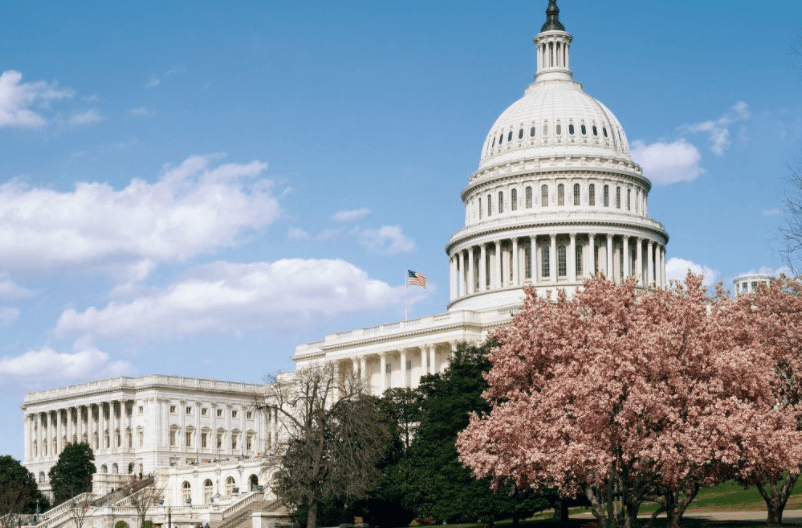
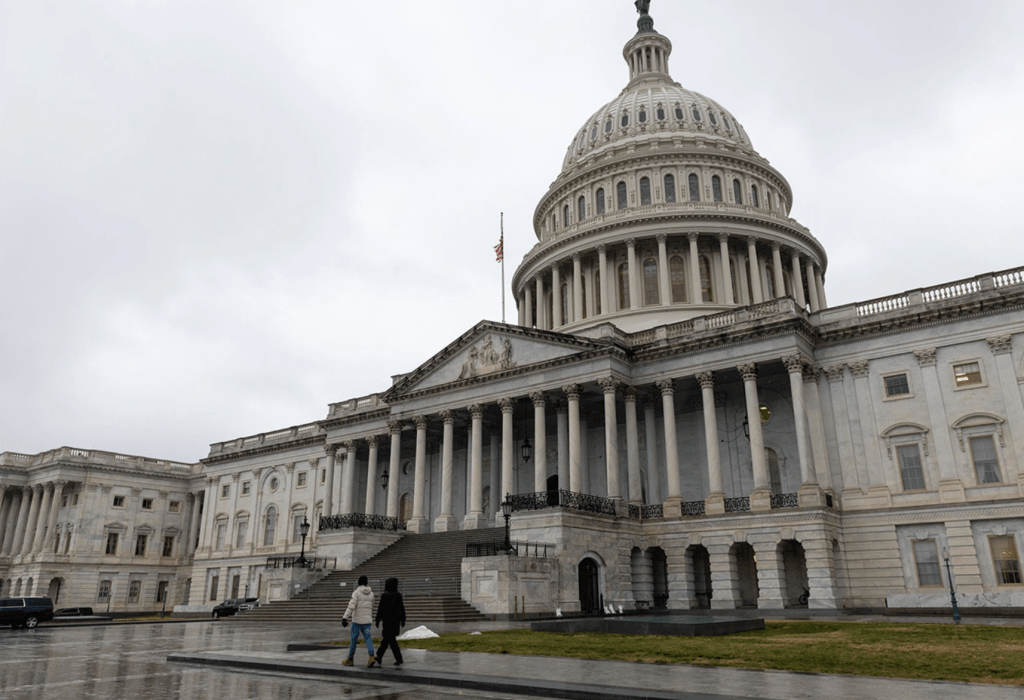
The U.S. Capitol on Jan. 20, 2022

However, a federal law which took effect in the new year ensures for over 100 million people across 32 states that this will not continue to occur. The new No Surprises Act protects nearly 1 million California residents not covered by the 2009 CA Supreme Court ruling that prohibits emergency room doctors and other providers of emergency services from billing HMO patients for out-of-network charges not paid by their insurers – otherwise known as balance billing.

The new law will prohibit patients from getting bills for services when they unknowingly receive care from most out-of-network providers. Existing law already protects members in HMO plans from surprise billing, while Medicare and Medicare Advantage plans have their own protections. The Knox-Keene Act, which governs most HMOs in CA, prevents emergency-room doctors and practitioners from billing HMO patients for services, while AB-72 provides that if an HMO patient receives services at an in-network facility by an out-of-network physician, the patient is only required to pay the in-network price for such services.

The No Surprises Act further allows providers and facilities to attempt negotiations for a satisfactory payment with the plan, given that they are not satisfied with an initial payment from a health plan for out-of-network services. When an appropriate amount cannot be negotiated, the provider can submit a claim to an independent dispute resolution process to determine the appropriate payment amount. The law most notably gives patients a good faith estimate of expected charges for scheduled services upon request.

This act is a result of work done by insurance providers who supported this federal action by briefing Congress members and their staff on patient experiences, as well as providing educational seminars on CA law. Ultimately, this act will allow people who were otherwise unable or unwilling to pay for surprise bills from emergency room visits considered out-of-network to be protected. However, there is still a long way to go for the uninsured, and those across the country who are not protected and covered by state programs for the disadvantaged.

This blog post is part of the CIMA Law Group Blog. If you are in need of legal help, the CIMA Law Group is a law firm in Phoenix, Arizona which possesses expertise in Immigration Law, Criminal Defense, Personal Injury, and Government Relations.

Design a site like this with WordPress.com
Get started