Why It’s Time to Update Our Government Access Laws

In 1986, the Electronic Communications Privacy Act (ECPA) was enacted by the United States Congress – Public Law 99-508, Statute 1848 – and is the law that “protects” the privacy of Americans’ electronic exchanges. Three years later, Tim Berners-Lee invented the World Wide Web (WWW). Notwithstanding the innovation of technology, the ECPA is primarily all that Americans have to protect their electronic privacy. This has shown to be flawed as the writers of the Electronic Communications Privacy Act could not have anticipated the privacy issues, we face in a technology heavy world.

It is for this reason that I would update the Electronic Communications Privacy Act to restore the privacy that our Founding Fathers recognized Americans were entitled to. With today’s social media networks and cheap or free cloud services, the language of the law is not sufficient in protecting the privacy of online users. The main issue with the ECPA is that the government has relatively easy access to users’ information. Currently, investigators only need a subpoena to obtain a user’s emails or other electronic messages that are stored in the cloud provided they are more than six months old. The Bill of Rights was created to provide a greater constitutional safeguard of individual liberty. Within the Bill of Rights is the Fourth Amendment which states, “The right of the people to be secure in their persons, houses, papers. And effects against unreasonable searches and seizures.” Typically, a lawfully executed warrant is needed to be able to search or seize, however, as stated before, an investigator only needs a subpoena, not a warrant approved by a judge to obtain emails or electronic messages of any user.

It is crucial for users to have the same protection under the Fourth Amendment when their “papers” and “effects” are stored electronically. The individual right to privacy as guaranteed by the Fourth Amendment should not be disregarded due to lack of foresight. As our society continues to innovate and evolve, so should the laws that protect the members of said society.

Citations

https://www.aclu.org/issues/privacy-technology/internet-privacy/modernizing-electronic-communications-privacy-act-ecpa

https://www.eff.org/deeplinks/2012/12/deep-dive-updating-electronic-communications-privacy-act

https://bja.ojp.gov/program/it/privacy-civil-liberties/authorities/statutes/1285

President Biden terminates the “Remain in Mexico” policy set during the Trump era.

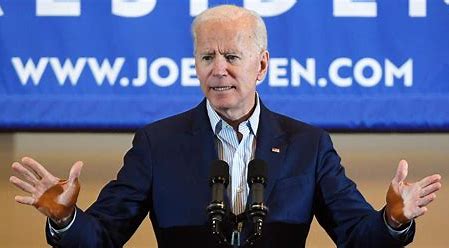
On June 1st, the Biden administration ended a Trump policy that forced Central American asylum seekers to stay in Mexico while their immigration cases were processed. Although the enforcement of this policy was suspended at the beginning of Biden’s presidency, the fact that the policy was officially ended is a big win for people who support an easier immigration process.

See the source image

The policy was making tens of thousands of asylum seekers to wait in terrible conditions for their asylum requests to be processed, which meant they were subjected to conditions that led to the threat of extortion, sexual assault and kidnapping. The Secretary of the Department of Homeland Security, Alejandro Mayorkas, discussed the policy stating that, “we can only manage migration in an effective, responsible, and durable manner if we approach the issue comprehensively, looking well beyond our own borders.” Many immigrant advocates described the forced return policy as cruel and should have been illegal to put in to place.

Image result for remain in mexico policy

The original law was put into place in 2019 when former President Trump was really trying to clamp down on immigration. Before this policy was put in place, immigrants used to be able to wait in the United States during their immigration proceedings. The ending of this policy represents the stark contrast between the two administrations’ goals when it comes to immigration.

If you have any questions about immigration cases or need an immigration attorney, CIMA Law Group is one of the best immigration law firms in Phoenix and will address your concerns.

Jobless Claims Hit New Low as U.S. Continues to Recover from the Pandemic

In what can clearly be construed as a positive sign that the pandemic is slowly coming to an end, “jobless claims” in the United States have hit a new low since the pandemic started. These “jobless claims” serve as a solid indication of how many employers are laying people off as people seek unemployment benefits. These numbers peaked in July 2020 with nearly 1.5 million jobless claims and have slowly been going down since then. Just to put the number in perspective, the 2019 weekly average for initial jobless claims sat at around 219,000. Now, for the first time since the pandemic started, however, the number for the latest week dipped below 400,000 reaching 385,000.

US jobless claims rise to 744,000 as some employers continue cutting jobs -  The Boston Globe

The numbers, while still high, are an incredibly welcome sight since the world shut down nearly 15 months ago. The trend seems to be continuing rapidly in the right direction too. The numbers are down 35% since late April with every week hitting a new low. The week ending May 1 saw 498,000 new jobless claims, and the week ending May 15 saw 440,000 new jobless claims. Both of these numbers at the time were new lows since the pandemic started. Ian Sheperdson, the chief economist at Pantheon Macroeconomics stated, “[c]laims remain elevated by normal standards, but the downward trend has been relentless in recent months, and a return to the pre-Covid level over the summer seems a decent bet.”

There have also been other promising signs that the economy is headed in the right direction. According to statistics from Indeed.com, one of the top job-search sites, job postings currently are 26% above where they were in February of 2020. Those numbers hit a low at nearly 40% below the February 2020 number in the few months following the start of the pandemic. Furthermore, in March 2021, the rate that people are quitting their jobs reached previous highs seen in 2001 and 2019. This number serves as an indicator of people’s confidence in their ability to find a better job.

There is still a long way to go before considering the economy to be fully recovered. The unemploymeny rate still remains far above the levels seen pre-COVID and there are still 15.4 million Americans receiving unemployment benefits meaning that there are still many people who remain jobless. However, signs seem to be pointing in the right direction and hopefully, we will continue to see new lows with each week that passes.

This blog post is part of the CIMA Law Group Blog. If you are in need of legal help, the CIMA Law Group is a law firm in Phoenix, Arizona which possesses expertise in Immigration Law, Criminal Defense, Personal Injury, and Government Relations.

Texas Republicans Elections Bill Will Restrict Voting for Residents

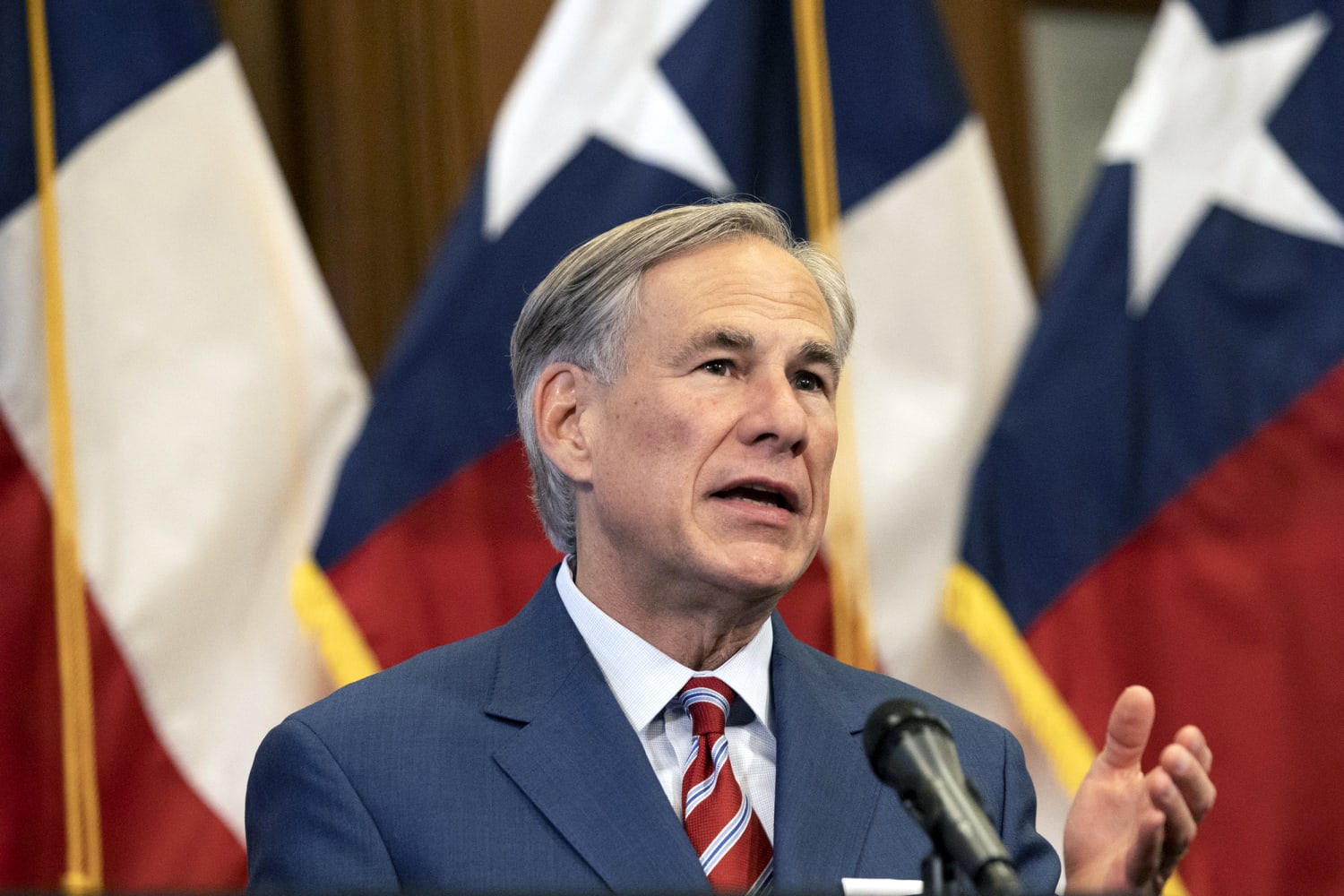
This bill put forward by the Republicans would do nothing but restrict voting to some Texas residents. Governor Greg Abbott claims the bill will make it harder to cheat, but easier to vote. It only expands early voting hours for certain counties, overall it is more restrictive than expansionary. Some things the bill would do is, “ban the drive-through voting and 24-hour voting that were used in 2020” and “it would ban morning voting on the last Sunday of early voting, a time some Black churches use for ‘souls to the polls’ voting drives. It would create a new identification requirement for mail-in voters. It would create new requirements for both voters with disabilities and people assisting them. The bill would also introduce a variety of new criminal offenses for elections officials. It would make it easier to get elections overturned. And it would empower partisan poll watchers in a variety of ways” (CNN). This is not an inclusive bill. Texas Republicans are trying to suppress the vote, especially the minority vote. Democratic state leaders did walk out on Sunday night to stop the immediate passage of the vote, but it is not dead yet. It will most likely get put on the agenda at a special legislative session at some point this year.

Texas Gov. Abbott says he'll target legislator pay after Democrats block  strict voting bill

6th Circuit Court Rules Against Using Race, Sex as Factors in Distributing COVID Relief

Last Thursday, the 6th Circuit Court of Appeals ruled against the Biden Aministration policy which created a 21 day span of time in which the Small Business Aministration would only process applications for aid from businesses “owned by women, veterans, or socially and economically disadvantaged individuals,” according to the Associated Press. What the AP does not clarify, however, is that if a person is a member of certain minority racial groups, “the Small Business Administration assumes [they] qualify as socially disadvantaged. Indeed, the only way not to qualify is if someone comes forward “with credible evidence to the contrary'” as the majority opinion in the case, Vitolo v. Guzman, makes clear. The funds available to businesses under the COVID bill were limited, and by allowing women and minority owned businesses jump to the front of the line, this policy made it more likely that the cash would run out before being distributed to business owners not born into these categories. The majority of the 6th circuit came to the conclusion that such a policy was a blatant violation of equal treatment under the law and held that the federal government did not have the right to implement it.

The AP is quick to quote the dissenting Judge in the case argued that the Supreme Court had “firmly establish[ed] that our Constitution permits the government to use race-based classifications to remediate past discrimination,” and that the present decision went squarely against that precedent. The Wall Street Journal, however, points out that legal remedies for discrimination “must address a specific episode of past discrimination, the past discrimination must have been intentional, and the government must have played a role in that discrimination,” none of which are true in the instance at hand. The Journal goes on to quote the Chief Justice of the Supreme Court, who said rather simply that the “way to stop discrimination on the basis of race is to stop discriminating on the basis of race.”

Vitolo is obviously not an isolated insident. The Wall Street Journal article is quick to adress the possible implications for Students for Fair Admissions v. Harvard, “which concerns the university’s use of race to discriminate against Asian-Americans in admissions,” a case which migh soon make its way to the nation’s highest court. And it’s worth remembering that, last November, Calfornia soundly rejected a proposition which got a decent amount of support from prominent Democrats, including current Vice President Kamala Harris, that would have re-allowed “racial discrimination and preferences in public hiring, contracting and education” according to USA Today. It seems likely that debates over the permisability of overtly race-based legal action will continue to be had in both appeals courts and the court of public opinion in the years to come.

Biden Changes Trump-era Policy that Required Immigrants to have Health Insurance.

In 2019, former President Donald Trump signed an executive order that banned giving visas to people who would be deemed “financial burdens” on the health care system of the United States. The main stipulation of this order would be to ban visas given to immigrants who did not have/could not afford healthcare. This policy was introduced because the Trump administration believed that anyone coming to this country should not be immediately put on public assistance. This meant immigrants had to prove that they had health insurance within thirty days of arrival to the United States.

On May 14th, President Joe Biden removed this requirement stating that “does not advance the interests of the United States.” This move is part of a series of reversals of former President Trump-era policies from President Biden’s administration. Although the original policy had never truly went into effect due to it being held up in the courts, this reversal demonstrates President Biden’s efforts to revert the immigration policies which his predecessor put into place.

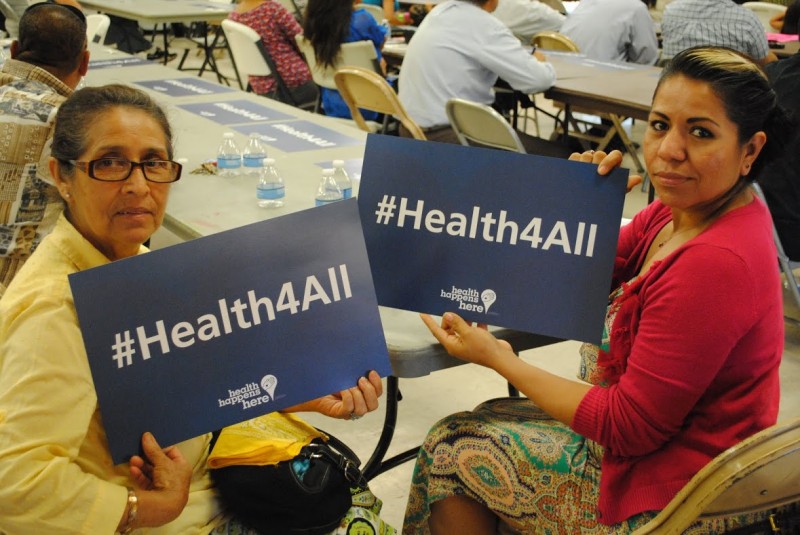
Furthermore, this change in policy also shows President Biden’s desire to expanding access to more affordable healthcare for everyone while not excluding immigrants from being able to have health insurance.

Along with this reversal, President Biden has also changed many other orders from the previous administration in the past few months. This includes: cancelling the travel ban, not enforcing the “public charge” rule, which allowed the government to restrict giving green cards to people who used public assistance, and also trying to find a path to citizenship for DACA recipients.

If you are searching for someone to help with your immigration needs/questions, CIMA Law Group is one of the best immigration law firms in Phoenix and is experienced in handling many different immigration situations.

Latest Mass Shooting Stokes Fire of National Firearms Debate

On Wednesday morning, a man by the name of Samuel Cassidy opened fire at a public transit yard in San Jose, California, killing nine of his coworkers before taking his own life. While many of the details surrounding the shooting are still surfacing, some things are clear. The man was a disgruntled employee who had worked for the Valley Transportation Authority (VTA) rail yard for many years, often expressing discontent with his coworkers and bosses in addition to what he saw as “unfair work assignments.” According to an ex-girlriend, he was prone to mood swings that were only exacerbated by his consumption of alcohol. On the day of the shooting, Cassidy came armed to work with three handguns and eleven magazines and seemed to systematically target certain coworkers. “[P]recursor things for explosives” were also found within his work locker.

Law enforcement officers respond to the scene of a shooting at a Santa Clara Valley Transportation Authority (VTA) facility on Wednesday, May 26, 2021, in San Jose, California.

This latest tragedy has once again led to questions about how to best handle the gun laws within the United States. The common arguments for each side of the national gun debate are well-known. On one hand, proponents of tighter gun control argue that stricter access to firearms would cause less deaths. On the other hand, detractors of stricter gun control state that it would infringe upon their Second Amendment right to bear arms and to defend themselves. One side might argue that if Samuel Cassidy was unable to obtain the guns, nobody would have died, whereas the other side might argue that those involved in the shooting would have been able to better defend themselves had they had access to a firearm.

To further complicate the matter, simply looking at statistics within the United States can often cause confusion. California, a state with some of the strictest gun laws in the United States may, at first glance, seem to be a sort of statistical paradox. California leads the nation in “mass shootings” (shootings where 4 or more people are fatally shot) with 21 happening since 1982. However, when looking at the number of gun-related deaths per 100,000 people, California finds itself much lower on the list coming in 44th place with 7.2 deaths. Both numbers may be explained by the sheer number of people within California. Other lower-population states such as Alaska and Wyoming, that have much more relaxed gun laws, come in at first place and third place respectively with 24.4 and 22.3 deaths per 100,000 people.

Despite the confusing statistics, the current Presidential Administration’s stance on the topic is clear. In a statement made by President Biden in the wake of this latest shooting, he urged Congress to “take immediate action” stating that “every life that is taken by a bullet pierces the soul of our nation.” Similarly, California Governor Gavin Newsom in his statement following the aftermath of the shooting called for “real action to curb gun violence today.”

This blog post is part of the CIMA Law Group Blog. If you are in need of legal help, the CIMA Law Group is a law firm in Phoenix, Arizona which possesses expertise in Immigration Law, Criminal Defense, Personal Injury, and Government Relations.

Family Wants Answers 6 Years After Man dies in ICE Custody

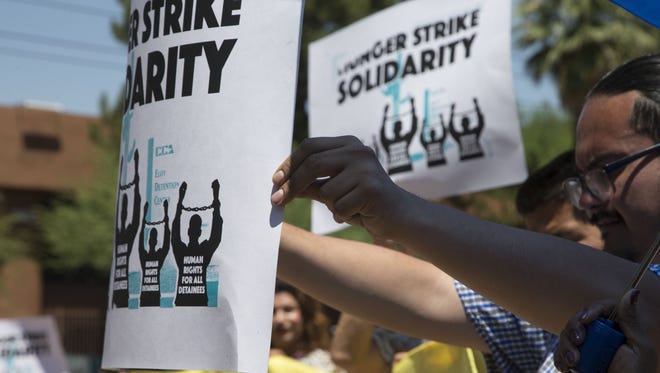
May 20th, 2015 José de Jesús Deniz-Sahagun died in ICE custody in the Eloy Detention Center in Pinal County. While the official autopsy conducted by the Pima County Medical Examiner’s Office ruled the death a suicide by lodging a sock in his own throat, many activists contest this categorization and are demanding answers on the six year anniversary of Deniz-Sahagun’s death.

An altar to José de Jesús Deniz Sahagun in his old bedroom at his home in Jalisco, Mexico.  “What happened to my son?” said Elisa Deniz. “I want to know the truth, because doubt hurts more than a lie.”
FERNANDA ECHÁVARRI/LATINO USA

On may 19th, 2015, the day after Deniz-Sahagun was brought to the facility he was evaluated for “delusional thoughts and behaviors for which he had to be restrained,” and put under constant suicide watch. The next day however he was taken off of this watch and moved to a video monitored cell with checks by security personnel every 15 minutes (AZ Central). It was after this move that Deniz-Sahagun allegedly took his own life.

Activists, protesters and other detainees of the facility believe that Deniz-Sahagun was beaten and ultimately killed by guards. Juan Miguel Cornejo claims to have been detained at the same facility the day of Deniz-Sahagun’s death and says, “Many of us heard him call out for help. I was there when he was beaten by agents and then killed”. (AZ Central).

Chief medical examiner Gregory Hess said that the autopsy showed no signs of beatings, and maintains Deniz-Sahagun died by suicide. Protesters have since called for an independent autopsy to be performed, but one was never conducted.

Nick Oza/The Republic

Thursday, the sixth anniversary of his death, activists alongside friends and family held a vigil in phoenix for Deniz-Sahagun and dozens of others who have died in ICE custody. At the vigil they expressed discontent for private prisons, ICE detainment centers and disappointment in Biden’s immigration policies.

The American Immigration Lawyers Association have reported between 61 and 64 deaths of detainees in ICE facilities since 2015.

CIMA Law Group is a top Immigration law firm in phoenix that is well equipped and experienced to assist in any and all immigration questions.

Rising Crime Rates Prompt Several Explanations

For decades, crime has been falling in the United States, but 2020 saw that trend reverse. Crime, and especially violent crime, rose significantly last year, to a degree not seen in recent memory. And, as with any broad socio-cultural trend, various explanations have been put forward to explain this troubling phenomenon.

One of the most obvious potential causes is, of course, the pandemic. In January, NPR ran a piece quoting New York Mayor Bill DeBlasio placing blame for the increase in violent crime in his city on COVID, as well as testimony that the rising murder rates “was happening in the early stages of the pandemic”, then saw upticks both “in the early stages of summer” and later on, when “some of the financial assistance started to wear off.” In this analysis, the lack of “face-to-face contact…among service providers and…[those] who are most likely to both commit these offenses and be the victims of them” is the crucial variable in explaining why so many violent altercations have gone unprevented.

Other interpretations focus on more long-term factors, such as that put forward by sociologist Patrick Sharkey, whose interview with the Atlantic was published in March. In Sharkey’s estimation, the pandemic itself wasn’t the only culprit, but rather may have simply contributed and worsened an already-present problem. His main argument “is that in areas where communities go through periods of disinvestment, and where institutions break down, people feel like they’re on their own,” which tends to increase the crime rate. While COVID lockdowns would have obviously increased the sense of isolation, Sharkey is perhaps correct to note that the situation in many places before the disease reached our nation is likely to have played some role.

He then goes on to comment on the final, and perhaps the most politically charged, explanation for the rise in violent crime: the movement to defund the police and the public demonstrations and riots following the murder of George Floyd. In this matter, Sharkey makes several comments, saying that “police often pull back” after large-scale public backlashes as the public become hypercritical of their every action. He also notes that the decline in the perceived “legitimacy” of law enforcement may have led some to be less “willing to reach out to the police for help and less willing to cooperate.”

It’s clear to many, however, that in such a time when violent crime is spiking, removing funding from the police is probably not the soundest policy. The New York Times published an article earlier today describing the situation in L.A, where 8% of the police department’s budget was slashed in response to mass demonstrations last summer, but after murder spiked an astounding 36%, the city approved an increase to that same budget in order to hire 250 new officers.

While all these explanations are likely true to some degree and, together, paint a bleak picture for the prospects of maintaining law and order, there is perhaps a silver lining in that many of these proposed causes were largely temporary. The financial and social distress caused by pandemic lockdowns is easing as people get vaccinated and states open up. Police were subject to an incredibly high degree of scrutiny, mistrust, and rage as a result of activist activity last summer and likely pulled back and were less engaged in communities because of it. With the conviction of the officer involved in the George Floyd case and the simple passage of time, it’s not altogether foolish to believe that the situation may be on the mend. And, now confronted with a clear crisis, cities are beginning to see the dangers in decreasing funds to law enforcement. One might hope that, with all these factors, the United States might, this year, return to the old norm of seeing violent crime drop every twelve months instead of rise, and might again enjoy the safety of living in a nation where the law is supreme.

CIMA Law Group specializes in immigration law, criminal defense, and personal injury, as well as having a substancial government relations division. Keep up with the blog for more updates on current political and legal events, or visit the website for more information or legal assistance.

Interesting Results From New Leaf Project

A Canadian charity recently conducted a bold social experiment: giving people experiencing homelessness a one-time cash infusion of $7,500. The results of a B.C. research project that gave thousands of dollars to homeless people are in and, according to one researcher, could challenge stereotypes about people “living on the margins.” The New Leaf project is a joint study started in 2018 by Foundations for Social Change, a Vancouver-based charitable organization, and the University of British Columbia. After giving homeless Lower Mainland residents cash payments of $7,500, researchers checked on them over a year to see how they were faring.

Is giving out free money the best way to help homeless people? - Vox

The individuals who got the payments tended to spend them on the necessities: on average they spent 52 percent of the cash on food and rent, 15 percent on other items like bills and medicine, and 16 percent on clothes and transportation. Spending on alcohol, cigarettes and drugs went down an average 39 percent as well. It is also, according to New Leaf, a way to potentially cut down on the costs of government services aiming to help the homeless. According to the program, Canada spends an average of $55,000 per person on social services for homeless people. Direct cash transfers could save $8100 per person.

Design a site like this with WordPress.com
Get started