The Electoral College

Following the victory of Joe Biden in the 2020 Presidential Election, one omnipresent controversy was able to escape the limelight this time around: the electoral college. This institution has been the subject of vociferous debate over the years, waxing and waning in the public conscience depending on how well it tracks the popular vote in any given election. This begs the question: if the Electoral College is essentially acting as a poor proxy for the popular vote, why does the Electoral College exist at all when the popular vote is available to be used? To properly answer this question, we must delve into the origins of the Electoral College, its evolution throughout American history, the pros and cons of the system as it currently operates, and what this system means for the future of American politics. 
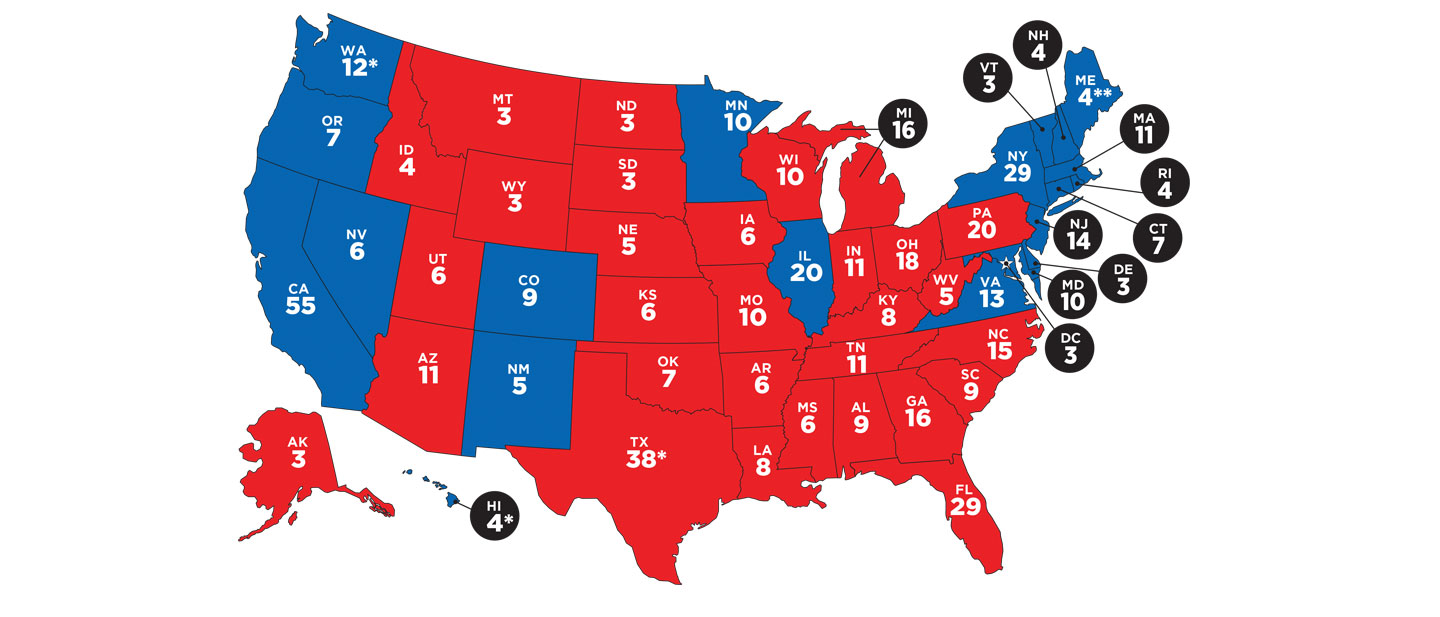
https://classroommagazines.scholastic.com/content/dam/classroom-magazines/magazines/election/election-2020/civics-in-action/the-electoral-college/ELECTION_ELECTORALCOLLEGE_HEADER_MAP.jpg

In Section II, Article I, the U.S. Constitution lays out the original plan for the Electoral College, whereby each state receives a number of Electors not exceeding their total number of Senators and Representatives, and these Electors cast votes for President of the United States. Once the votes are tallied, whichever candidate has the plurality of the votes becomes President. Interestingly, nowhere in the Constitution or anywhere else (at the time) does it say that citizens vote for President. Instead, the idea was that each district would vote for an Elector to represent their district. This was not an oversight by the Framers; it was by design. The idea behind this was that knowledgeable people from each state would select the next President, and do so by exercising nonpartisan, fair judgement of the candidates (Williams v. Rhodes, 393 U.S. 23, 43–44 (1968)), not unlike the way that the Cardinals select the new pope. 

Clearly, the spirit of this procedure has not endured to today. In fact, by 1800, this process was already being corrupted by the emergence of political parties. Furthermore, because the Constitution left the process by which states choose their electors entirely to the states themselves, states quickly deviated from the intended spirit. Despite states testing a few different systems in the early 1800s, by the 1830s, the Electoral College had evolved almost uniformly into the winner-take-all mechanism that we employ today, whereby the winner of the popular vote in each state receives all of that state’s electors. Only Maine and Nebraska differ from the rest, but only marginally. These two states split themselves up into two districts, with the popular vote winner in each district receiving that district’s electoral votes. 

In a follow up post, I will be discussing the pros and cons of the current system, and what it means for the future of American politics. 
Biden’s Covid Plan

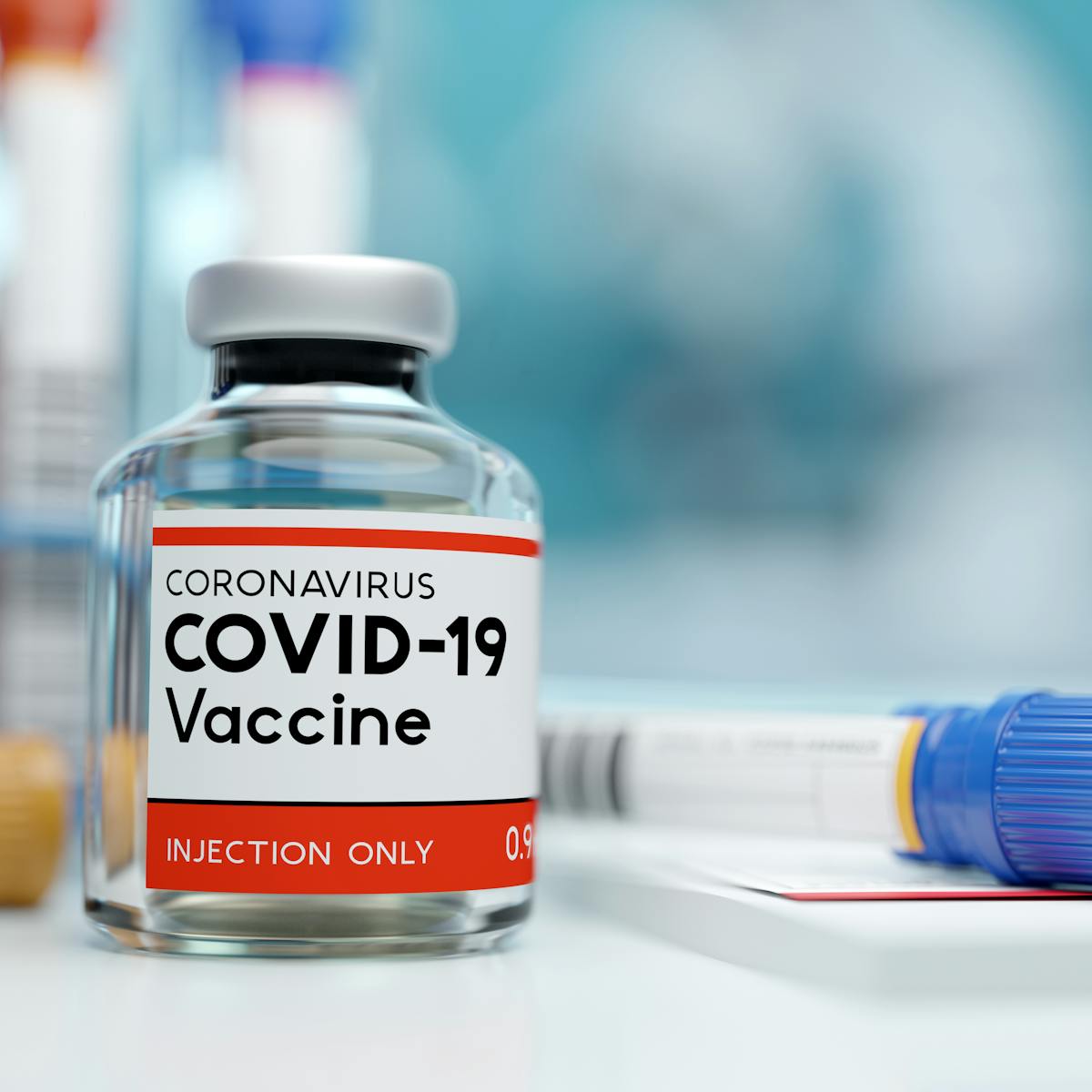
Joe Biden has only been in office for two days and he already has a plan to try and combat Covid-19. January is the second deadliest month on record in the US from the time the pandemic began in March. With that being said even with the vaccine being administered more action needs to be taken in the meantime. The Biden administration is proposing a $1.9 trillion coronavirus relief package. The year 2020 as a whole seemed like an uphill battle for most people, but hopefully 2021 brings more solutions to the pandemic. With the vaccine already being administered and a potential for a large Covid relief package hopefully the US can get more of a handle on this ongoing pandemic.

Infecting a volunteer with coronavirus to develop a vaccine – here's what  consent should look like

Phoenix Uninhabitable by 2050?

Phoenix, Arizona— one of the biggest cities in the U.S., and constantly growing— is also often crowned as one of the most unsustainable places in the world. Phoenix is a city plagued by many wants, many needs, and yet meager resources.

For one, “‘it’s currently the fastest warming big city in the US,’” and will be “‘three to five degrees hotter in the summer months by 2050′”. Many write off this increase in temperatures, by trusting in air conditioning to get them through the high heat. However, not all Phoenicians have this luxury: as the climate worsens, powering your home will become more expensive, making lower-income individuals suffer more in the summer months. This group of people may have to choose between food and cooling their home down. With a whopping “twenty-two percent of Phoenix residents liv[ing] in poverty, and at any given point about 6,300 [being] homeless,” it becomes clear that numbers of people simply will not be able to survive here.

In the near future, summer temperatures in Phoenix could hit 130°
Sierra Club

The risk of power outages can also not go unnoticed. If the grid fails in the dead of summer, the consequences could be disastrous. How long could some people really last without air conditioning, when temperatures may be above 110 degrees? Furthermore, the haboobs (dust storms) seen in Phoenix could wreak havoc, causing air conditioning to go out.

And, of course, there are issues in Phoenix concerning water— or the lack of it. The primary water source in this city comes from the Colorado River, which continues to be taken at a rate faster than it is being refilled. What is more, California has dibs on the water, which should leave Arizona, and Phoenicians, feeling unsettled. The rural communities will likely be worse off: when our water becomes scarce, it will be necessary to utilize groundwater, and in rural Arizona, these aquifers will not be enough. Rural communities will need to leave, and this will also have implications for our agriculture, as farms are located in these more rural areas. After the rural areas are hit, however, the urban areas will feel it, making the crisis inevitable to all in Arizona.

Phoenix, Arizona must start taking the not-so-distant future into account, and start preparing for what is to come. Much policy surrounding the future remains unclear, as our city leaders have focused more so on meeting immediate needs. As I write from my desk in Phoenix, Arizona, at CIMA Law Group, I contemplate our future and the logistics of what could mean to have scarcity in my own life.

Biden’s plans for immigration

It is day one of Biden’s administration and he has spoken of plans to provide immigrants with an eight year path to citizenship, with this being a major reversal from Trumps immigration policies. Throughout Trumps presidency, he often spoke of mass deportation and the creation of more restrictive immigration policies making Biden’s plan, if successfully established, a big win for immigrants.

Biden poised to be the most pro-immigrant president since Reagan

With this proposed legislation, those living in the U.S. as of Jan. 1, 2021, without legal status would have a five-year path to temporary legal status, or a green card, if they pass background checks, pay taxes and fulfill other basic requirements.  Biden is expected to make major changes in legislation as he is seen as one of the most pro-immigrant presidents that has been in office for years. Although his plan would make monumental differences in the lives of immigrants, the Republican Parties shift far rightward on the issue of immigration may present challenges in Biden’s ability to follow through with said legislation.

DACA Reinstated for Dreamers

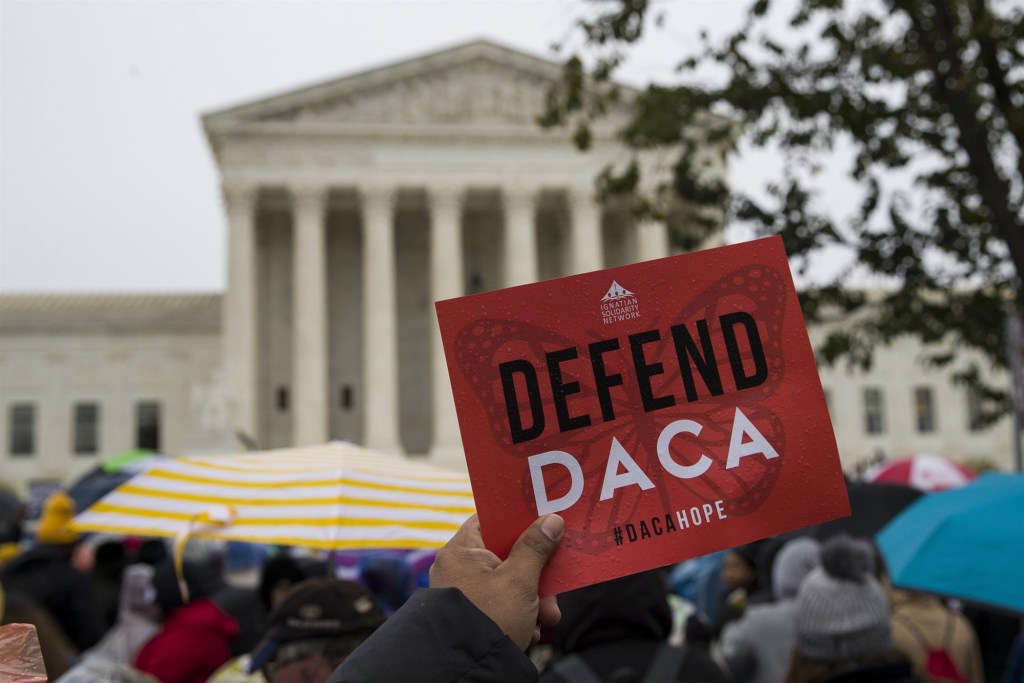
Deferred Action for Childhood Arrivals (DACA) was under scrutiny last year as many Arizona Dreamers awaited the Supreme Court response. 

DACA was implemented on August 15,2012 by the 45th President Barack Obama through executive order. DACA allows certain individuals that meet specific requirements to receive deferred action of removal from the United States. There have been over 24,000 active casesof DACA recipients in the State of Arizona. 

StateNumber of DACA recipients Average age of arrivalAverage year of arrival Number of U.S. born children of DACA recipients 
Arizona 24,7006199912,200 

On June 18,2020 the Supreme Court ruled in favor with DACA Recipients declaring that the DACA program will continue in effect.  The Trump Administration announced that it will continue to dismiss DACA applications, denying many individuals the right to many benefits. U.S Citizenship and Immigration Services (USCIS), had not accepted any new DACA applications after the Supreme Court Ruling, leaving many undocumented individuals not sure of what was to come. 

Following five months after the Trump Administration announcement on new applications, a federal court stated that DACA program must adhere to the past guidelines the program was issued during the Obama Administration. USCIS announced the acceptance of new applications on December 8, 2020. 

Visit CIMA Law Group for any questions relating immigration help , or services. 

Even Deadlier New COVID Strain?

Now more than ever is the worst time to start letting your guard down from COVID-19 as 4,000 deaths a day is now a reality in the United States of America. However, there is an even greater found strain on the horizon that has yet to unleash its true potential of fatal consequence.  Although the B.1.1.7 strain isn’t understood as more deadly in regards to its victims likelihood of survival, it is the case when considering the significantly higher acquisition and hyper-transmissibility of the newly mutated virus. B.1.1.7 has now shown frightening prominence in recently found cases, prominently blossoming in the country of Ireland as 43% of new cases within only the past 2 weeks have been classified as the new strain. This version of the virus is now considered the dominant strain in Ireland and has successfully acquired the title of highest new cases per capita globally. 

Image

From this, we can gather a pair of good news and bad news. The good news is that the vaccine still is effective in combating the lethal and even fatal effects of this evolved virus strain. The bad news is that the United States has shown a discouraging rollout. Even though we have the ability and scientific knowledge to create a vaccine in record-breaking time, the United States struggles in a time with no political stability to distribute it effectively. Cases of this can be seen with examples such as California, having approximately around 2,000,000 vaccinations left to distribute and are already far behind its own projected timeline. Much of the blame could be pinned toward the sort of distribution approach many levels of governments have decided to commit. Instead of restricting individuals by prioritizing certain professions and age groups, a new trend of scientists and influencers are starting to suggest that the most suitable alternative is to then advance with a “First come first serve” advancement. This is predicted to accelerate and widen vaccinated population sizes enough to drastically reduce the current rate of COVID infections. Only time will tell if the United States and the soon to occur transition of power will ultimately hinder or benefit the country’s future.

Rioters Arrested: Aftermath of January 6th.

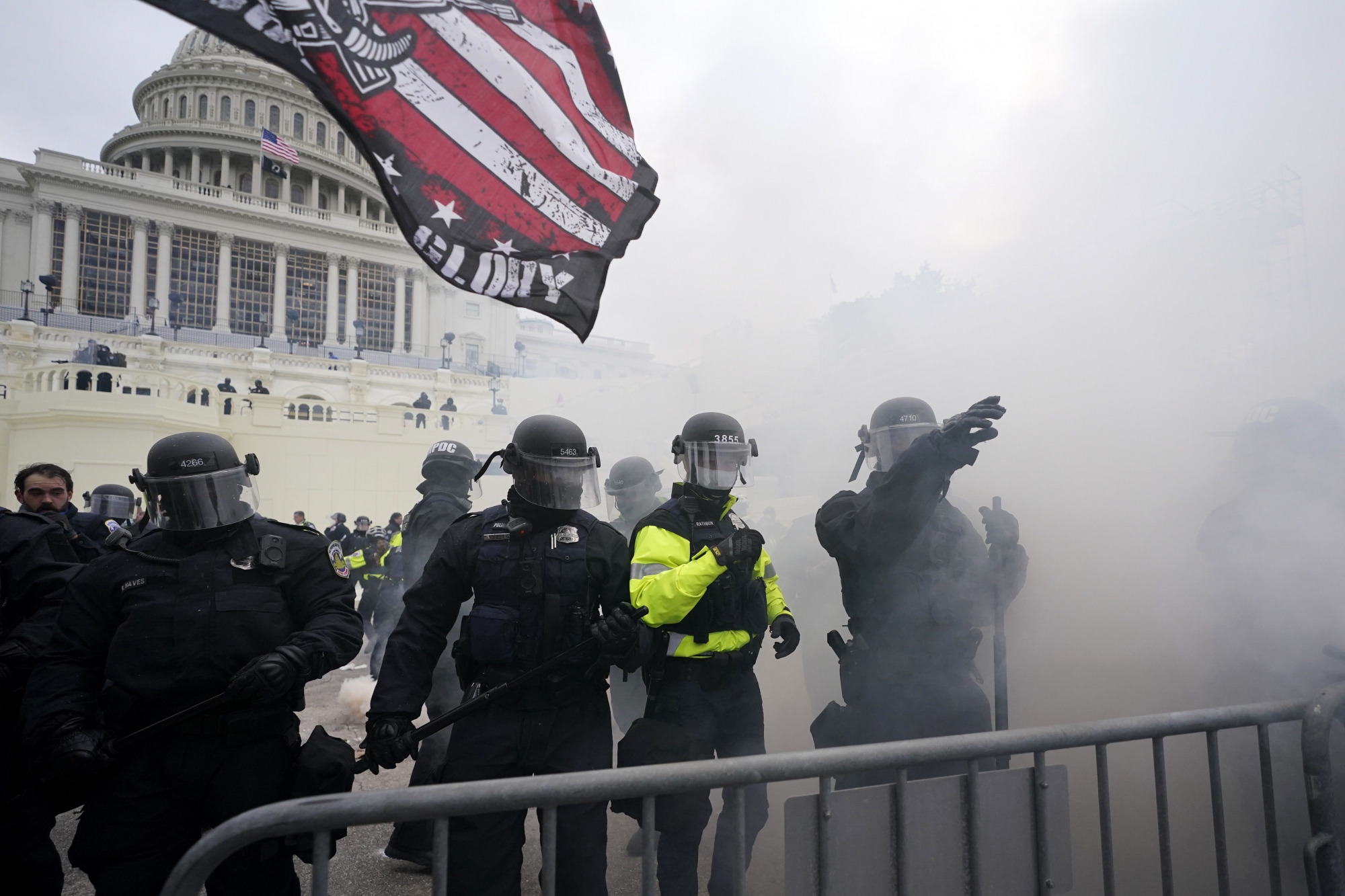
Following the attack of the United States Capitol building on January 6th, “U.S. Investigators have opened 275 criminal cases and charged roughly 98 individuals,” according to CNN. The number of opened cases is likely to bypass 300 with in the next few days as the FBI has received more than 140,000 tips identifying rioters. The FBI is actively seeking more information to press charges for seditious conspiracy, which is a 20 year prison sentence. The attack has left 5 dead.

Massimo and Vitka

Among those arrested are two police officers from Virginia, an Olympic gold medalist, a Delaware state elected legislator, and a member of the white supremacist group Proud Boys. U.S. Also included are highly trained ex military members. Attorney for the District of Columbia, Michael Sherwin, has firmly announced that no plea deals will be made surrounding this matter, even if the person self surrenders, due to the nature of the matter. Steven D’Atunono of the FBI’s Washington Field Office said the FBI will “leave no stone unturned” and will investigate everybody-including law enforcement officers and council members.

Moving forward, Daniel Hokanson, chief of the National Guard Bureau, announced over 21,000 National Guardsmen being deployed by Inauguration Day to defend the D.C. area against any fore-coming threats, saying he is very confident in the new security plan. However, Biden’s inauguration rehearsal has already been postponed due to security concerns following the actions of last week, drawing the question of how secure the inauguration would be. In addition, the FBI is expecting armed protests around all 50 states as the inauguration nears.

If you, or anyone you know, has been a victim of violence due to civil unrest please contact CIMA Law Group.

Pompeo’s Final Actions sideline the Biden Foreign Policy Plan

While the last weeks of President Trump’s term have been full of resignations following the right wing insurgence of the nation’s capitol on January 6th, one cabinet member has found themselves busy with trips, policy plans, and setting precedent. Secretary of State Mike Pompeo has made near daily announcements on large scale foreign policy actions. Many of these actions appear to be designed to push the trump administration’s foreign policy priorities into at least the first few months of the Biden presidency and set road blocks in the way of the key issues and negations Biden hopes to accomplish with in his first 100 days.

With in the last 14 days Pompeo has re-listed Cuba as a state sponsor of terrorism, making already difficult trade relations all the more complication and hampering the Biden administration’s plans for a quick rapprochement negation with Havana. This may also decimate the island’s tourism based economy as foreign investors may retreat, and with the Covid-19 pandemic keeping travelers home, this could be a deafening blow to Cuba’s hospitality industry.

Similarly, Pompeo has spoken about to his plans to designate Yemen’s Houthi rebels as a terrorist organization in line with the trump administrations hard line anti-Iran policies. Experts worry this policy will only worsen the humanitarian crisis of the country as its citizens face a famine, civil war, and Covid-19.

While these actions are fairly easy to reverse, they do affect the U.S.’s overall creditability on the global stage, and may stress already frail foreign relations as many countries, both allies and foes, feel raw after the Trump administration’s policy changes.

check back with CIMA law for more updates and news.

President-Elect Joe Biden’s Stimulus Plan

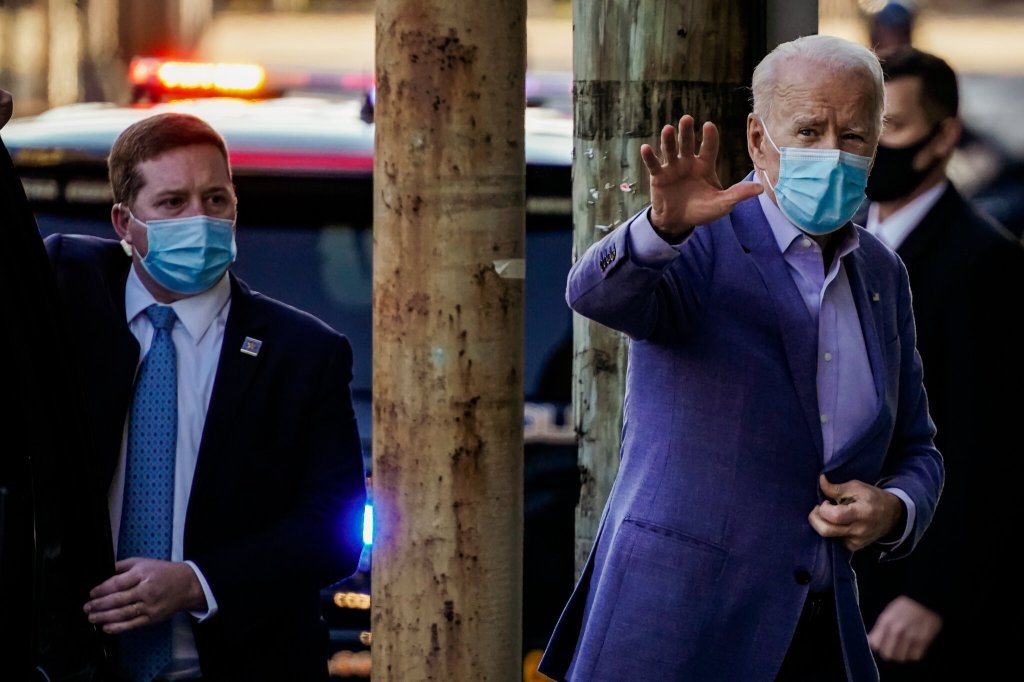
In less than a week, President-elect Joe Biden will be confirmed as the 46th President of the United States. Amid a second impeachment, capitol riots, and general civil unrest, Biden has unveiled his plan to launch a 1.9 trillion dollar coronavirus package. The plan titled “America Rescue Plan” comes after a year-long battle of conflicting opinions on managing a global pandemic. 

Biden’s plan tackles two facets of the pandemic: relief for American families and vaccine distribution. If approved, Biden’s plan will increase the weekly federal unemployment payments to $400 per week until September. It will also include another $1400 stimulus check, and he will be extending moratoriums on evictions through September. This follows an announcement that over 1 million American’s filed for unemployment last week.

Amr Alfiky/The New York Times

In terms of vaccine distribution, Biden’s plan would provide $70 billion to states to aid in their COVID testing efforts, as well as reading the minimum wage to $15 an hour. After announcing his relief plan Thursday evening, the stock market fell. Biden’s responded to this in Delaware, stating, “There is real pain overwhelming the real economy — the one where people rely on paychecks, not investments, to pay for their bills and their meals and their children’s needs.” Senior Biden officials have also alluded that bills regarding climate change and infrastructure will be introduced in February. 

2020 Makes Another Record- Tied for Hottest Year

With all the unique events, tragedies, and situations that 2020 has found itself in, it is almost of little surprise that it also tied 2016 for the hottest year on record. With wicked wildfires, droughts, and natural disasters this year, it is clear that nature had its fair share of suffering. And as I write from my desk here at CIMA Law Group in Arizona, I am reminded of the brutal summer endured here in the south-west United States.

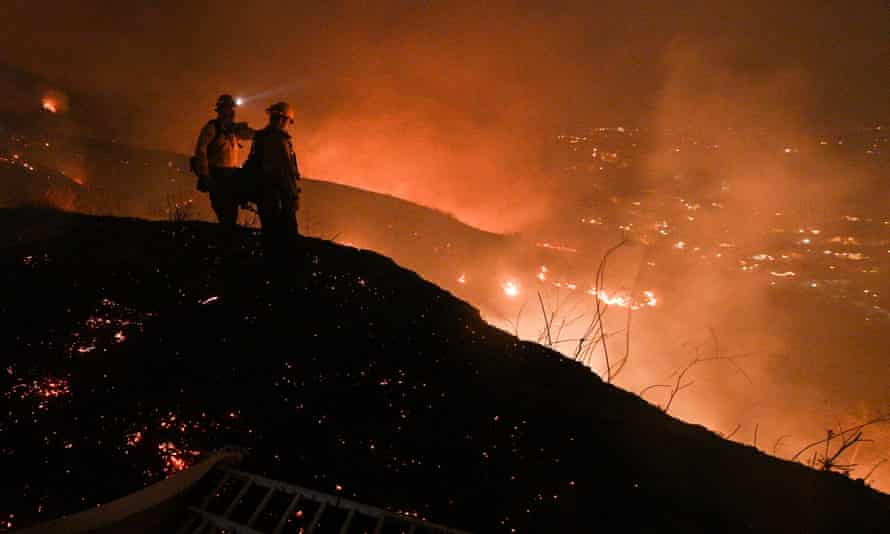
Firefighters look out over a burning hillside in Yorba Linda, California, on 27 October 2020.
Robyn Beck

According to the guardian, “the world’s seven hottest years on record have now all occurred since 2014,” a startling fact could be the new reality for all of us. In fact, scientists had even hoped that this year could be more moderate, since Earth’s climate is experiencing La Niña, which acts to cool temperatures. While it is possible to see more of La Niña’s effects in 2021, the happenings of 2020 should leave all of us feeling unsettled.

After four years of Trump, who will be remembered as weakening or removing over “125 rules and policies aimed at protecting the nation’s air, water, and land, with 40 more rollbacks underway,” there could be much environmental change coming, as Biden enters as the new president. This could, to some extent, influence our global temperatures, as the United States still stands as a major carbon dioxide contributor. As the consequences of climate change continue to swiftly progress, there is still much tension around the world as to how each government will handle climate policy.

Design a site like this with WordPress.com
Get started