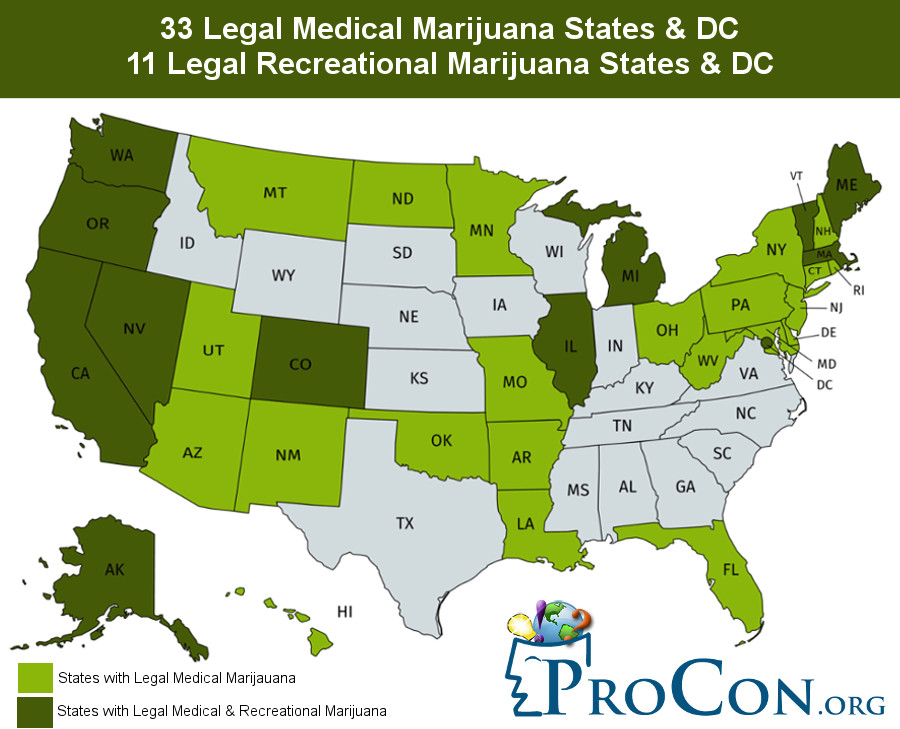
This November 3rd, voters will not only determine the next U.S. president, but they will also determine the fate of state-wide initiatives that have gathered enough support to make it to their ballot. In Arizona, voters are likely to see an initiative to legalize recreational marijuana for adults over 21 and to provide pardons for people previously convicted of marijuana-related charges.
What is the initiative?
Under “The Smart and Safe Arizona Act,” adults would be allowed to legally possess an ounce of marijuana at a time. The act would also establish over 100 recreational dispensaries and give local governments the power to control regulation, zoning, and licensing. Here is where proponents point to the potential of legalization to improve Arizona’s economy; in 2019, Colorado collected more than $302 million in taxes and fees on marijuana sales alone. Under “The Smart and Safe Arizona Act,” a 16% tax on cannabis sales would fund the enforcement of marijuana regulations and distribute the remaining revenue to police and fire departments, community college districts, and the state’s highway fund. 10% of those additional funds would also go towards a special “Justice Reinvestment Fund” aimed at preventing substance abuse and helping those disproportionately harmed by Arizona’s long history of anti-pot legislation.
The second part of the initiative would decriminalize many marijuana-related offenses and allow people convicted of marijuana-related crimes to petition to have them cleared from their criminal record. Arizona currently has the fourth-highest imprisonment rate in the nation and the fourth-highest penalty for marijuana possession (up to 18 months in prison). This initiative addresses citizen concerns that the Arizona prison population has grown twice as fast as the state’s general population and that 7% of all Arizona arrests are marijuana-related. A report done by George Mason University School of Public Policy estimated that non-violent, marijuana-related arrests cost Arizona taxpayers $168,969,000 annually in criminal justice expenses (totaled from police, judicial and legal, and correctional costs).

Interestingly, there has been little organized opposition to the “The Smart and Safe Arizona Act” apart from a few businesses looking to get into the cannabis industry; they expressed concern that the initiative favors multistate operators who already own licenses to sell recreational marijuana. The lack of opposition may be due to the fact that the initiative addressed the majority of the concerns expressed in previous years. For instance, “The Smart and Safe Act” would ban the sale of products designed to look like fruit, animals, cartoons, or gummy bears.
The Election
It may be that “The Smart and Safe Arizona Act” will be one of the only Arizona state initiatives to make the general election ballot. To get on the ballot, citizen initiatives must collect upwards of 200,000 to 300,000 signatures by July 2nd, but despite the coronavirus pandemic limiting petitioners’ abilities to collect in-person signatures, the Arizona Supreme Court denied an emergency request for petition initiatives to collect electronic signatures. This means that the majority of ballot measures won’t have the time to gather enough support to qualify. However, before the state shut down, “The Smart and Safe Arizona Act” had already gathered 320,000 signatures, nearly 80,000 more than is required.
Will the initiative pass? Amid the pandemic and larger national concerns, it may be too early to tell. Keep an eye out after July 2nd for updates on what initiatives will make it on your ballot come election day.
- Isabela von Dehl
 CIMA Law Group Blog