Cuomo Refuses to Resign

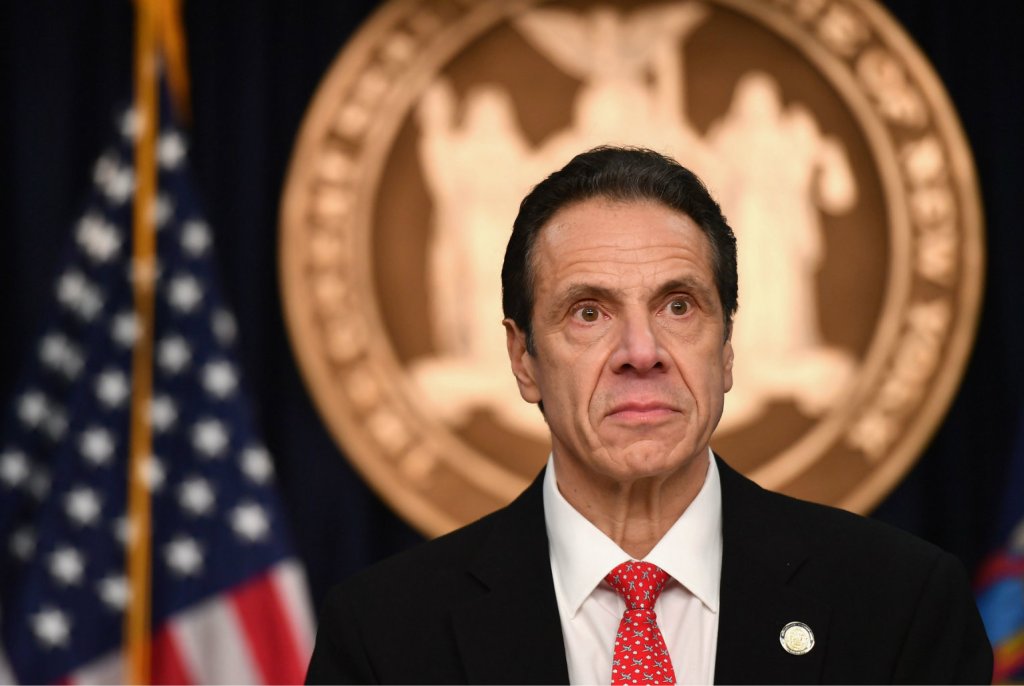
Andrew Cuomo has received over 35 statements in the past week that called out the work environment he created as inappropriate, overly stressful and toxic.
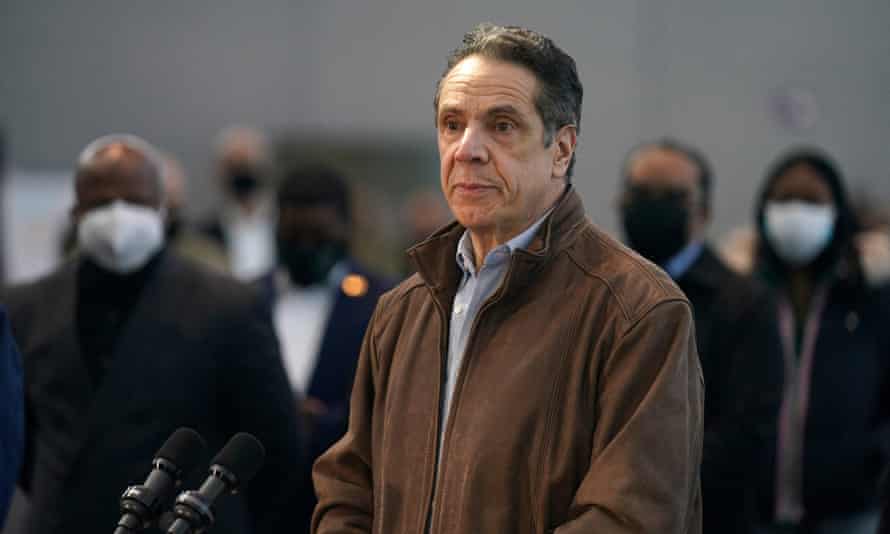
Cuomo denies sexual misconduct allegations: 'I'm not going to resign' | Andrew  Cuomo | The Guardian
https://www.theguardian.com/us-news/2021/mar/12/andrew-cuomo-resign-new-york-democrats-aoc-nadler

Several women have come forward with allegations of feeling sexualized by Cuomo. These allegations include inappropriate touching, gestures, sexual advances, and sexist expectations for female employees. The women that have come forward with more serious accusations have been largely supported and believed, although there remains people who are unconvinced.

Beyond allegations of sexism, he is being critiqued as having mishandled the pandemic, especially as it relates to nursing homes and his administration’s large understatement of the recorded death count. The number of COVID-19 deaths among long-term care patients in New York was underreported by about 50%, which also caused a lack of vital information among lawmakers. Many politicians have come forward, labeling Cuomo as incompetent and immoral.

Although inquiries continue, Cuomo refuses to resign, even stressing that he does not want to give into “cancel culture“. Cuomo also has expressed his belief that politicians’ call for his resignation is a political attack, even though Democratic New Yorkers and Republicans are both behind this. The governor continues to welcome people to step forward, but is refusing any serious allegations, declaring that any politician who believes these women is choosing to not believe facts. While he has acknowledged that his demeanor may have made some people uncomfortable, politicians and civilians alike believe that his past and present mistakes are too substantial to ignore.

Follow CIMA Law Groups blog, which posts several times a week. For booking a free consultation at CIMA, click here.
Iowa Governor passes contentious law aimed at limiting voting

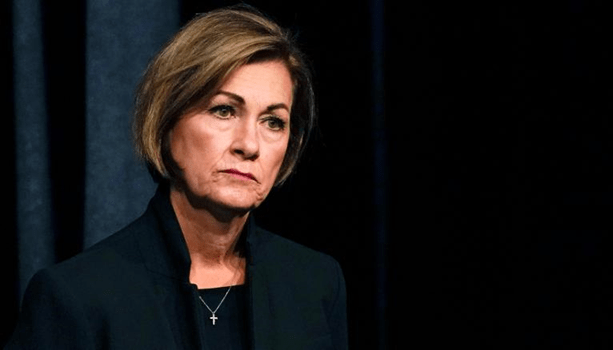
On Monday, Republican Iowa Governor Kim Reynolds signed a controversial bill into law which introduces a number of new restrictions on the voting process, including but not limited to: reducing the number of early voting days from 29 to 20 days, closing polling locations an hour earlier on Election Day (8p.m. instead of 9p.m.), and banning officials from sending applications for absentee voting without a voter first requesting one.

Republican Iowa Governor Kim Reynolds (Image by Charlie Neibergall, CNN Associated Press Journalist)

The legislation passed both Republican-controlled chambers last month and drew immediate backlash from Democrats in the state – including a tweet from the Iowa Democratic Party stating, “We deserve better.” Similarly, Democratic election attorney Marc Elias subsequently condemned the law as the “first major suppression law since the 2020 election” and insinuated that litigation may be forthcoming.

Despite the early upheaval provoked by this news, the passing of this legislation is, ironically, not an isolated incident in the state of Iowa – but rather part of a much larger effort by GOP legislators across the country to roll back voting access in light of the November 2020 election outcome. In fact, according to a February analysis conducted by the Brennan Center for Justice, over 165 restrictive bills have been introduced, prefiled, or carried in 33 different state legislatures this year (in stark contrast to a total of 35 bills in 15 states by February 3rd of last year).

With unprecedented numbers of voters casting their ballots by mail in the 2020 election, it logically follows that legislators would show particular interest in absentee voting reform. In a statement released earlier this week, Governor Reynolds claimed that such legislation is necessary to help strengthen uniformity for election officials, and promote “transparency and accountability”. However, whether these restrictions truly help restore voter confidence in democracy or are just a measure to suppress the vote in future elections is still unclear. It will be interesting to see how Reynolds’ arguments are used in other states and if they hold.

Here at CIMA Law Group, we will be following the matter closely.

Warren Proposes Wealth Tax on “Ultra Millionaires”

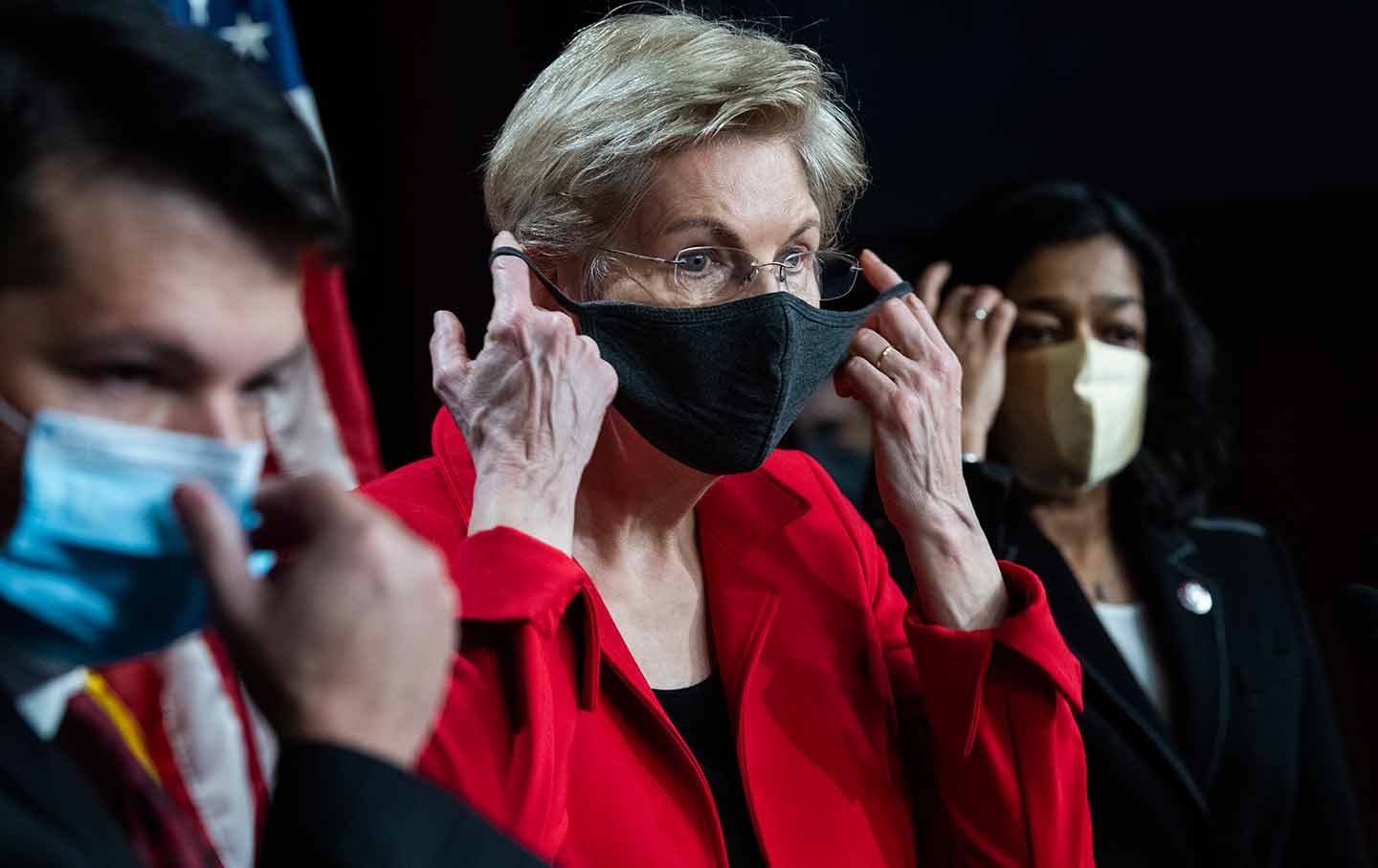
Massachusetts Senator Elizabeth Warren, Washington Rep. Pramila Jayapal, and Pennsylvania Rep. Brendan Boyle have proposed an ultra millionaire wealth tax in order to revive the economy and address income inequality. The tax is also firmly backed by Bernie Sanders. The Ultra Millionaire Tax Act, revealed on Monday morning, carries the conditions of a 2% annual tax on the net worth of households and trusts between $50 million and $1 billion, as well as a 1% annual surtax on assets above $1 billion, for a total of a 3% tax increase on billionaires. Approximately 100,000 American families would be subject to the Ultra-Millionaire Tax Act, and over 3 years, these additional taxes are projected to amount nearly $3 trillion over a decade. Warren stated the money collected from this proposal would go directly to child care, education, and infrastructure.

Elizabeth Warren

The bill is expected to face severe obstacles in the Senate, as some groups are predicting negative consequences from the taxation of America’s wealthiest homes. According to CNBC, a 2020 Tax Foundation analysis found the act would reduce U.S. economic output by 0.37% and 0.43% over the long term. The wealth tax would also face hardships on the administrative and compliance scale, as there would be a complex difficulty valuing assets as well as tax evasion schemes. However, Warren has included a dedication of $100 billion into IRS systems to ensure a 30% audit rate for the super wealthy, and the implementation of 40% exit wealth tax on Americans who seek to renounce their citizenship to avoid the wealth tax.

Although arguments regarding the constitutionality of the bill are quickly arising, The Hill reports that an outpour of support from law professors are becoming prevalent, as they are writing letters to Warren discussing the legality of the act. The Data for Progress also found that a majority of voters in the states that were previously surveyed supported a wealth tax, showing the gain of support for the notion across the country.

If you would like to receive updates on bill tracking, CIMA Law Group’s Government Relations Department is the perfect fit for you. For more information, please contact CIMA Law Group.

COVID-19 Updates

On March 5, 2021 Arizona Governor Doug Ducey announced that due to a drop in COVID rates in the state, physical distancing and mask protocols will remain in place, however restaurants, gyms, theaters, water parks, bowling alleys, and bars providing dine in services are now allowed to be open to full capacity. Spring Training and Major League Sports will have the ability to operate upon submission and approval of a plan to the Arizona Department of Health Services that demonstrates implementation of safety precautions and physical distancing.

A few days prior, business operators in Austin and throughout Central Texas expressed a mix of uncertainty, anger and relief after their Governor announced the lifting of Texas’s mask mandate and allowing businesses to return to 100% capacity beginning March 10. Although some people have expressed their relief on the matter, a majority of people seem to be unhappy with the decision. Two groups on Monday are holding a rally at the state Capitol in Austin against Gov. Greg Abbott’s recent order. Protesters are asking the governor not to relax the mask mandate until 70% of the state’s essential workers are vaccinated.

COVID-19 in Arizona: Coronavirus now 'widespread,' could peak in late April  | Cronkite News - Arizona PBS

As far as the vaccine goes, more and more Americans have been able to get the vaccine as it has become more easily available. The CDC has released guidance for those who have gotten the vaccine saying that people who are fully vaccinated against Covid-19 may now safely gather with small groups from other households without wearing masks or physical distancing, even if those people have not yet had their vaccine. This is a huge improvement considering this is the first public health guidance aimed at resuming life as normal. A person is considered fully vaccinated two weeks after the final dose, giving the body time to build antibodies against the virus so the process is still mildly time consuming however this is still exciting news. For the first time in a year, fully vaccinated grandparents may visit unvaccinated healthy adult children and healthy grandchildren without masks or physical distancing. Although there is still a long way to go, a life of normalcy is finally in sight again.

For any further questions, feel free to contact CIMA Law Group.

Senate passes Biden’s $1.9 trillion Covid relief plan

March 7, 2021, one year of covid-19 Pandemic has passed by the death of American people has rolled up to 500,000 by middle of February. However, we are still living in the middle of the pandemic. Millions of American still struggling in suffering sickness, unemployment, and lack of affordable childcare while most of schools remain closed.

President Joe Biden has proposed another $1.9 trillion COVID-19 relief bill. After almost 12 hours debate in the senate, the bill barely passed with 50-49 votes. This bill will pass to the House for approval on next Tuesday, and then it will go to Biden to be signed into law.

House Democrats Move Forward On Biden's $1.9 Trillion Stimulus Package—All  Republicans Vote Against

The stimulus package includes extend $300 weekly unemployment benefits through September 6, distribute extra $1400 to individual who makes less than $80,000 annually and billions of dollars for states and municipalities. schools, small businesses, and vaccine distribution.  

Many amendments were introduced by Senate Republicans, however most of them defeated by democratic majority. Few amendments were passed including extended unemployment benefits, school reopening and veteran’s educational benefits. Every Republican senator and eight democratic senator including Kyrsten Sinema of Arizona were opposed the minimum wage amendment. Note that the current federal minimum wage is only $7.25 per hour.

Many republicans are afraid this extra $1.9 trillion stimulus package will continue enlarges the federal deficit which was $3.1 trillion last year. But some economist believes that the package is large enough to erase the U.S. GDP gap to the pre-pandemic trend around midyear. A new high-water mark for GDP will not coincide with full recovery in the labor market. As of February, 9.5 million Americans remained out of work.

If the bill and amendment will be passed in the future? Follow CIMA LAW Group for weekly news update.

Ron DeSantis Soars in Approval and Competitiveness

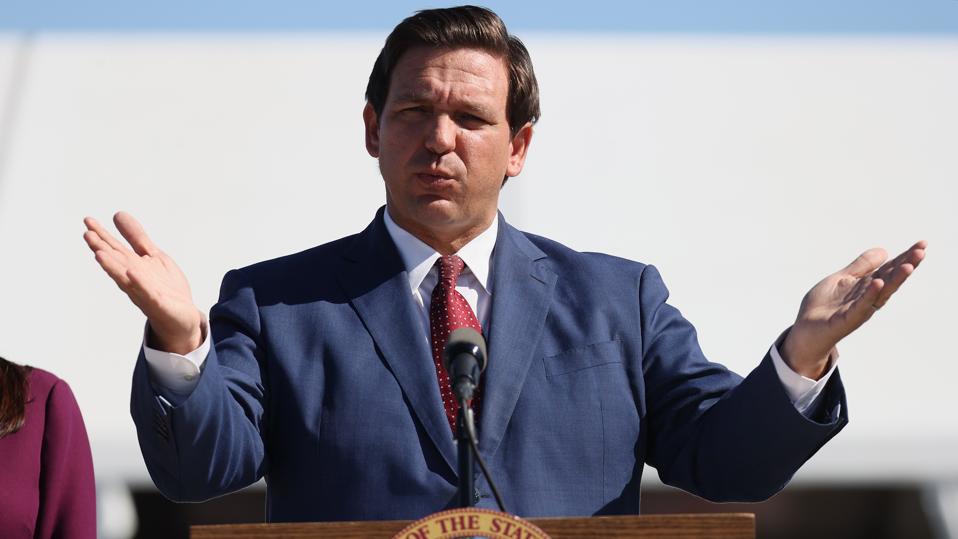
New polling data released Tuesday shows a major jump in Gov. Ron DeSantis’ job approval ratings put him in a strong position against hypothetical match ups against the two best-known possible Democratic challengers in 2022. The governor’s statewide approval rating has increased by a full eight points since July 2020, but is still down by nine points since March 2019, at the beginning of his term. DeSantis holds comfortable leads over Democrats Nikki Fried and Charlie Crist, his two most high-profile potential challengers for reelection in 2022, the poll found. His disapproval rating has also dropped 7 points from 49% to 42%. A second poll pits DeSantis against either Florida Agricultural Commissioner Nikki Fried (D) or U.S. Congressman and former Florida Governor Charlie Crist (D). The poll shows the incumbent governor with a nine-point lead over Fried, the only Democrat holding statewide office in Florida. Gov. DeSantis has an 11 point lead over Crist, Florida’s governor from 2007 to 2011. While voters are split along predictable party lines, DeSantis holds a wide advantage among independent voters, beating both potential Democratic challengers by approximately thirty points. The Mason-Dixon poll’s margin of error is no more than four percentage points.

Ron DeSantis Threatens To Pull Vaccines From Florida Counties That  Criticize Distribution

This new piece of data now is stopped by even more surprising data suggesting Former Vice President Mike Pence and Florida Gov. Ron DeSantis (R) are the two front-runners in a new poll of potential 2024 Republican candidates that does not include former President Trump. A new survey obtained by The Hill from GOP pollster Tony Fabrizio, who polled for Trump’s 2020 campaign, shows Pence at 19 percent and DeSantis at 17 percent support among GOP primary voters in a potential nominating contest that does not include Trump. Sen. Ted Cruz (R-Texas) is the only other contender to break double digits in the survey with 13 percent. However, when Trump is thrown into the equation, they find themselves in a distant second and third place. When the former president is taken into account, Trump gets 51 percent support, trailed by Pence at 9 percent and DeSantis at 7 percent.

George Floyd Police Reform Bill Passed by House

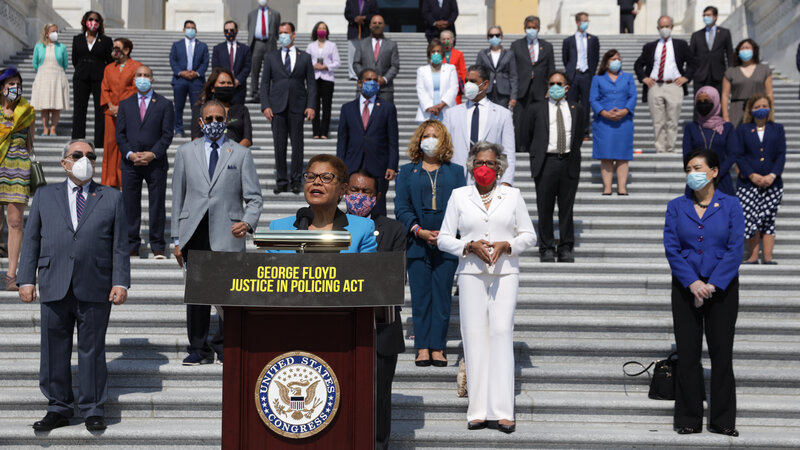
George Floyd’s tragic death spurred national protests and calls to action. Activists have demanded legislation to defund the police, or at the very least, to introduce policy that will reform the way police departments will be able to run. After several months of back and forth, a police reform bill named after George Floyd has been passed in the House.

Alex Wong/Getty Images

The bill’s most important aspects include its banning of chokeholds and of no-knock warrants in cases with drugs, in addition to its qualified immunity reformation. It also provides grants for states that set procedures for looking into police-involved deaths, creates a National Police Misconduct Registry, requires data on force, requires racial bias training, and provides incentives to state attorney generals for investigating police departments.

Although the bill’s passing in the House is reason to celebrate for many, it is important to note the unlikelihood of its passing in the Senate. Democrats hold a slight majority in the Senate, but 60 people are needed for the legislation to pass. There are simply not enough Democrats for the bill to pass, as 10 Republicans would have to vote in support of it. This is quite unlikely, as not a single Republican voted in favor of the bill in the House, with even two Democrats joining the Republicans in voting against its passing.

The partisan divide has seemed to have grown stronger; last summer, two Republicans had voted in favor of a similar version of the bill. Conservatives argue that the bill would tie up police departments with too many regulations, and would weaken police from being able to do their job effectively. Liberals assert that legislation to hold police accountable is vital at a time when the nation has witnessed innumerable accounts of police brutality.

For now, the U.S. will have to wait and see what the politicians in D.C. vote on. For news several times a week, keep up with our blog, and contact CIMA Law Group here.

New York AG says she may open investigation into Governor Cuomo

New York Attorney General Letitia James announced on Monday that she has a received a letter from Beth Garvey, special counsel and senior advisor to Governor Cuomo that asked the Attorney General to select an independent firm to conduct an inquiry into the recent sexual harassment allegations made against Cuomo by former aides of the Governor.

The fallout against Cuomo continued this week as a second woman, 25-year old Charlotte Bennet, who served as a former executive assistant and health policy advisor to Cuomo came forward to say that she had been in several uncomfortable situations with the Governor and that he had asked her inappropriate questions about her sex life. This comes one week after Lindsey Boylan, a former aide of Cuomo, also came forward to say that Cuomo had forcibly kissed her in his office back in 2018.

Governor Cuomo responded to the allegations over the weekend, stating that he may have made “insensitive” comments in the workplace, but continues to deny all recent allegations made against him. Bennet, in a blistering statement released on Monday, said “These are not the actions of someone who simply feels misunderstood; they are the actions of an individual who wields his power to avoid justice.”

James is also investigating Cuomo for nursing home deaths following reports that the state may have undercounted by up to 50%.

The Biden Administration Preparing to Sanction Russia this Week

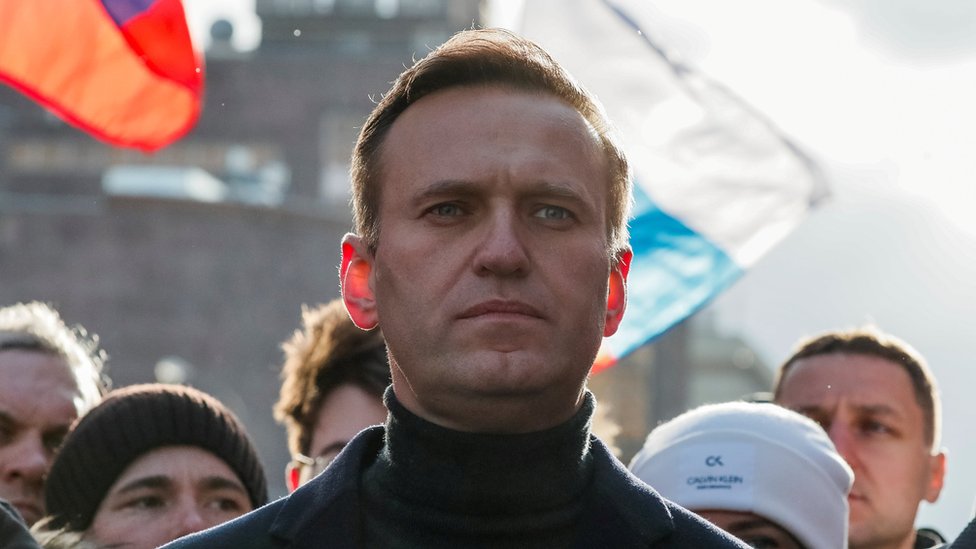
The Biden administration is preparing to impose sanctions on Russia following the poisoning and jailing of Russian opposition leader Alexey Navalny within the week, calling for his immediate release from prison. On August 20, 2020, Navalny was poisoned with the lethal nerve agent Novichok, which was planted in his underwear. Falling extremely ill on a flight to Moscow, the pilot diverted the plane to Omsk, where Navalny was transported to a secret location for life-saving treatment in Germany. If the flight had continued to Moscow, Navalny would have died. Returning home to Russia, Navalny was immediately imprisoned. However, before imprisonment, Navalny posed as an official in Russia’s National Security Council in order to find out the details of his poisoning from elite toxins teammember for Russia’s FSB security service, Konstantin Kudryavtsev, in which Kudryavtsev disclosed it was an inside job from the Russian government.

Navalny

Working in conjunction with the European Union, the implementation of the sanctions are the first imposed on Russia by the Biden administration, which according to CNN, “Will set the tone for their policy towards Moscow going forward.” The Biden administration criticized the Trump admin, saying the U.S. will no longer be bystanders to the poisoning of Navalny and will no longer shy away from directly confronting Russia in order to send a, “strong message on human rights.”

The Biden administration is also planning on tackling a broader set of challenges brought on from Russia within the coming weeks. One option being discussed is an executive order, focused on Russia, which would place sanctions on the country for their multiple assaults on both American democracy and American people. These sanctions would be reparations for attacks such as the SolarWinds hack and the bounties put on US soldiers in Afghanistan, both which have been linked back to Russia.

If you have been a victim of personal injury, please contact CIMA Law Group to discuss further options with a highly experienced professional.

Update on Immigration

Since Biden has taken over as President, he has spoken a lot about his future immigration plans, however so far there have not been many changes implemented. This is partly due to Democratic lawmakers wrestling with how to move forward with a series of immigration bills that would legalize undocumented immigrants, with some pushing for sweeping immigration revisions while others have been urging to proceed with caution. House Majority Leader Steny Hoyer, has mentioned trying to put a bill on the House floor by March 8 is “being discussed,” but he didn’t offer a timeline. If not, the lawmakers are hoping to address said immigration bills on the House floor before April 1, in which they can introduce legislation in the new session that’s already passed in the chamber without going through committee again. Rep. Linda Sánchez will lead Biden-Harris immigration legislation in the House when it finally gets there. It would be a huge step in the right direction if these bills were to be passed and implemented as they would grant legal status to thousands of undocumented farmworkers and address immigrants who came to the US illegally as children, as well as two other programs, Temporary Protected Status and Deferred Enforced Departure, that offer temporary relief.

How Will A Biden Administration Tackle Immigration After Four Years Of  Trump?: LAist

Biden also has his proposed his U.S. Citizenship Act that would create an eight-year path to citizenship for millions of immigrants already in the country and provide a faster track for undocumented immigrants brought to the US as children. This bill was first proposed last month yet is still up for debate, however Biden has announced his willingness to pass other proposed immigration bill in the mean time. Throughout this process, it is likely that Biden will face many obstacles along the way because even though Democrats largely support legalizing millions of immigrants who are already in the country illegally, as Biden’s proposal would do, there is a risk in passing the bill in the House only to watch it go nowhere in the Senate. There will likely be many more updates to come throughout the next few months as Biden’s work on passing immigration bills is just getting started.

For any further questions in regards to immigration, please contact CIMA Law Group.

Design a site like this with WordPress.com
Get started