CA Senate proposes alternative Budget

Grading Gavin Newsom: California's most liberal governor ever ...

CIMA Law Group has been monitoring California’s new budget from Governor Newsom on how to best handles its new deficit caused by COVID-19. The Governor of California, addressed California’s $54 billion dollar deficit and made it clear that large cuts will happen if California does not receive aid from the federal government. However many lawmakers and senate members see the governor’s plan as a “draconian budget cut” which would target safety net programs and K-14 schools funds. The governor introduced on May 14 a modified $203 billion blueprint that, among other cuts, shaves billions in public education funding and pulls more than $50 million from adult Medi-Cal services, including diabetes prevention programs and eye appointments. Many believe it will affect low-income Californians and the senate has made their own budget plan that will use the same framework, but have a key difference that would protect services for the homeless, seniors and sexual assault victims, health care services, immigrants, and child care for working families.

The Senate has a little bit more different agenda as many believe Governor Newsom plan is not empathetic towards low income Californians. The plan created by the senate is to use $8 billion in reserves and defers, transfers, or borrow an additional $9 billion which is anticipated to saving $3.6 billion dollars savings if the health and human services cases will not grow large. It will protect public school funding and Medi-Cal and as well rejects the administration’s plan to pull funding generated by a tobacco tax to pay Medi-Cal providers, and rejects cuts to services such as senior nutrition programs and child welfare services. However, both the governor and Senate will decide by June 15th on a new budgetary plan however the senate will have more room if the state could get money from Congress. However, if they do not receive aid from the federal government they would agree with a backup plan. The backup plan includes deferring $5.3 billion in the school’s funding and would approve cuts to a more narrow set of services. The back-up strategy would also delay $1 billion in payments by one day from June 30 to July 1 which was a strategy used in 2011 and 2012 during the last financial crisis to push spending into the next budget year.

California will be watched as it will handle balancing both the restructuring of its economy and the social and educational funds. The stakes are high as the time to decide will soon be approaching and whether the federal government will give aid to the state or the state must tread on its own in its recovery from deficits. Even with cuts there might be a middle ground the Senate and the Governor can stand together at that wont terribly hinder many of Californians and still provide the necessary funds to cut the deficit.

Sources: https://www.sacbee.com/news/politics-government/capitol-alert/article243063166.html

How to File for Unemployment

The U.S. Department of Labor’s unemployment insurance programs provide unemployment benefits to eligible workers who become unemployed through no fault of their own and meet certain other eligibility requirements. Unemployment insurance is a joint state-federal program that provides cash benefits to eligible workers. Each state administers a separate unemployment insurance program, but all states follow the same guidelines established by federal law.

Who is Eligible for Unemployment?

Workers who are laid off for economic reasons due to the business closing, a reduction-in-force, or because of lack of work, are considered to be unemployed through no fault of their own. 

What You Will Need to Apply for UI:

  • Your Social Security Number
  • Your mailing address, county of residence
  • Your Driver License or state-issued ID number
  • Employment history:
    • The names, addresses, and phone numbers of all employers for the last 18 months, including the correct mailing address and telephone number for the most recent employer
    • The last day worked immediately prior to filing the UI claim
    • Amount (before deductions) and date of any payment for severance, vacation, holiday or unused sick pay
    • The name and local number of your union hall, if applicable
    • Alien Registration Number, if applicable
    • Copy #4 of DD Form 214 if released from the military in the last 18 months
    • SF 8 or SF 50 if employed in Federal Civilian service in the last 18 months
    • Start date and monthly benefit amount of any pension (other than Social Security)

Applying Over the Phone:

You can apply by phone, Monday through Friday, 7 a.m.-6 p.m. and Sunday from 9:30 a.m.-5:00 p.m. The phone number is 1(877)600-2722.

Applying Online:

You can find the link to your state’s Department of Economic Security here.

Filing a Weekly Claim:

To maintain Unemployment Insurance benefits, you are required to file weekly claims confirming that you continue to meet the requirements to receive Unemployment Insurance. You must file a claim every week you are unemployed, or underemployed. Additional information will be mailed to you once filed or can be found on your state’s Department of Economic Security website.

Coronavirus: Economic Trends and Issues Facing the Real Estate Industry and What Could be the New Normal

The coronavirus has not just affected our health but as well as our economic safety net. All industries are affected one way or another however it has become a concern for the real estate industry in which relies heavily on social interaction the change will dramatically change the landscape for both residential and commercial. To help find some possible answers I attended, as a CIMA Law Group management assistant, a webinar created by NAR( National Association of Realtors) called NAR-Commercial Economic Issues and Trends Forum to examine trends the industry is currently facing during this unprecedented time and how the industry can adapt to a new way of doing business.

The Good

The industrial, self-storage, and property development are in good shape and are projected to be stable into 2021. Because of the rise of online purchases and the need to store more stuff, Mr. Yun believes industrial and self-storage sectors can thrive in this pandemic and post-pandemic era. Furthermore as many people are uncertain of this pandemic and its economic consequences, more people are likely to buy apartments which will increase the need for multifamily properties in cities and suburbs. It seems that house development and land property will struggle however Mr. Yun believes for now a housing development and land property can be stable into 2021 as of now residential investment grew to 21% which indicates it is in a stable state. Now the question of how can residential investment grows into the pandemic era and post-pandemic era? well for the most part people still very much desire housing and that with the possibility of working from home a reality people are looking towards properties they can have the space for work.

The Bad

We all know this economic crisis we haven’t seen since the great depression. It will be years to regain what we lost in such a short amount of time with more than 33 million unemployment and loss of -4.8% of GDP. Tough it looks very grim Mr. Yun wanted to make clear that real estate will be stable into 2021, however there are always parts that are the hardest hit and for the real estate industry the hardest hit is that of retail. The real estate commercial industry for retail has been for a time in a sharp decline. From 2018- 1Q20 people are looking more towards that of E-commerce and which is already burdening retail properties like malls and small retail businesses. As well for commercial properties are now struggling to pay rent as many were incomplete lock down and could not pay their property landlords which could create a situation with the loans as they become less valued and in the future create a situation where properties are bought by the fraction of its worth. Along with the Vacancy rate based on the model shown in the webinar by Mr. Yun showed that there was a 19% Vacancy for retail, a 22% vacancy for hotels, and an office’s vacancy of 13%. It shows a possible issue for the commercial industry which could deeply affect in its near future however it is not certain if vacancies will be a long term issue or a short term and when properties will be back to on their feet to generate income so they can pay their property rent and such.

Trends

Some aspects of our life are temporary changed but there will be lasting impact on where we do our work post-COVID-19. For real estate, some parts will keep going while others may drastically change forever. But it is the sincere belief that real estate can thrive if it can recreate itself for a possible society that is more socially distant.  Mr. Yun believes instead of an urban revival we will see in the near future the revival of the suburb. If we do see a trend come were workers stay home, many will desire to move to the suburbs that allow them to have cheaper prices and bigger spaces. It would be essential that houses be big enough where they can have the necessary space for work and could separate work and personal space. As well many businesses could use more properties in the suburbs and as well create less traffic.

However it could drastically affect commercial properties in the city that rely on companies to have people go to those properties for work. The current state of commercial real estate properties like office spaces are in a neutral position. whether it could either change its properties to the standards of social distancing or negatively impact it as the appeal lessens for large office spaces because of the risk of illnesses. If the commercial industry wants to keep office properties running they may need to change the basic layout of the space so that it is compatible with socially distant clientele or create large properties for business to rent for their remote workers. Many people want to be safe when they work but feel the unease of returning to big office spaces but at the same time feel it would be too difficult to work from home and so an idea that was proposed by Lawyer Louie Lujan, the Director of Government Relations for CIMA Office and who manages real estate cases in California and Arizona for the firm, has suggested having a middle ground in which a large commercial property can be rented out to multiple businesses in which allows a certain amount of people who work at home to schedule time to come in do their work without having the risk of crowded office space. As well the property could guarantee to have the area to be cleaned after each use and to have laptops and supplies for the workers when they come in. The idea is to shrink the large office spaces and designate people who work from home to go to certain properties throughout the city or suburb to do their work without them feeling completely isolated from home as a remote worker. For commercial real estate it could keep large office properties and could make income from the rents of businesses.

Medical Armory Malls

Lastly One of the biggest things Mr. Yun suggested for the future of retail properties is that to use empty retail malls as armory storage for medical supplies, which is a strange but clever idea at the same time. Like I said retail has been struggling for years and for many people the soon extinction of large malls could be in the near future. Now the question is how can we reuse large amount of space like malls and one possibility is to stockpile for medical items and use it as a make shift hospital. It would just help our hospitals which struggled immensely during this COVID-19 pandemic but as well better prepare for possible next pandemic or a next disaster in the area. But in general we could be at a future were real estate can benefit from selling or renting properties to hospitals or medical offices like in malls or retail spaces for not just saving these commercial spaces but as well helping our medical community.

The future is still unknown for the real estate industry, nothing is set in stone all could be well or be taken away a quick instant. Fate will decide as we progress in this economic instability in this country and the world economy. However having some basic knowledge and opinions by NAR’s top Economist and Senior Vice President of Research Mr. Yun it seems that real estate can overcome this hurtle like it did so many times before.

– Brittany Koehler

A COVID-19 and Real Estate Perspective by Jeffrey Prang: Los Angeles County Assessor

In order to answer pressing questions about the COVID-19 crisis and specific real estate issues in California, the Greater Downey Association of Realtors invited Los Angeles County Assessor Jeffrey Prang to speak at a Zoom Webinar on May 27th 2020.

Beginning with the COVID-19 crisis, it is stressed that the long term effects on the market so far are unclear. This is due to the pandemic only recently occurring and there being a lack of meaningful data and statistics regarding the changes it has caused.

However, Prang made it clear that in the short term we are entering an economic depression that will impact the government’s ability to provide services to American citizens. He provided data that has surfaced regarding the Housing Market in California. Home sale totals in Los Angeles dropped by 26.6% in April compared to March. The short term picture for the economy is bleak, with many curtailments and layoffs occurring and much more tele-working than prior to the pandemic. He detailed how in the LA County Assessors Office about 95% of his employees are currently tele-working.

The Housing market has seen a step backward in home sales, but home prices have risen by 3.8% in the same period, showing that LA County’s value remains high. In particular, Downey was ranked among the 20 most valuable cities in LA County and saw a 6.2% increase in property values, almost double what the county as a whole experienced. Prang attributed this growth in value and slowdown in sales to the multitude of new constructions in LA County and the CPI adjustment. It can be inferred based on the April numbers that the pandemic’s social distancing and stay-at-home orders are having an impact as well.

In addition to this information on the pandemic, Prang weighed in on the very important split-role measure on the California ballot for 2020. The amendment to the California Constitution would require a yearly assessment of all commercial and residential properties. This change would result in about a 7-12 billion dollar increase in the property taxes collected. These taxes would go towards critical public services such as the school system and helping the needy. In its current state, split role may or may not pass but it has a strong message of helping the children and the school system of California.

Jeffrey Prang will return to speak with the Greater Downey Association of Realtors in July to provide more information.

What is the “Retail Apocalypse”?

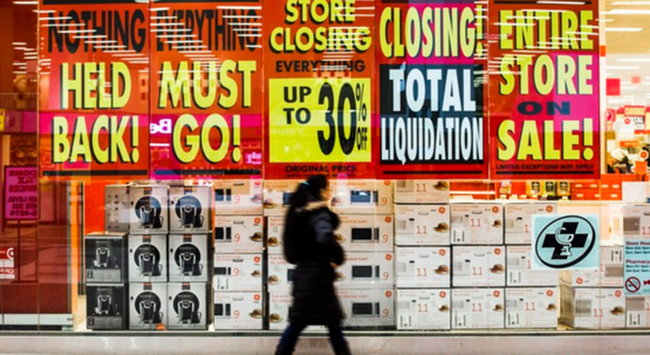
COVID-19 has struck small businesses and brick and mortar retail stores due to the shrinking amount of business they are receiving. Over 100,000 small businesses have closed their doors due to the impact of the COVID-19 pandemic. In addition, around 12,000 retail businesses are expected to close permanently in 2020, an increase from 9,300 in 2019.

Zooming in on retail stores, a larger pattern emerges which has been dubbed the, “Retail Apocalypse.” For a roughly ten year period the retail industry has been bombarded by continual bankruptcies and huge losses of revenue that have shown no signs of stopping. This rash of very bad business is known as an Apocalypse to imply the eventual complete and utter destruction of physical retail stores and malls.

This steady decline is due to several factors, including the rise of e-commerce, large corporate debts due to overexpansion and radical changes in consumer spending habits. Amazon and other e-commerce services corral millions of consumers into buying from the comfort of their homes, thus preventing their patronage of physical retail locations. This trend has only been magnified by COVID-19 as social distancing guidelines and stay-at-home orders have grounded many would-be retail shoppers. E-commerce is fully expected to become the new norm permanently and it is suspected that it already accounts for over 50% of total retail transactions.

This radical change in shopping behavior that has been expedited by COVID-19 spells the doom for physical retail locations. A recent study by Competera, a pricing platform, found in a survey that 29% of American respondents said they would never go back to offline shopping while 43% of British respondents said the same. This will be catastrophic for an industry that is already wracked by bankruptcies and closures.

These changes in spending habits will do nothing to assuage the massive debts accrued by retail giants, it will instead exacerbate them. Thus COVID-19 could greatly quicken the closing of retail locations.

Some argue that the Retail Apocalpyse is overblown, and data shows that numerous physical retail locations continue to open year after year. In addition, most closures appear to be from the same companies, rather than a sampling of all companies in the market, pointing to a more specific problem rather than a generalized Apocalypse.

Time will tell if physical retail can adapt and survive or if it is truly in the Apocalypse, a doomsday scenario with no possible recovery.

Cited:

https://competera.net/resources/articles/ecommerce-online-shopping-behavior-retail-infographic

https://www.msn.com/en-us/money/companies/more-than-3600-stores-are-closing-as-the-retail-apocalypse-drags-on/ss-BB13V2cJ?ocid=spartanntp

https://www.businessinsider.com/retail-apocalypse-amazon-accounts-for-half-of-all-retail-growth-2017-11

https://zh-prod-1cc738ca-7d3b-4a72-b792-20bd8d8fa069.storage.googleapis.com/s3fs-public/styles/max_650x650/public/2019-09/2019-07-13_07-33-30.png?itok=vHi4B74G

COVID-19: A Get Out of Jail Free Card?

The COVID-19 pandemic presents a serious challenge to detainees of the judicial system. This challenge stems from the detainee’s fear of contracting COVID-19 whilst in detention.  Across the United States scores of detainees have filed motions and appeals requesting their release from detention due to COVID-19. Should these potentially dangerous detainees be released into society because of the risk of catching coronavirus?

The powers that be have given a clear answer, No.

The most commonly cited case law for this issue comes from United States v. Clark, 2020. This case involves a diabetic man named Henry Clark who also happens to be a former drug trafficker. Clark found himself on the wrong end of the law when he was indicted with conspiracy to manufacture, distribute and possess heroin and fentanyl, and to make the picture even rosier, he was alleged to have caused a death due to the distribution of these substances. Clark is facing twenty years to life in prison.

In March, Clark motioned the District Court in Kansas for a temporary release from custody prior to his trial. In order for his gambit to work, Clark would need to prove that there was a compelling reason for his release from detention. He cited that due to his diabetes he was at a higher risk for complications from COVID-19. In addition, he claimed that he was unable to conform with CDC guidelines of social distancing in the Leavenworth Detention Facility in Kansas and that this facility would not effectively manage the outbreak. In essence, Clark’s compelling reason was his lack of personal safety due to being detained.

In order to determine whether his fears were compelling enough the Court decided to evaluate four factors: 1. The original grounds for pre-trial detention, 2. The specificity of the defendant’s stated COVID-19 concerns, 3. The extent to which the defendant’s release plan will mitigate COVID-19 risks and 4. The likelihood that the defendants release plan will cause COVID-19 risks to others.

  1. Grounds for pre-trial detention

Henry Clark was identified as a high risk detainee due to him being considered a flight risk and a danger to his community. He was considered to be a dangerous individual due to previous threats to police officers and claims of involvement with guns and weaponry. In addition, he was indicted of causing the reasonably foreseeable death of another person. Clark was not getting any brownie points from this section.

  1. The specificity of the defendant’s stated COVID-19 Concerns

Clark’s diabetes is a legitimate concern. According to the CDC, individuals with underlying health concerns such as diabetes are more at risk of having a severe illness due to COVID-19. However, his claims that he is more likely to contract COVID-19 due to his diabetes are incorrect. In addition, his assertion that the Leavenworth facility cannot deal with the outbreak was considered speculative, and his problem with his inability to conform to CDC guidelines was considered too generalized to be of any real consideration. The court acknowledged his diabetes, but dismissed many of his theories as to why he should be released.

  1. The extent to which the defendant’s release plan will mitigate COVID-19 risks

Clark’s plan of going home to live in Chicago with his mother was determined to be speculative at best in whether it would mitigate his COVID-19 risks. This was primarily due to the fact that there was no guarantee Clark would stay socially isolated and that his current detention facility provides quick and effective medical care that might not be replicated should he go back home.

  1. The likelihood that the defendants release plan will cause COVID-19 risks to others.

Due to his status of being a flight-risk, the court found that he was likely to leave his home and potentially come in contact with and spread COVID-19.

By virtue of these reasons, Mr. Clark was denied his motion for temporary release, setting the precedent for hundreds of more motions that have been filed since. It is very rare that a court will grant a defendant temporary release based on all four of these factors as they are heavily reliant on the defendant’s character and their ability to have an effective plan once they are released.

U.S. courts have decided that COVID-19 is indeed not a get out of jail free card much to the chagrin of current detainees.

Cited:

2020 WL 1446895

Case No. 19-40068-01-HLT

A Big Win Coming for REALTOR®s: The California Property Tax Transfers and Exemptions Initiative 2020

CAR Sacramento Meeting

The California Property Tax Transfers and Exemptions Initiative has been placed on the 2020 ballot in November. It is touted as being a “win-win” for both REALTOR®s

and customers, but are these claims justified and will it pass?

The short answer is absolutely. 

The Property Tax Transfers and Exemptions Initiative(PTTE) 2020 is much the same as the 2018 Property Tax Fairness Initiative that failed to pass, but it is reenvisioned, reinvigorated and reborn. This new Initiative will directly address the ills of the California state budget deficit which is in excess of thirty-five million dollars by generating hundreds of millions for the state budget. The revenue will go to areas of critical importance to Californians such as healthcare during the times of COVID-19 and education. In addition it will give relief and aid to vulnerable groups of citizens such as our elderly population and victims of wildfires. This includes crucial protection to generational transfers. Furthermore the Initiative will significantly expand the housing supply, increase development opportunities in our state and boost the California housing market.

A brief history is required to explain how the 2020 Initiative will have these effects. 

The PTTE of 2020 is a response to the controversial Prop 13 which passed on June 6, 1978. Prop 13 changed the Constitution of California to cap the property tax paid on California homes to only 1% of the homes value in 1976 with only small increases of 2% each year due to inflation. These property taxes can only be unfrozen and reassessed when either the ownership of the property changes or work is done on the home. This means that if a property owner who was affected by Prop 13 in 1978 moves, then their home will see its property tax skyrocket. Prop 13 is disastrous to the well-being of Californians for several reasons:

  1. It sucks away millions of dollars in potential state revenue that could be used to the benefit of all Californians
  2. It forces elderly Californians to hold onto their homes for fear of having to pay thousands more in taxes if they move
  3. The housing market is shrunk considerably from the homes held by Californians who are afraid of paying extra property taxes

So exactly how does this 2020 Initiative combat Prop 13?

Primarily this Initiative allows elderly Californians and those who have homes affected by Prop 13  to transfer their property tax and move to a new home but without having their property tax reassessed. In essence it gives the green light for these vulnerable populations to seek new homes closer to family and closer to healthcare support without having to fear a giant increase in taxes. This will have the direct effect of seeing a mass exodus of elderly Californians from their old homes to more comfortable housing. In addition, the protection of generational transfer will be instrumental in allowing elderly Californians to rest assured that their property will be given to their descendants. However, every Californian stands to benefit from this movement, not just these vulnerable populations.

California legislators will see the state deficit corrected and will have millions more in revenue to run an effective and helpful government

REALTOR®s will see the housing market swell as homes are sold and property taxes are reassessed to their proper levels. 

Everyday Californians: firefighters, teachers and police officers will see millions poured back into the State government and directly into the public services they rely upon, education, transportation, healthcare and more.

The campaign for the California Property Tax Transfers and Exemptions Initiative of 2020 is well-funded, researched and prepared for the road to November. Already polls show the CPTTE polling at over two-thirds of voters supporting the measure. REALTOR®s will be called upon due to their advanced and comprehensive knowledge of real estate to educate their peers and Californians about the benefits of voting YES on the California Property Tax Transfers and Exemptions Initiative of 2020. 

Image Credit- http://2.bp.blogspot.com/-M3HzmkVyJbI/U2mX_ebNHuI/AAAAAAAABsg/CeoG620iypE/s1600/CaliforniaAssociationofRealtorsSacramentoBoardMember.JPG

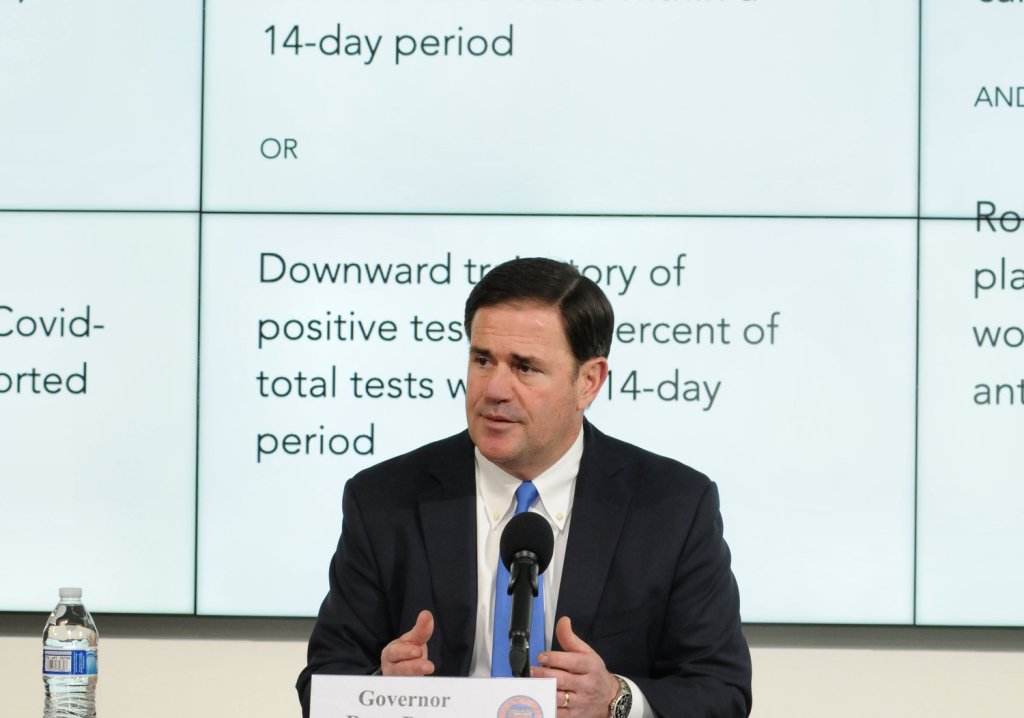
Arizona Governor Doug Ducey Reopening Guidelines

On  April 29, 2020, Gov. Doug Ducey extended the statewide stay-at-home order until May 15th and introduced guidelines for a slow reopening for the next two weeks. Listed below are the dates, places opening, along with a brief overview of safety measures for both businesses and customers. Before visiting these places, it is important to stay home if you are sick and take proper precautions if you may be at risk. 

May 4, 2020

Retail businesses can reopen for delivery service, window service, walk-up service, drive-thru service, curbside delivery or appointment. It is recommended for customers to choose online delivery or curbside pick-up before choosing other options. Customers should also wear face coverings, visit during low volume hours, disinfect shopping carts, and adhere to social distancing while shopping and waiting in lines. Businesses must enforce proper sanitation, physical distancing, the use of face masks, and implement symptom screening for employees prior to the start of their shift. The retailers that could open are banks, shipping services, hardware stores, decor shops, and many others.

For more information regarding retail services, click here.

May 8, 2020

Barbershops and cosmetologists can resume appointment-based services. Proper sanitation of workstations and face coverings for both employees and customers is directed by the Centers for Disease Control and Prevention (CDC), the United States Department of Labor Division of Occupational Safety and the Arizona Department of Health Services (ADHS). Retail businesses can resume partial in-person operations by adhering to social distancing, limiting occupancy, and implementing comprehensive sanitation protocols.

For more information regarding barbers and cosmetologists, click here.

May 11, 2020

Restaurants and coffee shops can resume for dine-in services. It is recommended to consider ordering for pick-up or delivery first. If dining in, it is encouraged to dine-in during off-peak hours, practice physical distancing, and wash your hand before and after eating meals. Employers must operate with limited occupancy, implement symptom screening for staff, and sanitize all customer areas after each sitting. The Arizona Department of Health Services recommends employers to provide face masks to staff and implement a sanitation protocol for the bathrooms.

For more information regarding restaurants, click here.

**Note: Bars, gyms, movie theaters, and hair salons are not open as of May 11, 2020.**

How Covid-19 is Affecting These 10 California Cities

Stay at home orders were issued across the state starting in March. The coronavirus outbreak allowed for deficits to replace reserves. Below are 10 California cities which have been impacted by the virus who are taking helpful actions to prevent their citizens and businesses from being ravaged. As they fight, they are waiting for the next round of help from the federal government.

Los Angeles

Mayor Eric Garetti took a series of helpful actions fighting COVID-19 and protecting people, even though some items are costly

  • Halting all evictions in mid-March
  • Releasing 26 free testing sites, everyone with symptoms can get tested within two days
  • Ordering residents to cover their face in public
  • Established a philanthropic fund as a form of ‘cash card’ particularly to help undocumented immigrants, 56,000 applied immediately

Short-term expectation regarding today’s economic condition

  • A $598 million drop in tax revenues is expected this budget year
    • 30% to 40% drop in the city’s hotel occupancy tax and significant decreases in sales tax revenue
  • Unemployment soars to 20%

Actions against money shortfall

  • A 10% pay cut for thousands of civilian workers from furlough
  • Using reserved money for the COVID-19 response fund
  • Waiting for next round of funding from federal government

San Diego

  • 8,000 homeless people will be helped with housing accommodations; Mayor Kevin Faulconer pushed to turn the “San Diego Convention Center” into a massive homeless shelter, which has taken more than 800 people with no stable housing; 2,000 hotel rooms have been procured so far.
    • Large expenditures: Turing “Convention Center” now needs $2.8 million per month; $6 million per month for hotel room use.
  • The city’s coffers dried up as two key revenues, hotel tax and sale tax, plummeted; facing a $250 million deficit.
  • Actions for money shortfall: Federal, state, and county dollars can offset part of the deficit. The mayor took further cuts on libraries, recreation centers, and arts.

San Jose

Helpful Actions

  • The “Silicon Valley Strong” program brings more than $20 million to help the area’s most vulnerable residents, small businesses and nonprofits.

Lesson from last Recession

  • A painful pension battle resulted in losing a third of its workforce due to a hiring freezes, pay-cuts, and employee attrition. Now Silicon Valley is in for another blow.

Economic Situation

  • Mayor Sam Liccardo claimed at least a $100 million hit on the budget, and it may get worse. The current relief bill helps the city, but Liccardo expected more financial help from Washington, D.C. 

San Francisco

  • In the city’s history, we can take lessons from the 1918 Spanish flu. At that time, the city introduced aggressive social distancing, which limited the initial breakout. However, only because of opening back up early, it came to suffer lethal consequences.
  • Now, there is a massive unsheltered homeless population. San Francisco’s board demanded the mayor’s administration lease 8,250 hotel rooms for helping 8,000 people on the street. However, mayor London Breed claimed they can not fulfill the demand. So far, the city has leased 2,000 hotel rooms and helped nearly 800 people.
  • The city’s controller initially estimated $1.1 billion and $1.7 billion deficits on the budget over the next two years, and $800 million wiped out from reserved money.

Fresno

  • Before the outbreak, the economy was in great shape.
    • The budget increased
    • City services increased
    • Fully funded pensions
    • Unemployment of 5% as of last May
  • Many people lost jobs; sales tax, as a main kind of revenue, plummeted; Mayor Lee Brand is looking for another round of funding from the federal government.
  • The city funded $750,000 for small businesses, including zero-interest loan options.

Sacramento

  • Coronavirus Relief Fund from federal government gave $90 million for the capital city.
  •  This fiscal year’s budget can be held, but cuts will come on next year’s for sure. Mayor’s administration is looking for more assistance.
  • Mayor Darrell Steinberg instructed staff for a long-term strategy of placing homeless people in hotels or trailers.

Long Beach

  • The city’s revenue decreased, as the main revenues of sales tax, oil revenue, and transient occupancy tax, which is paid by hotel guests, decreased, while expenses increased. Under assumption that entering recovery after May, an optimistic projection, by the city finance director John Gross, is that expenses will be between $38 million–$44 million in this fiscal year.
  • Nursing homes and long-term care facilities were hit hard in Long Beach. In response the Long Beach Medical Reserve Corps launched a free clinic for testing COVID-19 at Long Beach University and also established a drive-thru site near the free clinic.

Oakland

  • 1,100 small business owners applied for emergency relief from a “city-sponsored charity fund”, 7/10 of them made less 35% than median income in Oakland. The budget went toward a deficit, so the city has laid off thousands of temporary workers.
  • The city avoided reaching high forecasted death totals and overcrowded hospitals.
  • Scattering homeless people to one-person shed camps and sanctioned RV parks, helped prevent the contagion from spreading in large clusters. Mayor Libby Schaaf hoped to help more people become permanent residents and find shelter.

Bakersfield

  • The city failed to get the Coronavirus Relief Fund because of population cutoffs. However, a local sales tax measure, which began two years ago, helped the economy and homelessness. The city manager Christian Clegg hoped the Congress would decrease the population threshold on next round to get direct help from the federal government.
    • Christian Clegg claimed $50 million from sales tax revenue could be put into use. Half of the money has already been allocated and the rest can still help the local downturn, but he also expected this revenue would see a double-digit reduction.
  • Unlike most other cities, which are planning spending cuts, Christian Clegg said the city would have the ability to do new things.
  • There are 500 COVID-19 cases centered on Kern county, 300 of them in the ages of 18-49.

Anaheim

  • Disneyland closed for the third time in history
    • As a city depending on tourism, city spokesman Mike Lyster said at least 10,000 workers lost jobs in the tourism industry and the city lost $10 million in revenue from hotel and sales taxes.
  • $1.4 million was used from the state fund to open a third homeless shelter and repurpose the Honda Center as a food bank distribution center.
  • Mayor Harry Sidhu would use $15 million from EL Pollo Loco franchise
    • Among $15 million, $8 million would use to help seniors, workers, and people struggling with rent. The rest of the money would go to “VisitAnaheim.Org”, which is a main driver for tourism. This company now has laid off half its workers.
  • City leaders are optimistic about reopening dine-in businesses in May or June.

– Yitong Liu

SB 939 and AB 828: Evictions and Foreclosures in California during the Covid-19 Pandemic

Due to the COVID-19 outbreak many issues have come up affecting our communities. One particular issue affecting millions of Californians is rent. How will landlords keep asking tenants to pay rent, when millions of workers in California have lost their jobs due to this pandemic? Members of the California Legislature, Scott Weiner and Phil Ting have taken immediate action to resolve these types of concerns that were not clear under Governor Newsom’s executive order. Scott and Phil have introduced two bills, SB-939 and AB-828. Please read below for more information on the two introduced bills. Government affairs firms like CIMA Law Group, take initiative to monitor bills like SB-939 and AB-828. For more information provided by this government affairs firm, continue to read below.

What does SB-939 consist of?

SB-939’s ultimate goal is to attempt to prohibit the evictions of tenants that rent commercial real properties such as businesses and non-profit organizations. If a violation of this bill were to happen on behalf of landlords, they could be facing up to a $10,000 and even a year in county jail. SB-939 will also make evictions unenforceable since March 4th, 2020 when Governor Newsom declared an emergency of state in California. However, evictions that took place before March 4th, 2020 will not be prohibited under SB-939.

What does AB-828 consist of?

Like SB-939, AB-828 was introduced to also impose a suspension on evictions, however foreclosures as well. This bill will consist of no evictions or foreclosures during the state of emergency declared by Governor Newsom and even extends to fifteen days after the state of emergency is over. This bill also allows courts to set up a repayment plan for tenants that may go through March 2021 if the resident can prove economic struggle. In conclusion, AB-828 allows tenants to stay in their homes during this time of crisis.

Gavin Newsom by Gage Skidmore

What should Landlords do?

There’s no doubt that during this time there will be struggle for both, landlords and tenants. Solutions will have to depend on each landlord and tenant’s specific situation. If you as a landlord would like more assistance in regards to handling certain situations with tenants, make sure to check in with your city’s order or contact CIMA Law Group for guidance from a government affairs firm. If you are interested in getting more information please refer to firms that work with government relations. Continue to read for some additional tips and guidance if you are a landlord.

Tips for Landlords

  1. Look up regulations in your city Cities in California have issued different bans and suspensions on evictions. Make sure you follow your appropriate local guidelines. Check your local firms that deal with government relations, to get a better understanding of regulations in your city.
  2. Communicate with your tenants. Having good communication can help you learn about tenant’s current situations and set up monthly payment plans with individuals. Communicating can also inform you if there’s any other way you could assist them.
  3. Contact your lender. It’s important to keep clear and transparent communication with you lender to inform them about the situation you are having with your tenants. Lenders may be able to provide solutions for you as well, make sure to contact them.
  4. Virtual tours. Selling or renting units might be a little more difficult right now due to COVID-19, however, offering virtual tours of vacant units, waiving, certain fees, or some type of incentive can help boost filling up those vacant units.
  5. Government loans. If you have no other assistance to rely on and your lender is not cooperating with you, checking to see if you qualify for a government loan can offer temporary relief during this pandemic.

If you would like more information in regards to SB 939 and AB 828, contact CIMA Law Group and speak to a government relations specialist.

– Maria Campos Tello

Design a site like this with WordPress.com
Get started