Kyle Rittenhouse and Ricky Schroder?

On Friday, November 20th, 17-year-old Kyle Rittenhouse was released on two million dollars bail. The young teen faces two felony charges of homicide and one misdemeanor charge of possessing a dangerous weapon while under 18. These charges followed an incident in Kenosha, Wisconsin, where the 17-year-old allegedly shot and killed two Black men at a protest, leaving another injured. The protest in Kenosha followed the police shooting of Jacob Black.

Kyle’s attorneys claim that there is evidence to prove the teen was acting in self-defense. Yet, many onlookers would say otherwise. Perhaps the weirdest thing to come of this horrific tragedy would be the fact that “Silver Spoons” actor Ricky Schroder supplied the two million dollar bail for Rittenhouse. Schroder, an outspoken Trump supporter, felt compelled to help the teen because the events that transpired in Kenosha “made him mad,” because Rittenhouse was there, in his words, “to protect property.” 

This case is ongoing and continuously putting out new developments. Recently it has come to light that Rittenhouse had an adult friend purchase the weapon he used to commit the shooting with his stimulus money. It will be interesting to see how the trial transpires and what charges Kyle will ultimately receive. This case comes at a time when tensions are still running high, so developing a jury pool will prove to be a challenge.

Trump Weighed Options to Attack Iran

President Trump asked for options to attack Iran, just days after the 2020 race was called for Biden. On the 12th of November, United States President Donald J. Trump had assembled senior advisors in the Oval Office to ask whether he could take action against Iran’s most important nuclear weapons site. According to the New York Times, “A range of senior advisers dissuaded the president from moving ahead with a military strike. The advisers — including Vice President Mike Pence; Secretary of State Mike Pompeo; Christopher C. Miller, the acting defense secretary; and Gen. Mark A. Milley, the chairman of the Joint Chiefs of Staff — warned that a strike against Iran’s facilities could easily escalate into a broader conflict in the last weeks of Mr. Trump’s presidency,” This conveniently had been discussed within 24 hours after the International Atomic Energy Agency had reported that Iran’s uranium stockpile was 12 times bigger than permitted. However, the word permitted is considered questionable due to the United States withdrawing from the Iran deal on May 8th, 2018. It should also be noted that Iran’s behavior beforehand remained compliant with the rules set in place since the finalization of the deal.

Trump, Pompeo sabotaging Biden's plan for Iran - Asia Times

Trump’s curiosity has met controversy as many individuals have speculated an ulterior motive in play to leave President-Elect Biden in difficult circumstances when enacted as President. Former Vice President Biden has previously stated that one of his Day 1 executive orders would be to re-enter the Iran Nuclear Deal, yet if an attack had been done by Trump weeks before his departure, it would have been nearly impossible for Biden to do so. This reported behavior by Trump also conflicts with one of his front-running policies of not participating in any more wars while withdrawing troops from the Middle East. However, these promises have not been met with fulfillment as 2,500 troops remain in Iraq, 2,500 troops remain in Afghanistan, and thousands more spread throughout the Middle East. The transition between both administrations in the coming weeks is an exciting spectacle that will be unprecedented on nearly every front. Never has there been an unwillingness to this extent to pass along power towards the next presidential era, especially in a time when the United States has posed itself as fragile and divided than ever before.

94.5% Effective Against COVID-19: What The Newest Vaccine Could Mean For America

The Moderna vaccine is proving to be 94.5% effective against Coronavirus. If the vaccine continues to prove to be effective, vaccinations could begin distribution in the last half of December.

“It was one of the greatest moments in my life and my career. It is absolutely amazing to be able to develop this vaccine and see the ability to prevent symptomatic disease with such high efficacy,” said Dr. Tal Zacks, Moderna’s chief medical officer.

The vaccine is the second one to have a high success rate in the U.S. An initial trial was conducted with 30,000 participants that concluded in a 94.5% success rate.

Moderna says it expects to have 20 million doses for the U.S. right away. They announced today that they have met the primary endpoint of the first interim analysis.

For more information on COVID-19 and current events, visit CIMA Law Group and CIMA Blog.

Direct Ballot Initiatives in Favor For Paid Time Off & Higher Taxes On The Rich

Direct ballot initiatives had a significant night on election day. Marijuana won on every ballot it had appeared on. The legalization of all drugs has won in Oregon. Decriminalizing hallucinogenic mushrooms had passed in Washington D.C., and Florida voted to increase the minimum wage with over 60% favorability. However, there have been other direct ballot initiatives which have raised the attention of many individuals, such as Colorado voters having approved a new paid family and medical leave law. Proposition 118, a measure that had the support of 57 percent and a sizable lead of nearly 400,000 votes, would require that employers provide 12 weeks of paid time off for childbirth and family emergencies. Within the past two decades only eight other states have created programs which bear resemblance. Colorado State Senator Faith Winter stated “The new law will ensure that mothers don’t have to return to work mere days after giving birth, and that cancer patients can take time to heal.”

Election 2020: California's ballot initiative system isn't working. - Vox

Arizona passed a substantial law of its own, raising rates for the state’s wealthiest households. Known as Proposition 208, the measure aims to essentially set up a fifth income tax bracket for wealthy residents that would raise the top rate to 8% from 4.5%. This additional 3.5% tax will only apply on incomes above $250,000, and $500,000 for joint filers. The state’s joint legislative budget committee estimates to save $940 million per year, and revenue would be used for education-related expenses. The controversial measure was intended to allow Arizona to make important investments in education. Whereas opposition of the proposition argued that it would hurt small businesses that are taxed through the individual code on their owners’ returns.

Are We Approaching a Second Lockdown?

With the news splitting its time between election coverage and COVID-19 updates, it seems like 2020 may go on forever. But with a new Presidential Elect and an on going Pandemic, with case numbers spiking all over the country, it is looking like we are heading toward a second lockdown.

Today, the United States has hit over 11 million cases, and with that, many states are imposing new rules. California, Oregon, and Washington have imposed travel restrictions as a preemptive measure. With the holidays approaching and airlines posting record travel numbers, states are worried about their citizens. Other states like New York, Maryland, and New Mexico are taking different approaches to slow the spread, like ceasing indoor dining or enforcing mandated curfews.

In Arizona, people are calling for our Governor to close down restaurants and revert to our tactics in place a few months ago. To some, this may feel like Deja Vu, and to others, it may feel like we have been in a total free fall since March. But with every state exercising its right to handle the virus differently, is a Federal Mandate needed to truly combat this Pandemic?

As we know, all efforts thus far have not been successful in eradicating COVID-19. The Vaccine is still going through safety checks, but the virus is not on pause. If we continue on our current path the virus will continue to spread at a rapid rate, with our hospitals in dire need of assistance. The current admisntartion seemingly has no new ideas on how to tackle this crisis, so we may not go into a formal federal lockdown until January.

President Trump and the 2020 Presidential Election

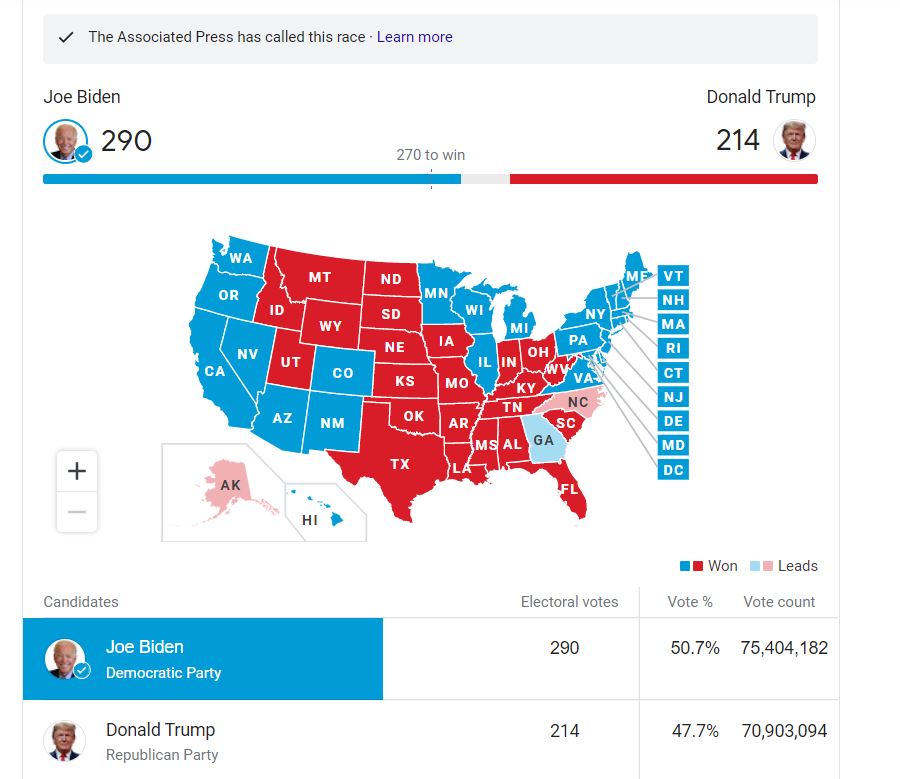
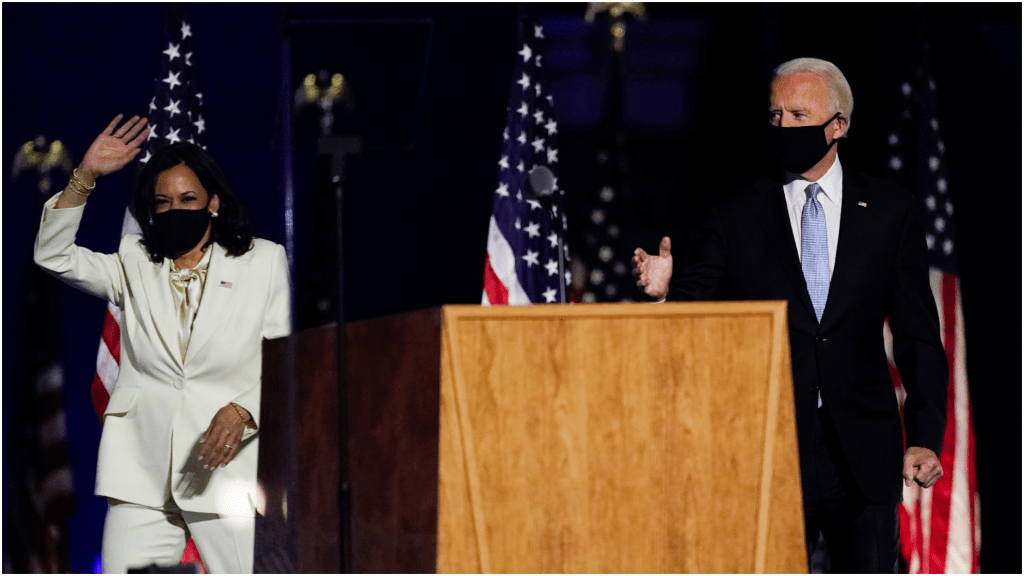
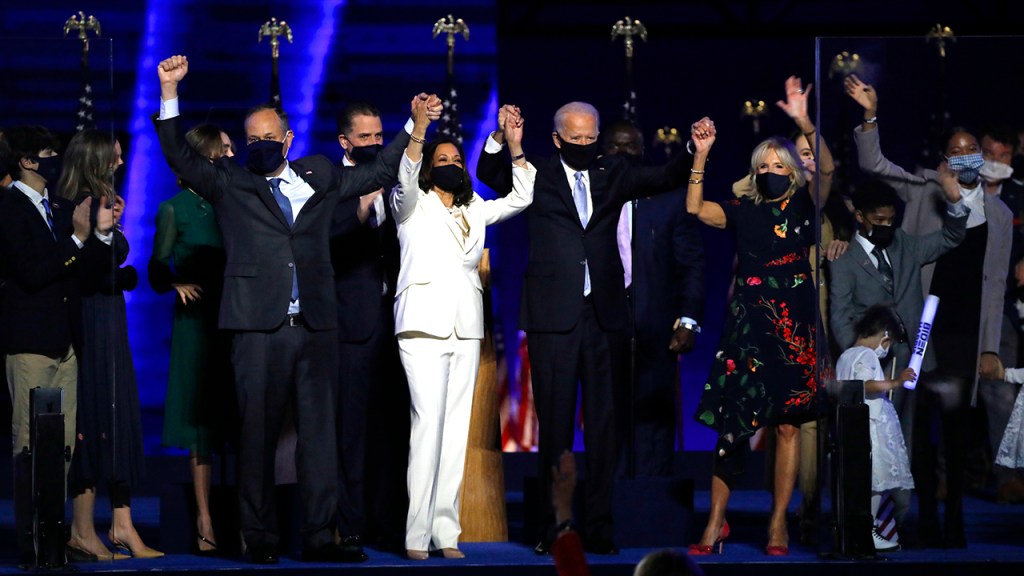
Saturday morning, Democratic nominee Joe Biden and his running mate, Kamala Harris, secured the ticket for the 2020 presidential election, becoming President-elect and Vice President-elect of the United States. The election, painted with tension, anticipation, and ardent feelings across the country, was further met with discontent and unacceptance as President Trump and his campaign sued several battleground states, laying the groundwork for contesting the results of the election.

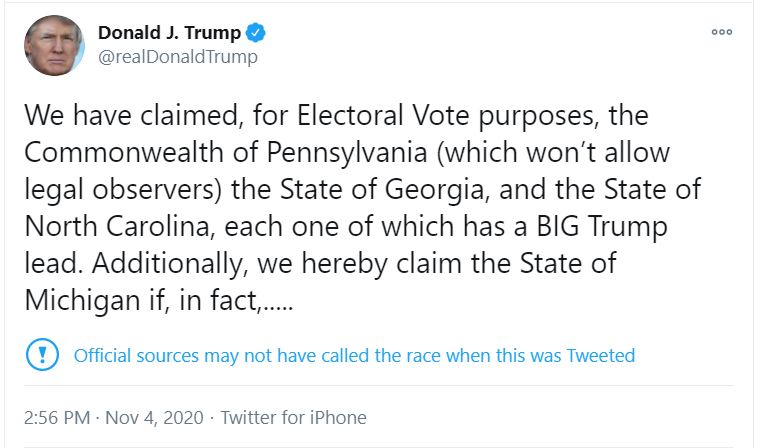
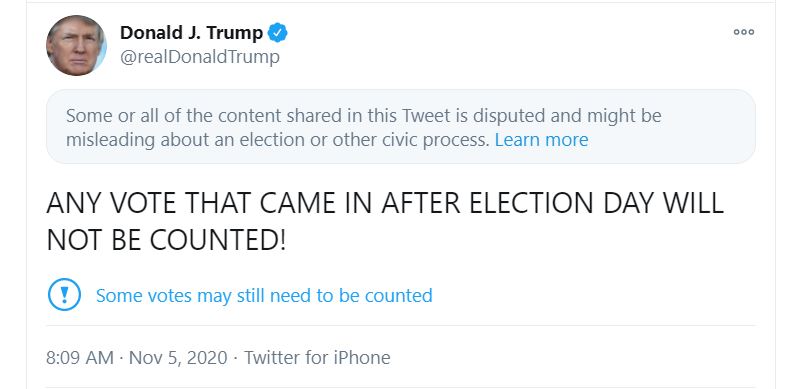
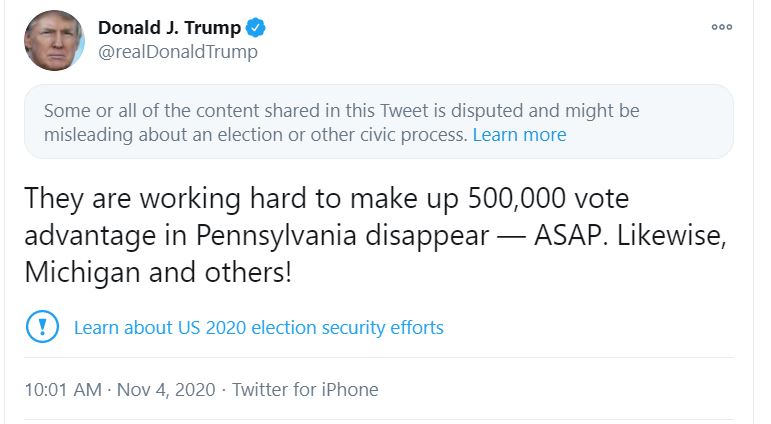
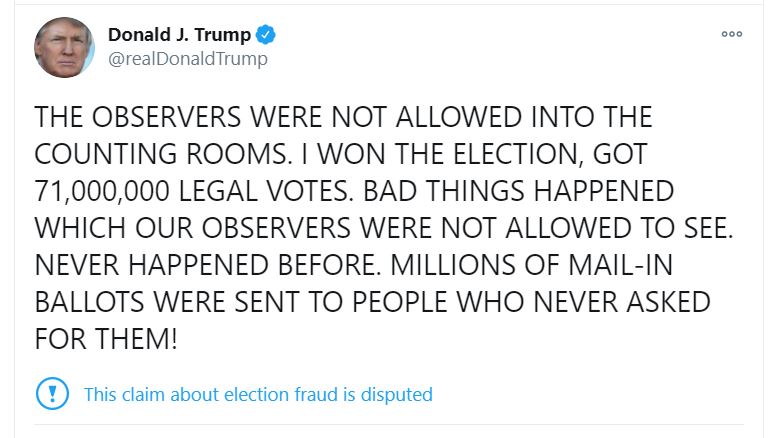
The states sued by the Trump campaign include Georgia, Michigan, and Pennsylvania, all states won by President-elect Biden. Despite the absence of evidence of voter and election fraud, President Trump made and continues to make a multitude of tweets falsely claiming the election, accusing states of making votes disappear, making distinctions between “legal” and “illegal” votes, and demanding that votes (particularly mail-in ballots) stop being counted. President Trump also released a statement rejecting that Biden won the election and declaring that his campaign will “start prosecuting our case in court to ensure election laws are fully upheld and the rightful winner is seated.”

*This tweet was flagged as, “Official sources may not have called the race when this was Tweeted”
*This tweet was flagged as, “Some or all of the content shared in this Tweet is disputed and might be misleading about an election or other civic process.”
*This tweet was flagged as, “This claim about election fraud is disputed.”

Due to unprecedented numbers in voters this year, the results of the election took longer to announce, particularly due to the vast number of mail-in ballots, which accounted for a vast number of votes in the election. In every election, however, “results reported on election night are unofficial and the counting of ballots extends past Election Day. Mail ballots normally take more time to verify and count. This year, because of the large numbers of mail ballots and a close race, results were expected to take longer.” Record numbers of ballots cast prior to Election Day resembled a trend that particularly favored Democrats, as President Trump denounced and discouraged the method of mail-in ballots for the election. Republican strategist Scott Jennings shared with NPR:

At some juncture, he’s going to have to accept that the election didn’t go his way. The weight of American democracy and the weight of our institutions and the weight of the momentum of how all this works will, frankly, make whatever he says less important.

– Scott Jennings, Republican strategist

Worth noting are the Republican officials who have openly denounced President Trump and his campaign amid the 2020 presidential election, especially regarding his statements about the validity of the election and its results. Over 70 former senior Republican officials signed a statement asserting that “We are profoundly concerned about our nation’s security and standing in the world under the leadership of Donald Trump. The President has demonstrated that he is dangerously unfit to serve another term.

Also worth noting, if now more than ever, is the democratic process of elections. Delayed election results are neither unusual or indicative of election and/or voter fraud. They simply mean that democracy is indeed working and that every vote is and should be voted.

President Biden’s First Plans In Office

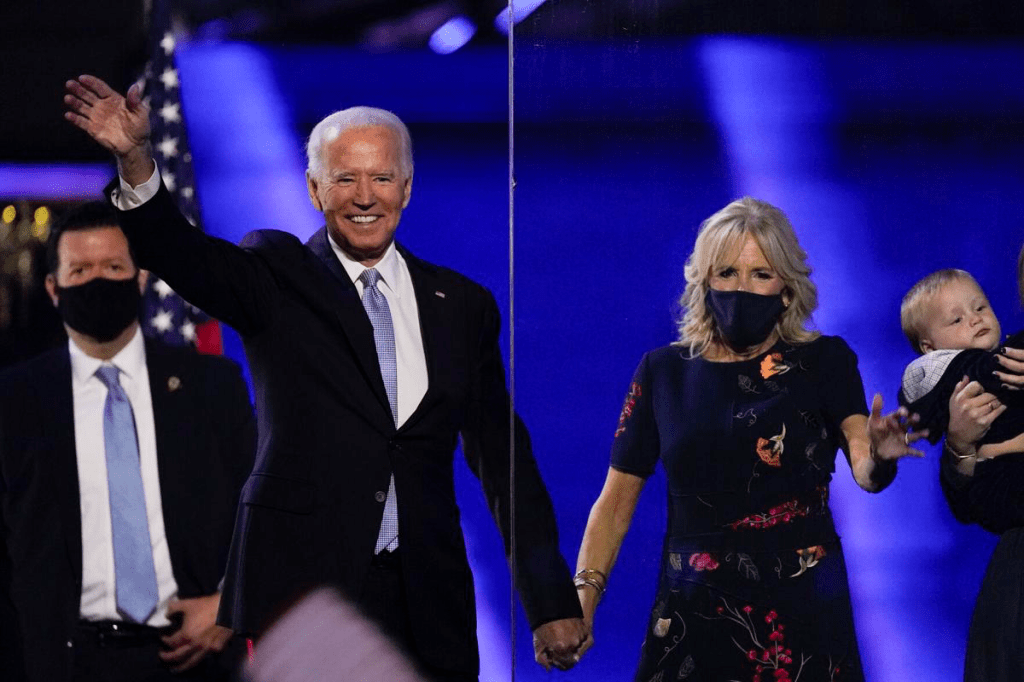
On November 7th, 2020, Joseph R. Biden was elected the 46th President of the United States. His victory speech exuded hope and attempt to make peace with all supporters of Trump. “I understand the disappointment tonight. I’ve lost a couple of times myself. But now, let’s give each other a chance,” Biden said. “This is the time to heal in America.”

Biden pledged that he does not see red and blue states, but only the United States. Biden’s first plans of action is to tackle COVID-19 head on with a 12 person Coronavirus task force on Monday, November 9th.

Biden’s first goals on his agenda are to undue some of Trump’s policies such as withdrawing form the World Health Organization as well as repealing Trump’s ban on travel from some Muslim-majority countries.

Biden seems to have a plan to unite the United States again and heal what has been hurt for the past couple of years.

For more information on the election and current events, visit CIMA Law Group and CIMA Law Blog.

How the World Reacted to President Elect Joe Biden

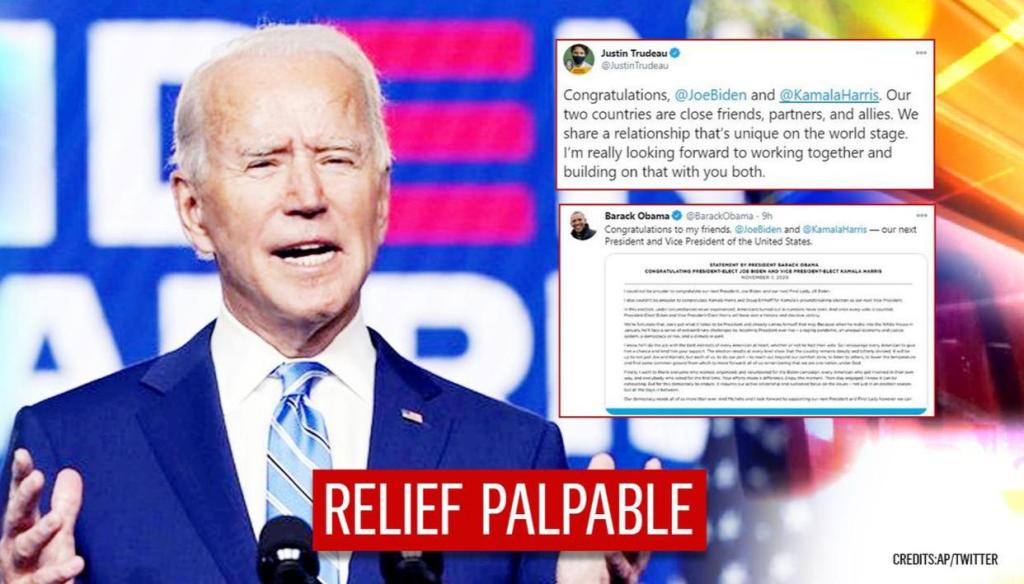
After a contentious few days, Joesph R Biden was determined to be the winner of the 2020 Presidential election. With claims of voter fraud from the sitting President and an ongoing pandemic, it was interesting to see how the world responded to our new Presidential Elect.

The Trump administration has burnt many international bridges during their four-year occupation of the White House. But on November 7th, leaders around the world sent their congratulatory messages to Joe Biden and V.P. elect Kamala Harris on her historic achievement. From South Korea to England, it was clear that our allies are happy to see a new administration take charge. The chairman of the foreign affairs committee in Germany even noted that they were excited to revive their relationship with the United States. After Trump’s failure to adequately respond to the Coronavirus, among other missteps, our allies lost confidence in us on the Global Stage. Joe Biden’s victory is a win for the American people and our position on the world stage.

Meanwhile, current President Donald Trump continues to strike up court battles as his days in office dwindle. It will also be interesting to see if Joe Biden will re-enter the Paris Agreement, which Trump’s administration pulled out of. Donald Trump’s exit will be the grand finale to an oppressive regime. Joe Biden hopefully will right America’s position on the world stage and restore professionalism to politics. 

Kanye West announces ‘Kanye 2024’

Prominent Hip-Hop Rapper, Kanye West, had entered the 2020 election cycle in July, a fashionably late stage of the race. Advocating for the implementation of policies which denounce abortion and prioritize faith. Drawing up a 10 point plan which had included items calling for support for the environment and arts, an anti-interventionist foreign policy, and reforms to the legal system and policing. Due to West’s lack of timelines to be considered a serious candidate for many voters and state officials, he had struggled to make it to the ballots of many states, forcing submitted vote casting to be conducted through “Write-Ins”. Across the 12 states West had appeared in he won fewer than 60,000 votes, most success in Tennessee, winning more than 10,000 votes, 0.3% of the state’s total.

Image

As he cast his own vote, West said he had never previously voted in a presidential election. He tweeted: “God is so good. Today I am voting for the first time in my life for the President of the United States, and it’s for someone I truly trust … me.” West seemingly conceded from the race early Wednesday in a now-deleted tweet stating “WELP KANYE 2024”. West reiterated this motivation to run in the next presidential election by posting an identical tweet that reads, “KANYE 2024”. West’s tweet includes a pic of his silhouette in front of a large screen with an electoral map. If it had been possible to vote in a reality TV star as our 45th President of the United States, no one would underestimate the possibility of electing a musical artist as our 47th.

Blockchain: The Future of Voting

Blockchain, an emerging technology that is known for its use in Bitcoin, has the potential to revolutionize the democratic process in the United States. There are many unique features of blockchain that make it a promising candidate for a new system of voting. Primarily, blockchain is a distributed ledger, meaning that it uses decentralized peer-to-peer confirmation for all of its data processing. This ensures that there are no intermediaries and makes blockchain a relatively incorruptible technology. Each block within the chain of transactions stays within a specified order and changes made are documented as new blocks that are added to the end of the chain. In order for a block to be added, a cryptographic puzzle has to be solved, and the solution has to be verified by other computers. This is known as peer to peer verification, a system which ensures that no fake voter IDs can be generated. These measures can help officials count votes with certainty and clarity in the fact that each voter ID only corresponds to one vote. 

This kind of system infrastructure is extremely useful for voting because a vote is essentially a small piece of high-value data. For this reason, online voting systems that have been developed in the past have posed security challenges. The process of voting using blockchain technology follows a relatively straightforward, logical path. First, voters register using multiple types of personal identification such as social security number, driver’s license number, and home address. The individual’s personal information is documented as a transaction for the user requesting to be registered as an official voter. Next, a transaction is created to represent the government’s authorization of the user’s right to vote. When it comes time to vote, the user provides the same pieces of personal identification that were used to register along with their voter registration number, the password assigned to them during registration, and a scan of the QR code provided on their ballot. The blockchain system is then used to verify both that the voter is properly registered and that they have not already submitted their ballot. 

Although the use of blockchain for voting has only narrow applications in the business world, it has the potential to be very useful for the government. Additionally, companies that wish to take on the challenge of developing an incorruptible blockchain voting system can certainly do so with the hopes of selling their services to the government. There are a number of benefits to the government. First, the current voting process is relatively ambiguous in that after ballots are submitted, it can be hard to know what happens to them and if they end up being counted. Contrastingly, with blockchain technology, there is far more transparency, allowing ballots to be tracked all the way from voter registration to ballot counting. Since blockchain uses extensive verification processes, there is a significant decrease in election fraud. Both of these features of blockchain voting help the government by streamlining verification processes and eliminating the need to hire and trust poll workers. Additionally, the increase in transparency and decrease in fraud serves to heighten public trust in the government and faith in democracy. The nature of the new voting process also allows ballots to be tallied immediately, reducing the amount of time between voting and release of results. This can be beneficial for potentially holding more frequent elections and referendums that individuals can easily vote on at any time. Another advantage of blockchain voting is that it is easily accessible. There is no need for people to take time off of work to go to a polling place, wait in line, and cast their ballots. They can simply do so from the comfort of their home which will likely increase voter participation. Overall, there are many advantages to using blockchain technology for voting that can and should be explored as an avenue for enhancing the representative nature of democracy. 

Barnes, A., Brake, C., & Perry, T. (2016, September 29). Digital Voting with the use of Blockchain Technology. Retrieved October 05, 2020, from https://www.economist.com/sites/default/files/plymouth.pdf

Garner, B. (2020, May 26). How Blockchain Voting Works & Why We Need It. Retrieved October 05, 2020, from https://coincentral.com/how-blockchain-voting-works-why-we-need-it/

Mearian, L. (2019, January 29). What is blockchain? The complete guide. Retrieved October 05, 2020, from https://www.computerworld.com/article/3191077/what-is-blockchain-the-complete-guide.html

Tatar, J. (2020, April 22). Can Blockchain Technology Change How We Vote? Retrieved October 06, 2020, from https://www.thebalance.com/how-the-blockchain-will-change-how-we-vote-4012008
Design a site like this with WordPress.com
Get started