First Presidential Debate sways Voters Opinions

Only two days before President Trump’s hospitalization on Friday, October 2nd, the first presidential debate between President Trump and Vice President Joe Biden featured a chaotic exchange of insults and banter.  The debate consisted of the president repeatedly speaking over his Democratic counterpart and the moderator, Chris Wallace, struggling to mitigate a fire-induced 90-minute spectacle. However, the following two days after the memorable night an NBC News and the Wall Street Journal poll had concluded Joe Biden’s national lead over President Donald Trump to have approximately doubled after Tuesday’s presidential debate. While also finding that voters believe at a ratio 2-to-1 that Biden has the better temperament to be president.

Presidential debate: Trump, Biden spar over Supreme Court, health care,  COVID-19

Now it has been deduced that Biden is ahead of President Trump by 14 points through analysis of registered voters. Before the debate, Biden had sustained a national 8-point lead and has since climbed in numbers now representing Biden’s largest lead during his entire campaign. Yet, these numbers are yet reflective of President Trump’s recent hospitalization, which theorists believe will only hinder Trump’s campaign strategy and portrays the controversial handling of the pandemic as the commander-in-chief. Now, the question steadily arises as to how and whether the Commission on Presidential Debates will hold the second of three presidential debates on October 15th. 

Arizona’s Education System and Proposition 208

During the past few years, education became a more prevalent and forefront issue for the State of Arizona. Some may even argue that it is the most important issue. Arizona’s public education system is currently ranked as 49 out of the 50 states. There is a shortage of teachers and very limited resources. Ultimately, education affects the students and future leaders of tomorrow. Proposition 208 aims to provide funding to the public education system. 

Summary of Proposition 208: 

  • Proposition 208 imposes a 3.5% increase on income tax. Specifically, single persons or married persons filing separate taxes with a taxable income of over $250,000 and married couples or single persons who are the head of the household with a taxable income of over $500,000 would receive a 3.5% increase. 
  • Taxes collected will be used to establish the Student Support and Safety Fund. 
    • 50% for hiring and hiring and increasing the base pay for teachers/classroom support personnels
    • 25% for the hiring and increasing base pay for student support services personnels
    • 10% ten percent to mentoring and retention programs
    • 12% twelve percent to the Career Training and Workforce Fund
    • 3% to the Arizona Teachers Academy Fund

While Proposition 208 might seem like the solution to the educational gap some organizations have stated that it will increase taxes but only help administrators not the teachers and the students. Should there be a better solution or do you think Proposition 208 is enough? Does Proposition 208 actually address the problem?

Trump VS Federal Income Taxes

A New York Times investigation published on Sunday shared that President Trump paid only $750 in federal income taxes in 2016 and 2017. Trump declined this statement with his most familiar rebuttal: “fake news.”

President Trump was accused of only paying $750 in federal income taxes for the years 2016 and 2017.

The New York Times further reported that Trump paid no income taxes in 10 of the previous 15 years as he reported massive losses to his business.

Here are other key findings from The New York Times:

  • Trump has hundreds of millions of dollars in loans that are set to come due within the next 4 years.
  • He’s currently battling the Internal Revenue Service over an almost $73 million tax refund he claimed a decade ago.
  • He used the 427.4 million dollars made from his TV show, “The Apprentice” mainly on building his golf courses and putting more money into his business ventures than he was making.

Trump’s response to the detailed claims over the years is “I pay a lot, and I pay a lot in state income taxes”. He shared that he will release his tax statements once he is no longer under audit of the IRS.

Nancy Pelosi, Speaker of the House of Representatives, shared “The fact that you could have a sitting president who owes hundreds of millions of dollars that he’s personally guaranteed to lenders, and we don’t know who these lenders are,” she said, and suggested that Mr Trump may be indebted to Russian President Vladimir Putin.

Left to right: President Donald Trump, VP Mike Pence, Democratic Nominee Joe Biden and VP Nominee Kamala Harris

The first of three Presidential debates between Democratic nominee, Joe Biden, and incumbent Donald Trump begins tonight at 9p.m. Eastern time.

For more on elections and government relations, visit CIMA Law Group.

California’s Rent Control Initiative: Proposition 21

California Proposition 21, Local Rent Control Initiative, will be on the state’s ballot for the November 3, 2020 election as an initiated state statute.

  • A “yes” vote for California Prop. 21 “supports this ballot initiative to allow local governments to enact rent control on housing that was first occupied over 15 years ago, with an exception for landlords who own no more than two homes with distinct titles or subdivided interests” (Ballotpedia, 2020).
  • A “no” vote for California Prop. 21 “opposes this ballot initiative, thereby continuing to prohibit rent control on housing that was first occupied after February 1, 1995, and housing units with distinct titles, such as single-family homes” (Ballotpedia, 2020).

Enactment of Prop. 21 would allow cities to pass rent control measures on rental housing, providing that the housing is more than fifteen (15) years old. The ballot would also replace the Costa-Hawkins Rental Housing Act, passed in 1995, which allowed landlords to exercise rent control except on a) housing inhabited after February 1, 1995 and b) distinct-title housing such as single-family homes, condos, and townhouses. The Costa-Hawkins Rental Housing Act also allows landlords exercise of vacancy decontrol, a policy allowing rent price increases to market rates when a tenant moves out. Under California Prop. 21:

  • Local governments would be permitted to exercise rent control on a) housing more than fifteen (15) years old and b) distinct-title housing units (i.e., single-family homes, condos, townhouses, etc.) owned by individuals who own no more than two (2) housing units with separate titles
  • Local governments would be sanctioned to allow landlords to increase rental rates by 15% for the first three years following a vacancy
Prop. 21 explained in one (1) minute

Thoughts of Supporters and Opponents to Prop. 21

SUPPORTERS of Prop. 21 say the measure would allow cities to put limits on rent increases, protecting California families from eviction by corporate landlords. Such limits would also work against gentrification and homelessness. Supporters of Prop. 21 include the California Democratic Party, Eviction Defense Network, and Michael Weinstein, president of the AIDS Healthcare Foundation.

OPPONENTS of Prop. 21 say the measure would be less profitable for housing construction, especially amid a time of massive housing shortage. Furthermore, opponents assert the measure would diminish revenue for city and state governments. Opponents of Prop. 21 include the California Apartment Association, Essex Property Trust and Prometheus Real Estate Group, and Governor Gavin Newsom.

How the US is Responding to Food Insecurity

According to the Feeding America Organization food insecurity is defined as “a household’s inability to provide enough food for every person to live an active, healthy life.” Food insecurity can result in serious health complications and the inability to learn and develop. This year alone estimates show that about 54 million individuals specifically 18 million children will experience food insecurity. The real question is – how is the US responding to this persisting issue? 

People Are Speaking Up –

  • On September 2, 2020 students and faculty members from Bucknell University protested about food insecurity. This was a response to the university increasing their meal plan prices. 
  • Brenda Ann Kelly  (an american documentary photographer) – brought attention to people from New York to California who are having a hard time feeding their families. Her photographs give a chilling reality of the problem the U.S. is currently facing. 
  • “A Place at the Table” is a documentary that examines hunger in America. 

Legislative Response –  

  • On March 18, 2020, the Family First Coronavirus Response Act was passed. This will result in about $1 billion in nutrition assistance. 
  • On July 30, 2020, Congressman Bobby Scott introduced the Pandemic Child Hunger Act. Addressed the need for universal school meals. 
  • In April 2020,  Sen. Kamala Harris and Kirsten Gillibrand introduced the Closing the Meal Act Gap of 2020. 

While these actions help bring attention to food insecurity there’s more work to be done. Food insecurity is directly related to the United States poverty and unemployment rates.  And especially during the Coronavirus pandemic many families will experience food insecurity. Hopefully, other bills will be introduced and passed to help mitigate this issue.

Stunning 2020 Voter Turnout Comparison to 2016

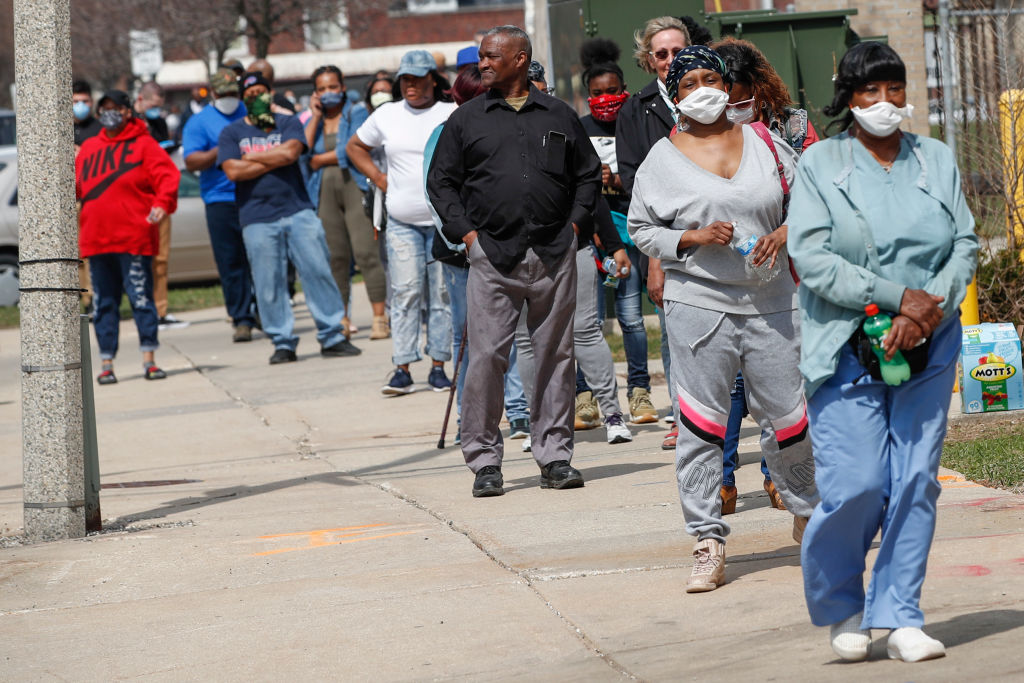
Around this time in 2016, September 26th, approximately 9,500 votes had been casted for the Presidential election. Today, within the same point of the year as 2016, over 865,000 votes had already been casted for this years election. Michael McDonald, Professor at the University of Florida, runs the U.S. Elections Project and has reflected his model off of the 25 states whose early voting data is available. McDonald contributes the statistical results from the project as a sign for the excitement Americans have for the upcoming election combined with concerns stemming from both COVID-19 and the U.S. Postal Service Delay. This leaves one to wonder of the rampant rate 2020 vote casting will achieve with the consideration voting increases as election day steadily arrives.

GOP Takes Advantage of Coronavirus for Voter Suppression | Time

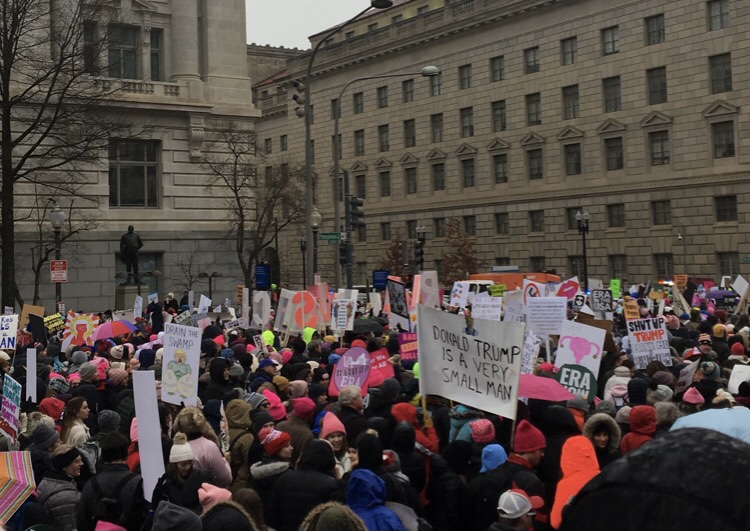
There had been other interesting statistics uncovered with the results of McDonald’s US Elections Project. With extracting information from three states reporting party registration data; Florida, Iowa, and and North Carolina – Democrats are understood to make up the majority of early voting. With Republicans making up around 17%, Democrats consisting of approximately 54%, and Independent voters compromising 29%. Also in regards to mail-in voting, Democrats are far more likely to vote by mail largely due to the coronavirus pandemic and the risk of exposure in polling locations. With all this information in mind, it would be interesting to see the days leading up to November 3rd, and witnessing historical records with the culmination of a number of negative and unpredictable factors.

The World Honors Justice Ruth Bader Ginsburg

Justice Ruth Bader Ginsburg, legal and feminist icon, passed away peacefully at her Washington D.C. home on September 18th, 2020 due to complications of metastatic cancer.

“Our nation has lost a justice of historic stature,” Chief Justice John Roberts said. “We at the Supreme Court have lost a cherished colleague. Today we mourn but with confidence that future generations will remember Ruth Bader Ginsburg as we knew her, a tireless and resolute champion of justice.”

During her time at Harvard Law as a young woman, she was one in nine women out of a class of over 500 students. This sparked her passion for breaking the glass ceiling.

Ginsberg never stopped fighting for equality and justice from decades before she was appointed in the Supreme Court up until her last day of life. She worked her whole life to break down the glass ceiling and other barriers holding women back from being decision makers. As a relatively new Supreme Court justice, Ginsburg wrote the court’s 7-1 opinion declaring that the Virginia Military Institute could no longer remain an all-male institution. 

Ginsberg wore many hats in her lifetime and career. She was a mother, a wife, a student, a teacher, an advocate for women and minority rights, a cancer fighter, a Supreme Court Judge, and so much more. She is survived by her two children, Jane and James.

For more information and advocacy for minority representation, visit CIMA Law Group.

ICE, Roe, and the Future of Women’s Reproductive Rights

In 1973, the Supreme Court provided a ruling in Roe v. Wade that upheld women’s right to have abortions. Although the decision was somewhat restrictive about the conditions required for abortion, it nonetheless served as not only a landmark decision for abortion rights, but for women’s right to privacy. It set the precedent for women’s ability to make reproductive choices for themselves, and has continually been reaffirmed in cases following it such as Planned Parenthood v. Casey (1992). Despite this clear foundation for women’s right to reproductive choice in the United States, recent events have significantly threatened this foundation and brought into question the extent to which the United States truly protects women’s reproductive rights and the extent to which these rights will remain intact in the near future. 

Early last week, whistleblower Dawn Wooten, a nurse at the Irwin County ICE Detention Center filed a complaint expressing concerns about the high number of hysterectomies being performed without proper consent within ICE facilities. This issue came to light amidst reports of Immigration and Custom Enforcement’s refusal to enforce proper COVID-19 regulations and provide adequate testing. Although investigation is underway, the claim that ICE is performing mass hysterectomies has not yet been validated. However, issues concerning women’s health, including a lack of prenatal care, at ICE facilities have been reported for years now. Additionally, Project South, the organization that helped Wooten file her complaints makes a powerful point about the importance of these reports. The underlying issue here is the lack of proper informed consent. Detainees reported being confused about their medical procedures and why they received them, indicating a clear lack of informed consent for the hysterectomies and other operations they received.

Informed consent, especially in the case of procedures relating to female reproductive capabilities, should be an obvious prerequisite for treatment. In an era when the United States claims to uphold women’s reproductive rights, it is nothing short of inhumane for ICE, a United States executive agency, to perform procedures that inhibit women’s reproductive ability without their proper informed consent. The recent reports of unwilling sterilization in ICE detention centers have evoked comparisons to the 20th century when the United States had government-sponsored forced sterilization programs across 33 states. In both cases, we see that the groups disproportionately impacted were those who were primarily low-income individuals and people of color. 

These allegations of mass sterilization by Immigration and Custom Enforcement have arisen at a contentious time for women’s reproductive rights within the United States. With the passing of Supreme Court Justice Ruth Bader Ginsburg, there is potential for a 6-3 conservative majority within the Court. This conservative majority could prove problematic for a couple of reasons. First, President Trump has indicated in the past that his pick for Supreme Court Justice will likely be a pro-life individual with the determination to overturn Roe v. Wade. In the case June Medical Services LLC v. Russo (2019), Justice Neil Gorsuch and Justice Brett Kavanaugh, both Trump appointees, sided with conservatives, against the abortion providers. It is likely that if the Trump Administration is able to confirm a third justice before the end of the term, it will be another individual with an anti-abortion ideology. Second, another conservative on the Court increases the chances that even if Roe is not overturned, reproductive choice rights can be limited via narrower laws and new cases that present non-abortion reproductive rights issues. At the moment, with the Supreme Court vacancy in the hands of the Trump Administration and Senate Republicans, the fate of women’s reproductive rights hangs in the balance. 

Feinberg, A. (2020, September 23). Trump’s Supreme Court pick could challenge Brown v Board of Education. Retrieved September 26, 2020, from https://www.independent.co.uk/voices/trump-supreme-court-pick-ginsburg-amy-coney-barrett-roe-v-wade-brown-v-board-education-b535886.html

ICE whistleblower: Nurse alleges ‘hysterectomies on immigrant women in US’. (2020, September 15). Retrieved September 26, 2020, from https://www.bbc.com/news/world-us-canada-54160638

More detained immigrant women say they didn’t approve surgery. (2020, September 18). Retrieved September 26, 2020, from https://www.cnbc.com/2020/09/18/more-detained-immigrant-women-say-they-didnt-approve-surgery.html

Project South. (2020, September 14). Lack of Medical Care, Unsafe Work Practices, and Absence of Adequate Protection Against COVID-19 for Detained Immigrants and Employees Alike at the Irwin County Detention Center. Retrieved September 26, 2020, from https://projectsouth.org/wp-content/uploads/2020/09/OIG-ICDC-Complaint-1.pdf

Reuters. (2020, September 23). Explainer: Supreme Court’s Roe v. Wade decision hinged on women’s right to privacy. Retrieved September 26, 2020, from https://uk.reuters.com/article/us-usa-court-abortion-roevwade-explainer/explainer-supreme-courts-roe-v-wade-decision-hinged-on-womens-right-to-privacy-idUSKCN26E1LU

Svokos, A. (2020, September 21). Is Ginsburg’s death the end of Roe v. Wade? This time, some experts say, it could be. Retrieved September 26, 2020, from https://abcnews.go.com/Politics/ginsburgs-death-end-roe-wade-time-experts/story?id=73119646

Center of Controversy: SB-145 – California’s New Sex Law

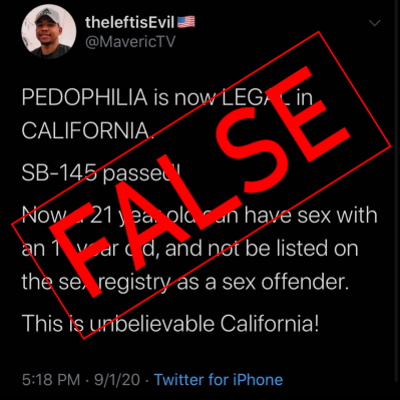
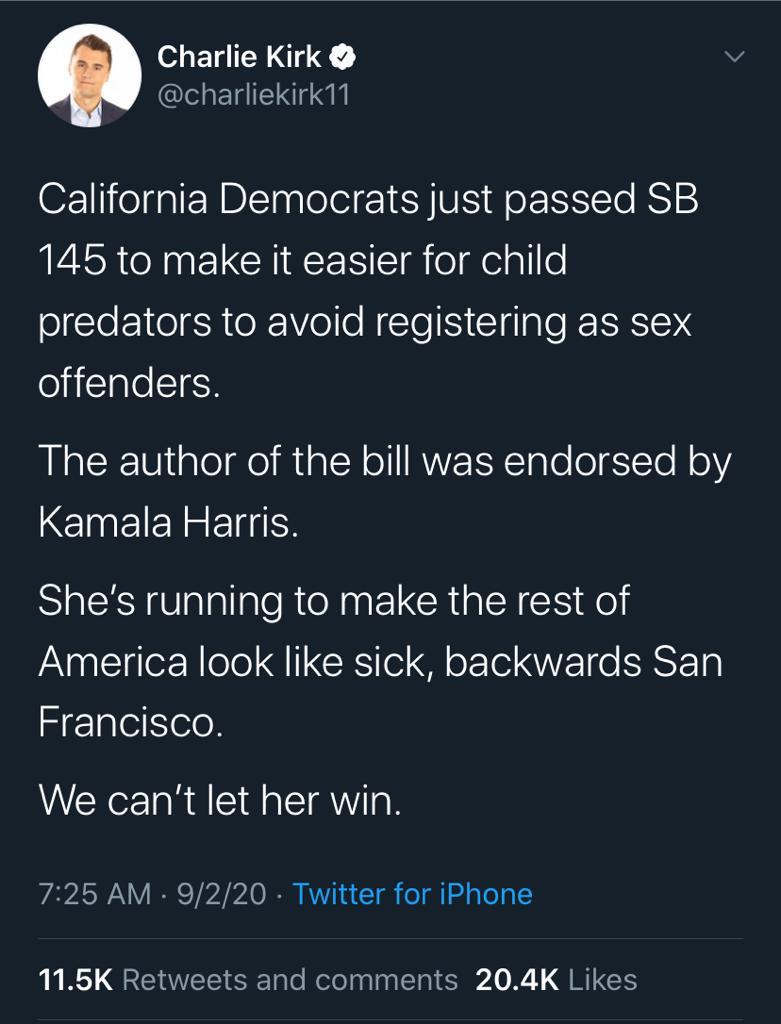
California Governor Gavin Newsom signed into effect SB-145, an amendment to existing state law that gives judges discretion regarding “whether an adult convicted of having vaginal sexual intercourse with a minor should register as a sex offender in cases in which the minor is 14 years or older and the adult is not more than 10 years older than the minor” (Willon, 2020). The bill has been met with controversy surrounding the widespread, yet false, belief that the amendment legalizes pedophilia. Many others have made the claim that the bill is a political tool serving to drive a wedge between Democrat and Republican voters.

Tweet by Charlie Kirk, Founder and President of Turning Point USA

Prior to the enactment of SB-145, California law mandated that adults convicted of oral or anal sex with a minor be automatically added to the state’s sex offender registry. SB-145 eliminates such automation and allows judges discretion in deciding such matters. A major facet of the amendment to state law prior to SB-145 regards sexual relationships between people close in age. For instance:

The intent of SB 145…is to address cases in which two people close in age — an 18-year-old and 17-year-old dating in high school, for example — are in a sexual relationship. The 18-year-old can still be convicted of a sex offense but should not automatically be registered as a sex offender, a lifelong designation that is an impediment to finding employment, a place to live and other necessities of life.”

Phil Willon, Staff Writer of Los Angeles Times

SB-145 is also said to combat and end discrimination against members of the LGBTQ community from being convicted at a higher rate for similar sex crimes committed by heterosexual individuals. The bill addresses the disparity in California’s anti-sodomy laws, which were constructed to criminalize sex between homosexual men. As for claims that SB-145 legalizes pedophilia, such comes from the portion of the bill that allows the maximum ten (10) year age gap between the adult and the minor in the sexual relationship. Many political figures have spoken out against SB-145, one of which is Democratic Assemblywoman Lorena Gonzalez of San Diego, who declared,

I cannot, in my mind, as a mother, understand how sex between a 24-year-old and a 14-year-old could ever be consensual, how it could ever not be a registerable offense. I challenge everybody: Give me a situation where a 24-year-old had sex with a 14-year-old, any kind of sex, and it wasn’t predatory.

Assemblywoman Lorena Gonzalez during debate on the bill on the Assembly floor, Aug. 31, 2020

Despite the criticism and backlash, advocates of the bill, including Gov. Newsom, assert its critical importance in equalizing the treatment of heterosexual and LGBTQ individuals in regards to sex crimes.

Summary and Review: AZ SB1278 – victims’ privacy

Photo taken from Flickr and created by Onasill ~ Bill

In January 2020, Arizona’s 20th district State Senator Paul Boyer introduced SB1278 on the floor. This bill directly deals with the victim’s right to privacy and what information is protected from the defense and their attorneys. He believed that the location and any identifying information of a victim must be removed from any documents given to the defense attorney or its staff.

“Identifying information” is defined as the victim’s date of birth, social security number and official state or government issued driver license or identification number. And “locating information” specifically pertains to the victim’s address, telephone number, email address, and place of employment. Ultimately, unless the victim gives consent or the court finds that it is necessary to give that information, any identifying information or location should not be shared with the defense during the discovery phase or at any point in the case. 

While I believe this bill is a noble idea, I wonder how effective/realistic it is in practice. SB1278 does not explicitly state when it is appropriate to give out victim’s information it only states when the courts deem there is a compelling need. There are too many loopholes in this bill that a defense attorney could simply argue that it is necessary even when it’s not. In order for this bill to really protect victims and their privacy, it should be reexamined and be more detailed.

Design a site like this with WordPress.com
Get started